I’ve been using red and near-infrared light panels for about two years now, and I’ll be honest — I was skeptical about dropping $1,399 on the Hooga ULTRA1500. That’s real money. But after spending several months with this thing in my home setup, I have some opinions.
This review is going to be straight. No fluff, no “this panel changed my life” nonsense. Just what it does, how it works, what the numbers actually mean, and whether it makes sense for your situation.
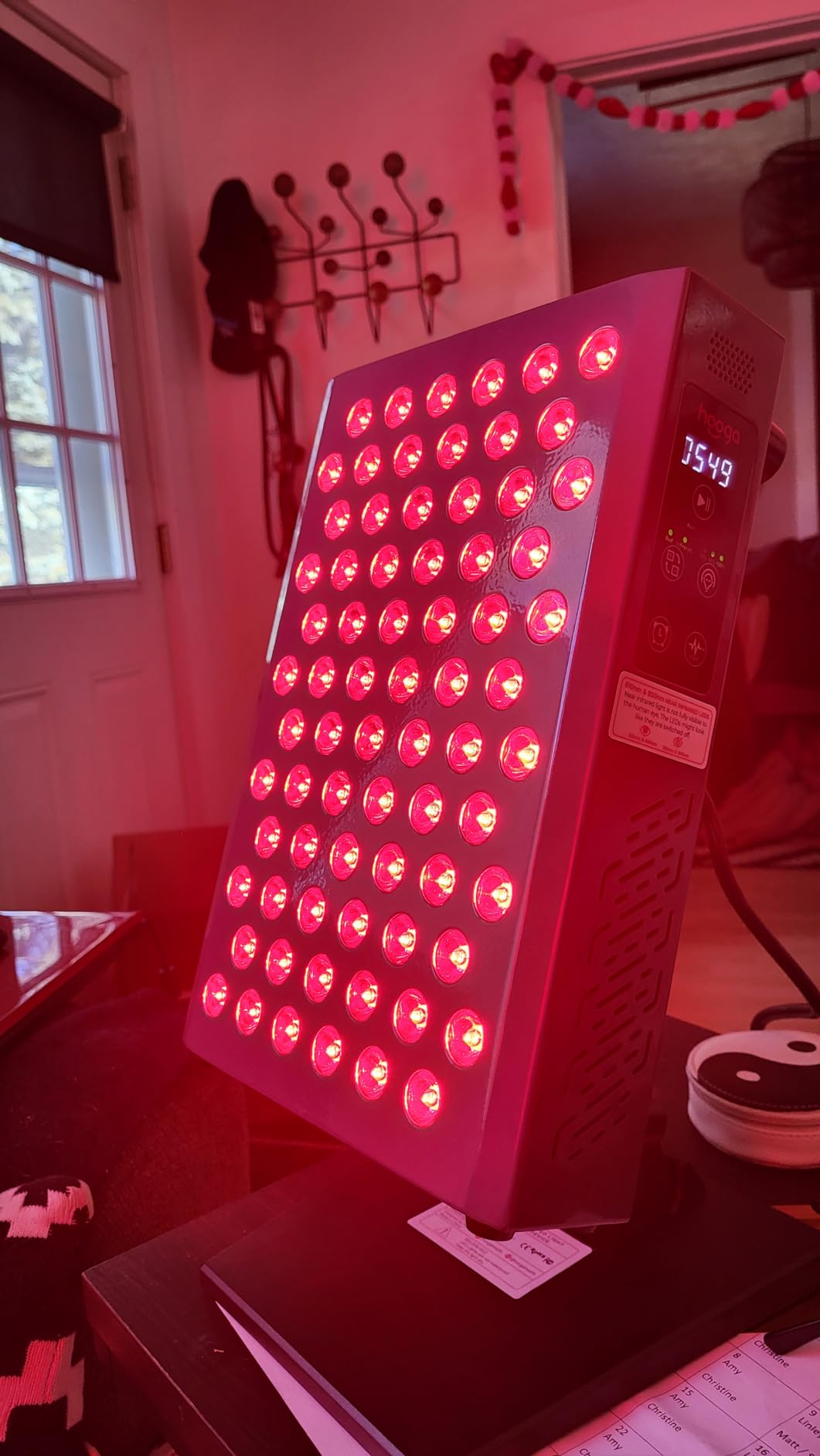
What Is the Hooga ULTRA1500 and Who Makes It
Hooga is a US-based brand that’s been in the red light therapy space for several years. They’re not a pop-up operation — they have a real support team, a 3-year warranty, and a 60-day trial period. That matters when you’re spending this kind of money.
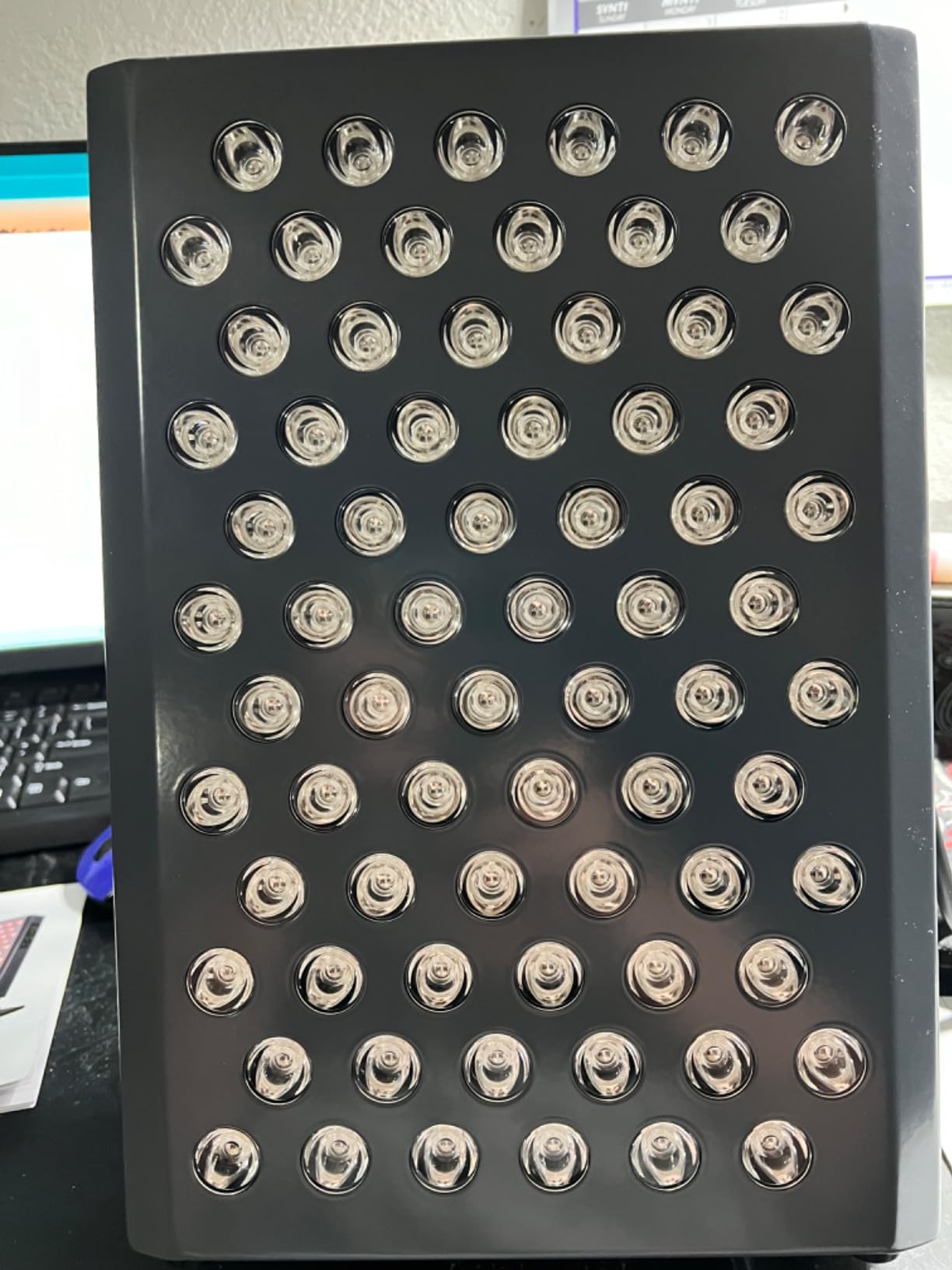
The ULTRA1500 is their flagship full-body panel. It’s a tall, wall-mountable or stand-compatible panel measuring 39.5 inches tall by 8.6 inches wide. It weighs 28 lbs. When it’s running, it looks like a glowing red monolith in your room. Your partner will ask questions.
Check current price and availability on Amazon
The Specs That Actually Matter
Before I get into my experience, let’s talk numbers — because there’s a lot of noise in this category from panels that look impressive on paper but underdeliver in practice.
Wavelengths: The Four-Wavelength System
The ULTRA1500 uses quad-chip LEDs, meaning each LED contains four individual diodes emitting at different wavelengths:
- 630nm — red light, absorbed primarily at the skin surface
- 660nm — red light, slightly deeper penetration, most studied wavelength for skin benefits
- 810nm — near-infrared, penetrates several centimeters into tissue
- 850nm — near-infrared, deep tissue penetration
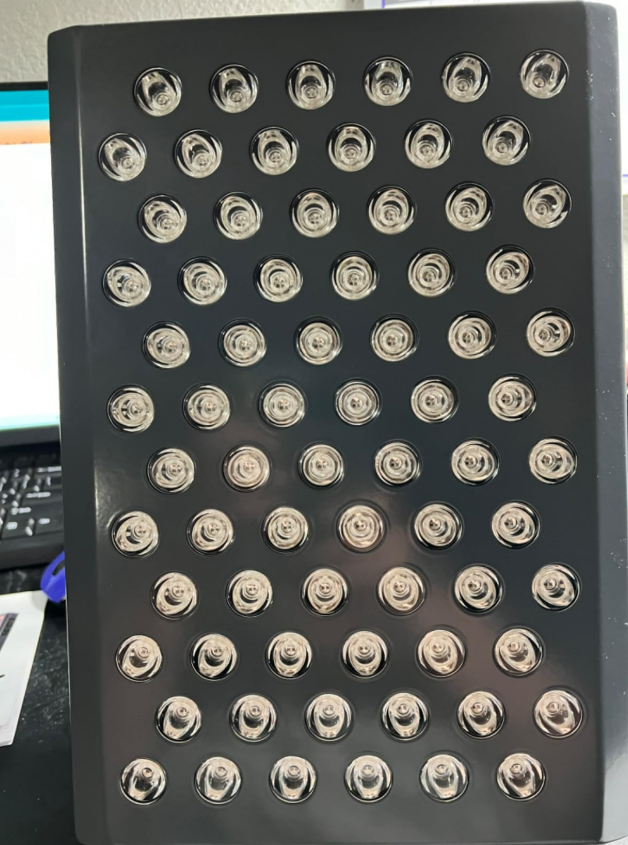
Why does this matter? Single-wavelength panels are simpler and cheaper, but the research on photobiomodulation generally shows benefits across multiple wavelengths. Having all four in one panel means you’re not choosing between surface-level skin work and deeper tissue sessions — you get both simultaneously.
The 660nm and 850nm combination in particular has been used in most of the published studies on things like muscle recovery, skin collagen, and joint pain.
Irradiance: The Number Most Brands Won’t Show You
Irradiance is how much light energy hits your skin per second, measured in mW/cm². This is arguably the most important spec, and it’s also the one that’s most commonly misrepresented or conveniently left vague.
The ULTRA1500’s measured irradiance at various distances:
| Distance | Irradiance | Coverage Area |
|---|---|---|
| 3 inches | 190 mW/cm² | 41” x 10” |
| 6 inches | 165 mW/cm² | 45” x 13” |
| 12 inches | 114 mW/cm² | 51” x 20” |
| 18 inches | 82 mW/cm² | 58” x 27” |
Most practitioners suggest operating in the 20-200 mW/cm² range. At 6 inches, you’re sitting comfortably in that zone with 165 mW/cm². At 12 inches you get broader coverage (51” x 20”) while still maintaining solid irradiance of 114 mW/cm².
For reference: a lot of budget panels claiming “high irradiance” top out around 50-80 mW/cm² and can’t go much lower in price because the LEDs themselves are just weaker. The ULTRA1500’s output at 6 inches is genuinely competitive with clinical-grade equipment.
Physical Dimensions and Build
This panel is 39.5 inches tall. That covers most of your torso if you’re standing. For a true full-body session, you’d either need two panels stacked (Hooga sells modular connection hardware for this) or you do upper body and then reposition for lower body. That’s a real limitation worth knowing upfront.
The construction is aluminum with integrated cooling fans on the back. The fans are audible — not loud, but not silent either. If you’re someone who needs total silence during recovery sessions, factor that in.
The Control Panel: More Useful Than Expected
One of the things I didn’t expect to care about was the control interface, and then I actually started using it.
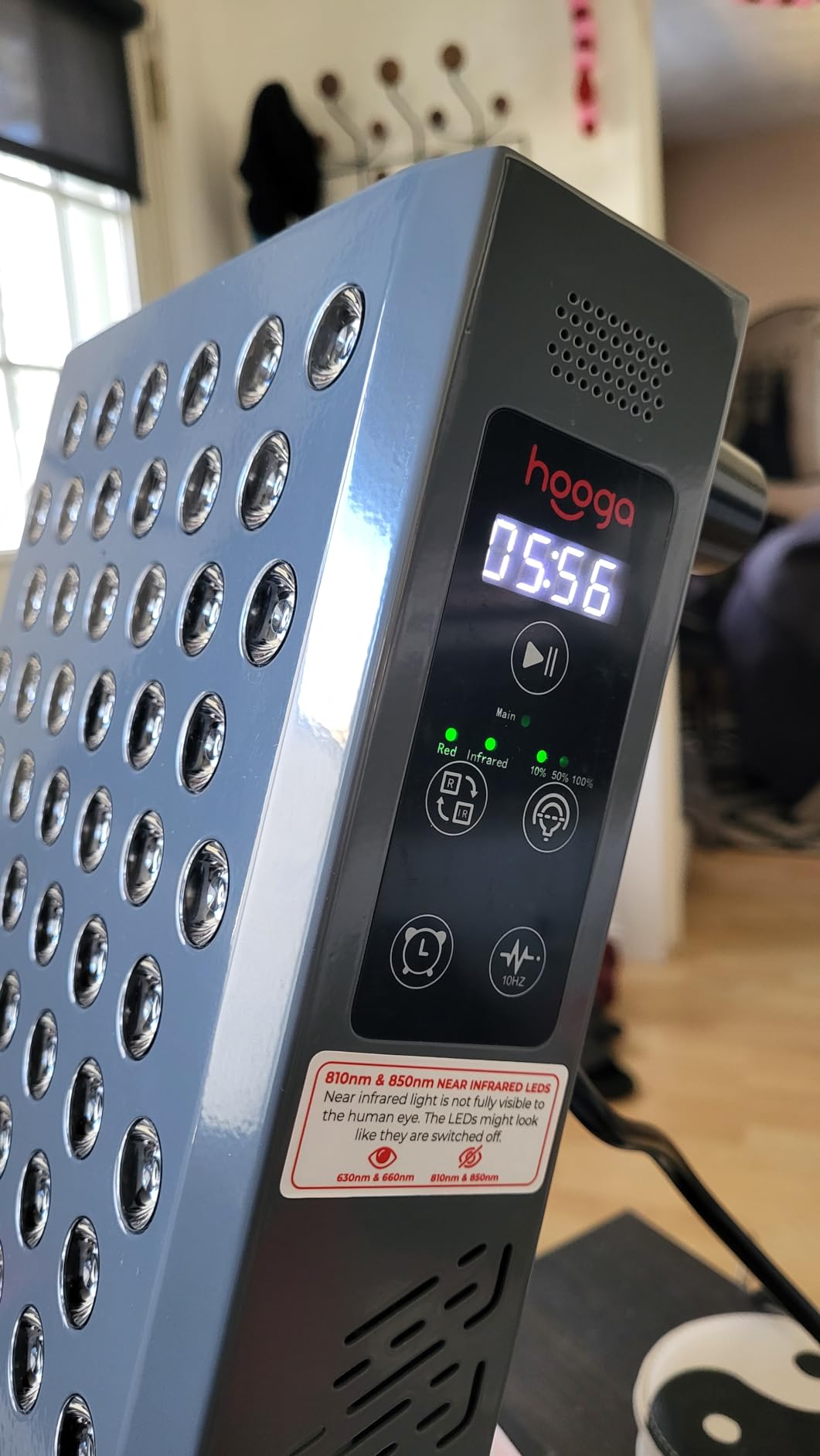
The front-facing touchscreen lets you:
- Set a session timer (I usually run 10-20 minute sessions)
- Control red and near-infrared brightness independently — this is genuinely useful because you can run NIR-only sessions for deeper tissue work without the visible red glow
- Toggle pulse mode at 10Hz, which some researchers have explored for neurological applications
- Adjust brightness at 10%, 50%, or 100%
The independent channel control is the feature I actually use the most. Morning skin sessions: I’ll run red light heavier. Evening recovery sessions after training: heavier on the NIR side. It’s a simple toggle but it changes how flexible the panel is for different use cases.
Key Features Overview
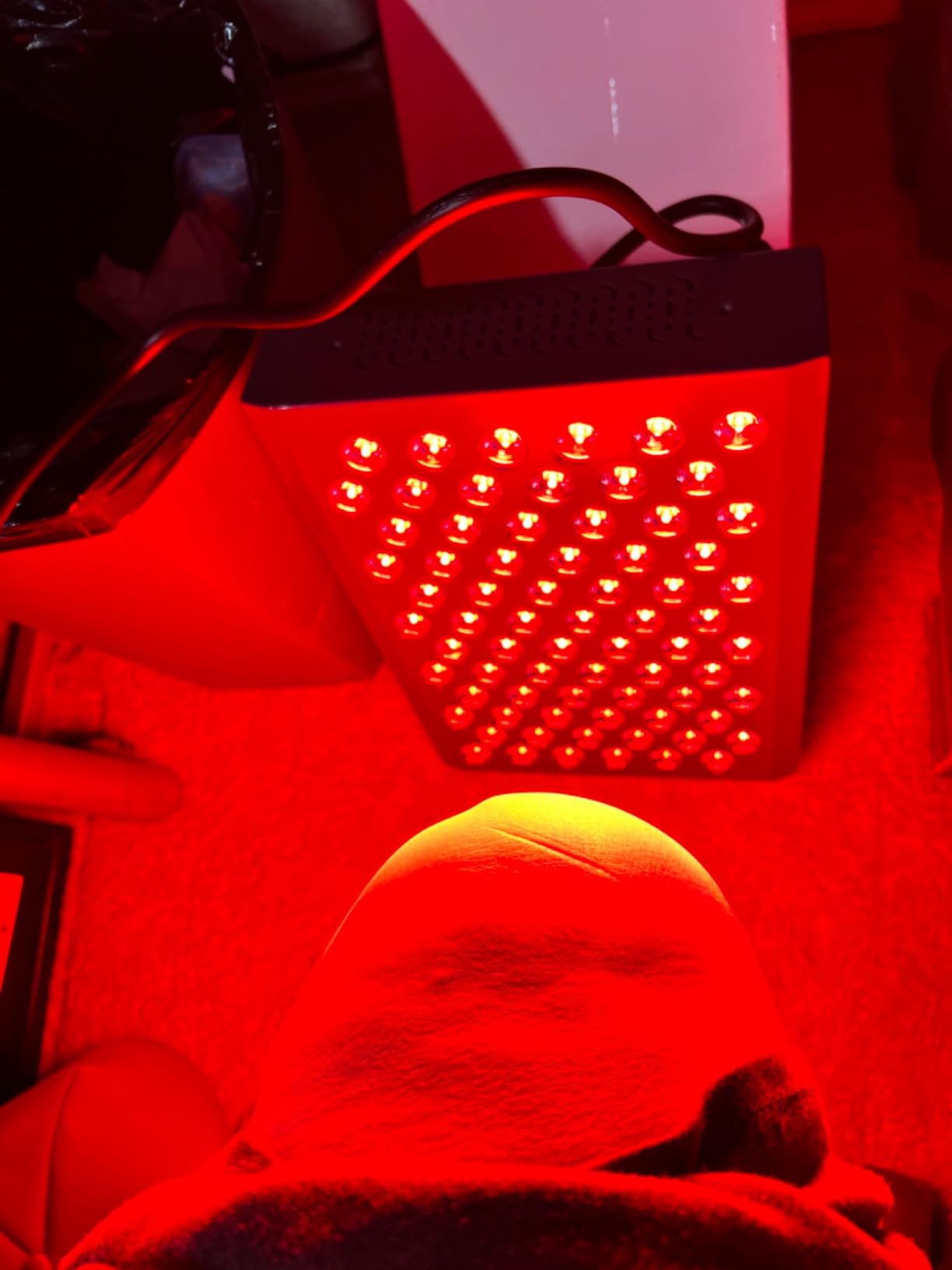
A quick rundown of what you’re getting:
Zero flicker technology. Flicker from LED panels can cause eye strain with extended sessions. The ULTRA1500 uses flicker-free driver technology. Not glamorous, but important for anyone doing daily sessions over months.
Low EMF output. EMF concerns are a frequent topic in this space. The panel is designed to minimize EMF emissions — Hooga publishes third-party testing data on request.
Modular connectivity. You can daisy-chain multiple ULTRA panels together for expanded coverage. If you eventually want full-body top-to-bottom coverage, you’re not buying an entirely new system.
3-year warranty + 60-day trial. The 60-day trial is meaningful on a $1,399 purchase. If it doesn’t work for your use case, you have an out.
Designed for Home Use, Not Just Gym Showoffs
One thing I’ll say about this panel vs. some of the fancier options: Hooga clearly built this for people who are actually going to use it daily in a regular home, not for Instagram content.
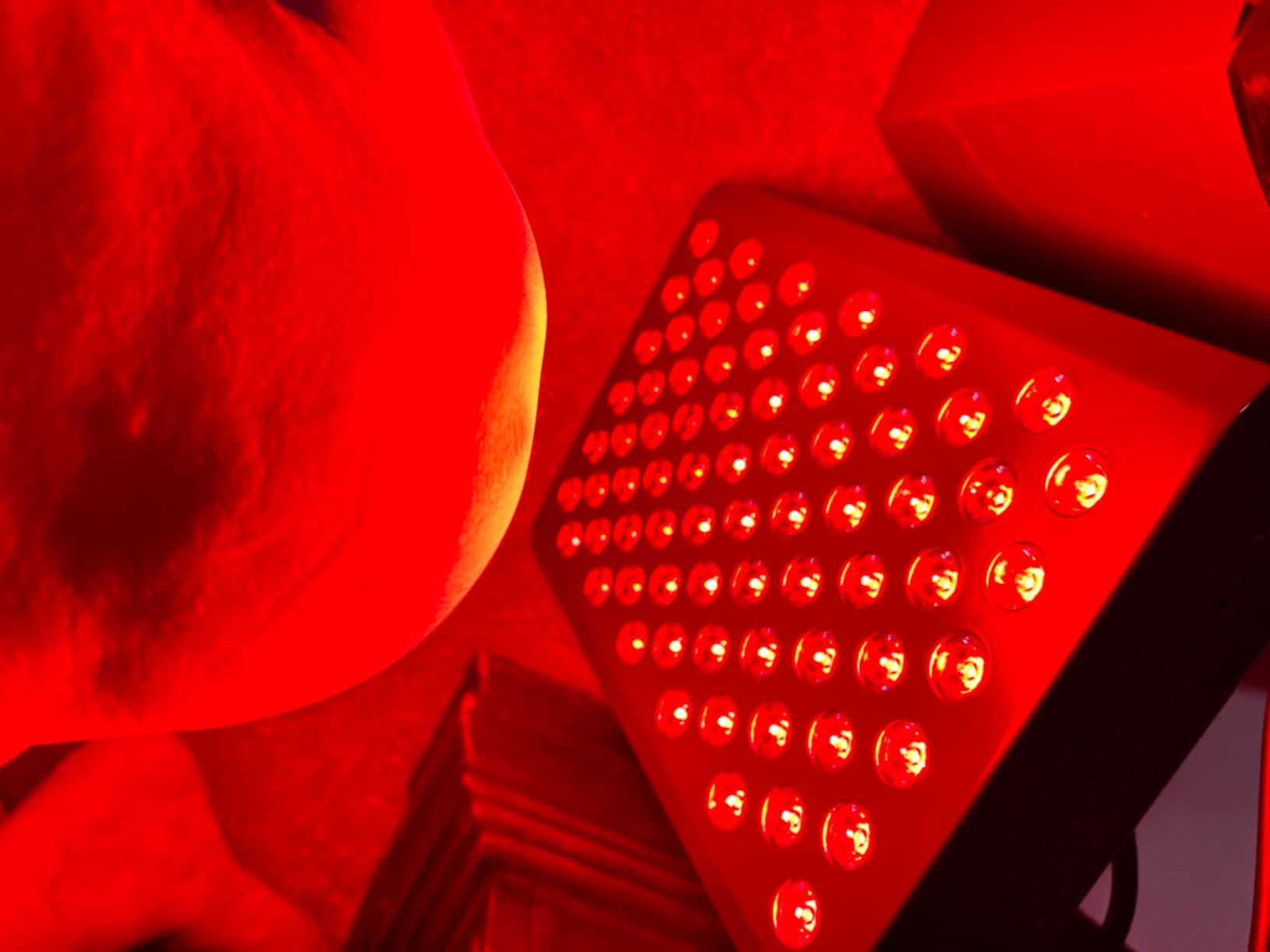
The mounting hardware is straightforward. You can wall-mount it, use a stand (sold separately), or just prop it up. The 60-degree beam angle means you don’t need to be within inches of it for effective coverage — you can stand back 12+ inches and still get useful irradiance across a wide area.
Real User Feedback: What People Are Actually Saying
I looked through a bunch of verified purchase reviews, and a few themes kept coming up.
One reviewer who’d been doing in-office red light treatments for melasma said she noticed results after about a month of home use, with her skin appearing brighter and slightly firmer. She compared it favorably to face masks and smaller panels, calling those “light weight and ineffective” by comparison.
Another reviewer with an autoimmune condition was using it for joint pain management. She mentioned it’s not cheap, but called it solidly built and “not cheaply made at all” — and that it was ready to use straight out of the box.
The pattern I noticed: people who’d done research before buying, understood what they were getting, and used it consistently were generally satisfied. The complaints (when they existed) were usually about the price point and the panel not covering the full body in one shot.
How to Use the ULTRA1500: Session Guidelines
This isn’t medical advice — consult a healthcare provider if you have specific conditions. But here’s how most people structure sessions with a panel like this:
Session duration: 10-20 minutes per body area is the most commonly cited range. The research on photobiomodulation generally shows a dose-response curve — more isn’t always better, and there’s a point of diminishing returns.
Distance: I do most sessions at 6-12 inches. At 6 inches you get high irradiance for shorter sessions. At 12 inches you get broader coverage, which is better for larger muscle groups.
Frequency: Most people see best results with daily or near-daily use. This is where having a home panel pays off versus clinic visits — consistency is what drives results, and clinic scheduling makes that hard.
Eye protection: Near-infrared is invisible to the naked eye but still interacts with retinal tissue. Eye protection is recommended, especially for sessions where your face is near the panel.

Who Should Buy the Hooga ULTRA1500
Good fit if:
- You want a serious home panel, not a starter device
- You’re interested in both skin applications (red light) and deeper tissue work (NIR)
- You plan to use it consistently — this is a tool, not a magic fix
- You want independent channel control for customizable sessions
- You’re considering going full-body eventually and want a modular system
Not a great fit if:
- You want a budget entry point to test the concept (look at their smaller panels first)
- You need silent operation
- You want true head-to-toe coverage in one session without a second panel
- You’re expecting clinical-level results without clinical-level consistency
Price and Value
At $1,399, the ULTRA1500 is in the premium home category. It’s not the most expensive panel on the market, but it’s far from cheap.
The math that makes sense for some people: clinical red light therapy sessions typically run $40-100 per visit. If you’re doing 3x per week, that’s $500-1,500 per month. A panel that pays for itself in one to three months of consistent use changes the calculus.
The 60-day trial removes most of the purchasing risk. The 3-year warranty removes the “what if it breaks” anxiety.
See current pricing and check for discount codes on Amazon
Alternatives Worth Considering
Before buying at this price point, it’s worth knowing what else is out there:
Hooga HG300 / HG500 — Hooga’s smaller panels run $150-400 and are a reasonable starting point if you’re unsure whether RLT works for you. Less power, smaller coverage, but the same wavelength approach.
Mito Red Light MitoMEGA — A competing full-body panel in a similar price range. Generally good reputation, slightly different build approach.
Joovv Solo 3.0 — Premium brand, significantly more expensive, modular system. Joovv is probably the most recognized name in this space but you pay a brand premium.
Hooga sits in a reasonable middle ground: better output and build quality than budget panels, similar specs to Joovv at a meaningfully lower price.
Final Verdict
The Hooga ULTRA1500 is a well-built, high-irradiance full-body panel with genuine versatility — the quad-chip LEDs, independent channel control, and modular design separate it from the crowded budget market. At $1,399, it’s a significant investment, and it’s not the right purchase for someone who wants to dip a toe in. But if you’ve done the research, you understand what red light therapy is and isn’t, and you’re ready to commit to consistent daily use, this panel delivers what it promises.
The 60-day return window means you can try it with real stakes. That’s about as good as it gets for a purchase at this price.
Check the Hooga ULTRA1500 on Amazon — current price and availability
Disclosure: This post contains affiliate links. If you purchase through these links, I may earn a commission at no additional cost to you. I only recommend products I’ve personally evaluated.
This content is for informational purposes only and is not intended as medical advice. Consult a healthcare professional before starting any new wellness regimen.