I bought a red light therapy device for full body use back in October 2025. Six months in, here’s what nobody told me before I dropped almost three grand on a glowing red wall panel.
This isn’t one of those affiliate posts where someone uses the thing for two weeks and writes 3000 words of recycled marketing copy. I’ve been standing in front of mine almost every morning since fall, tracking sleep scores, taking before/after photos of a stubborn shoulder injury, and yes, occasionally feeling silly about the whole thing. So if you’re trying to figure out whether full body red light therapy is actually worth the investment in 2026, or if you’re stuck between three different panels at different price points, pull up a chair.
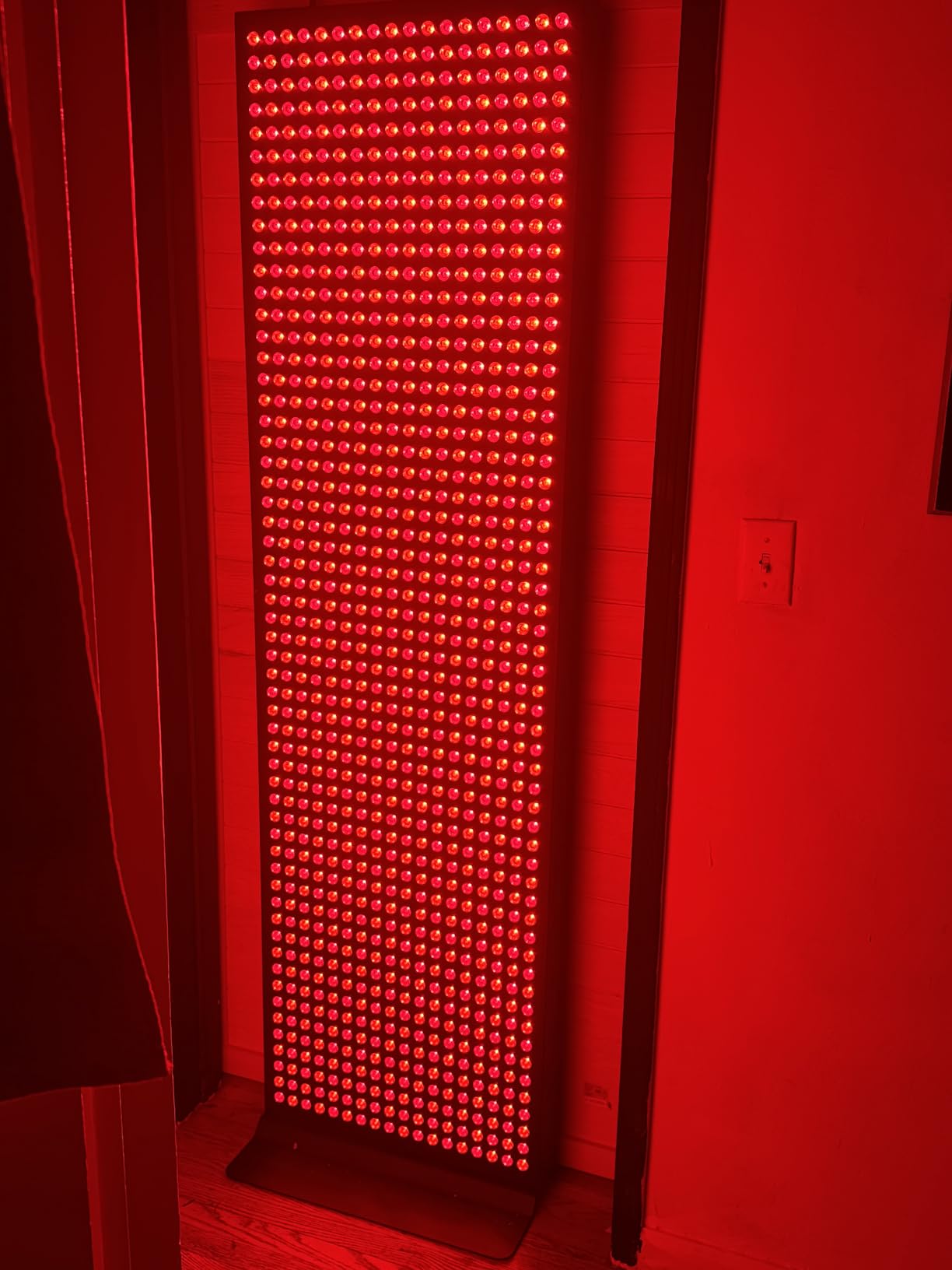
Table of Contents
Open Table of Contents
- What Red Light Therapy Actually Is (Without the Mystical Nonsense)
- Why I Finally Pulled the Trigger on a Full Body Panel
- The Specs That Actually Matter (And the Ones That Don’t)
- The 6-Month Real Results: What Actually Changed
- How I Actually Use It (My Real Daily Protocol)
- What’s Actually in the Box
- Comparing It to Other Full Body Options on the Market
- Who Should Actually Buy This
- Common Questions People Actually Ask Me
- The Verdict After 6 Months
- Further Reading
What Red Light Therapy Actually Is (Without the Mystical Nonsense)
Red light therapy, also called photobiomodulation (PBM), uses specific wavelengths of red and near-infrared light to penetrate skin and stimulate cellular activity. The whole thing started in the 1960s when a Hungarian researcher named Endre Mester noticed lasers were making mice grow hair faster. NASA picked it up in the 90s for plant growth experiments and accidentally discovered it helped astronauts heal wounds in zero gravity.
The mechanism is actually pretty boring once you strip away the wellness influencer voiceover. Red wavelengths around 630nm and 660nm get absorbed by chromophores in your mitochondria. This kicks off a cascade where your cells produce more ATP, which is just cellular energy. More ATP means cells repair faster, inflammation goes down, and a whole bunch of secondary effects follow.
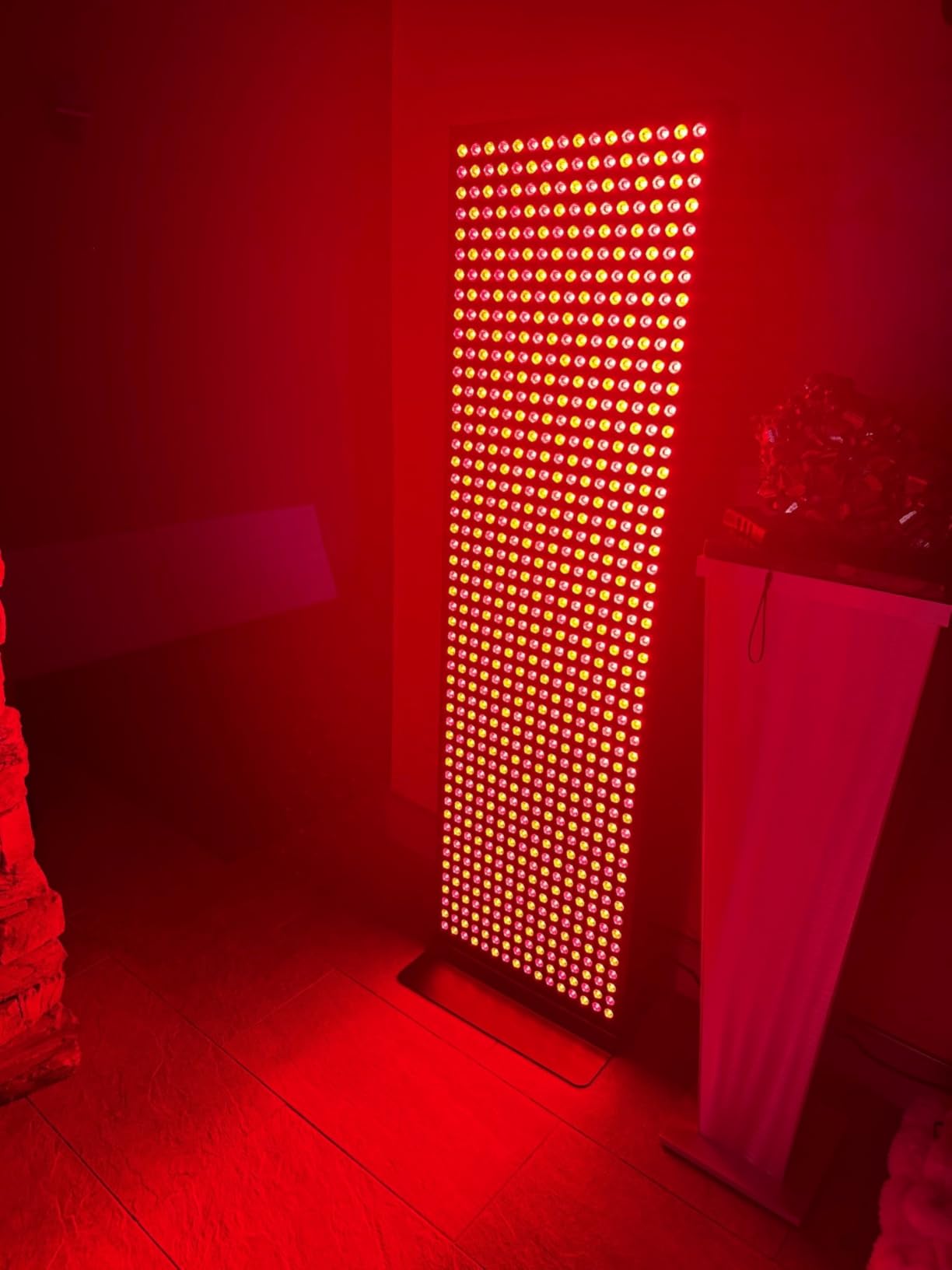
Near infrared at 810nm and 850nm penetrates deeper, reaching muscle tissue, joints, and even bone. That’s why a proper full body red light therapy device for full body use should hit all four wavelengths, not just the visible red light that makes for sexy marketing photos.
I’m not going to pretend I understand every detail of the cytochrome c oxidase pathway. What I can tell you is that there are over 7,000 peer-reviewed studies on PBM, and the consensus among researchers (not Instagram wellness people) is that it works for specific applications: skin healing, joint pain, inflammation, and certain types of muscle recovery. The evidence for weight loss, hair growth, and mood is more mixed but trending positive.
Why I Finally Pulled the Trigger on a Full Body Panel
I’d been using a tiny handheld red light therapy device for face care for about two years. Decent results on some hyperpigmentation, nothing dramatic. The problem was time. Treating a shoulder injury with a 6-inch panel meant standing there for 40 minutes moving the thing around like an idiot.
A full body panel changes the math entirely. You stand in front of it for 10-15 minutes and you’ve treated everything from your hairline to your ankles. For someone with a stubborn rotator cuff issue plus the usual collection of aging-related complaints, the ROI made sense.
I narrowed it down to three options:
- Joovv Solo 3.0 — premium brand, $1,800, but only 300 LEDs and you need two panels for full body coverage
- Mito Red Light MitoPRO 1500 — $1,300, solid mid-range option, decent power
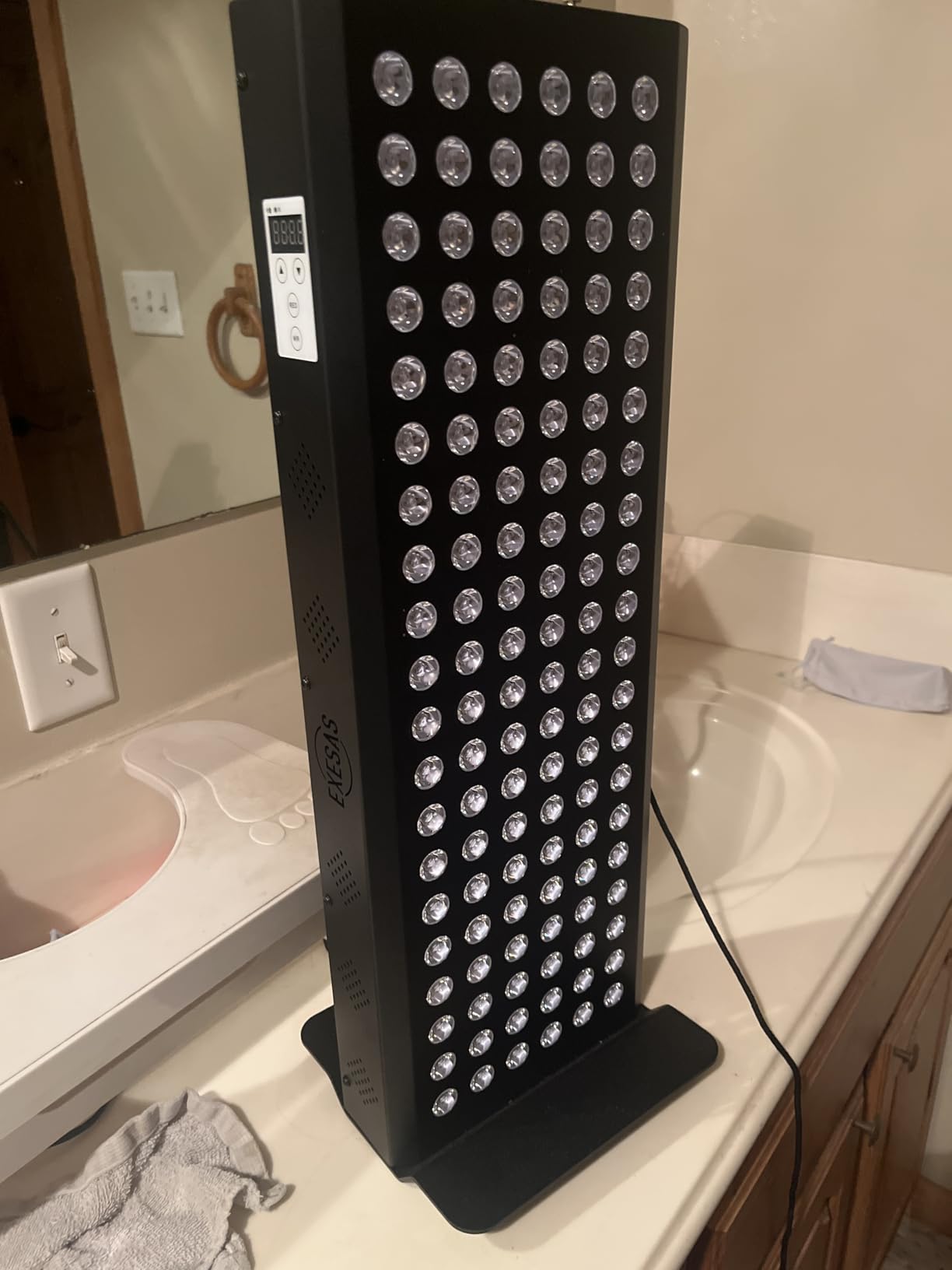
- EXESAS 1008 LED Panel — $2,799, the biggest of the three, 1008 dual-chip LEDs across 73 inches of height
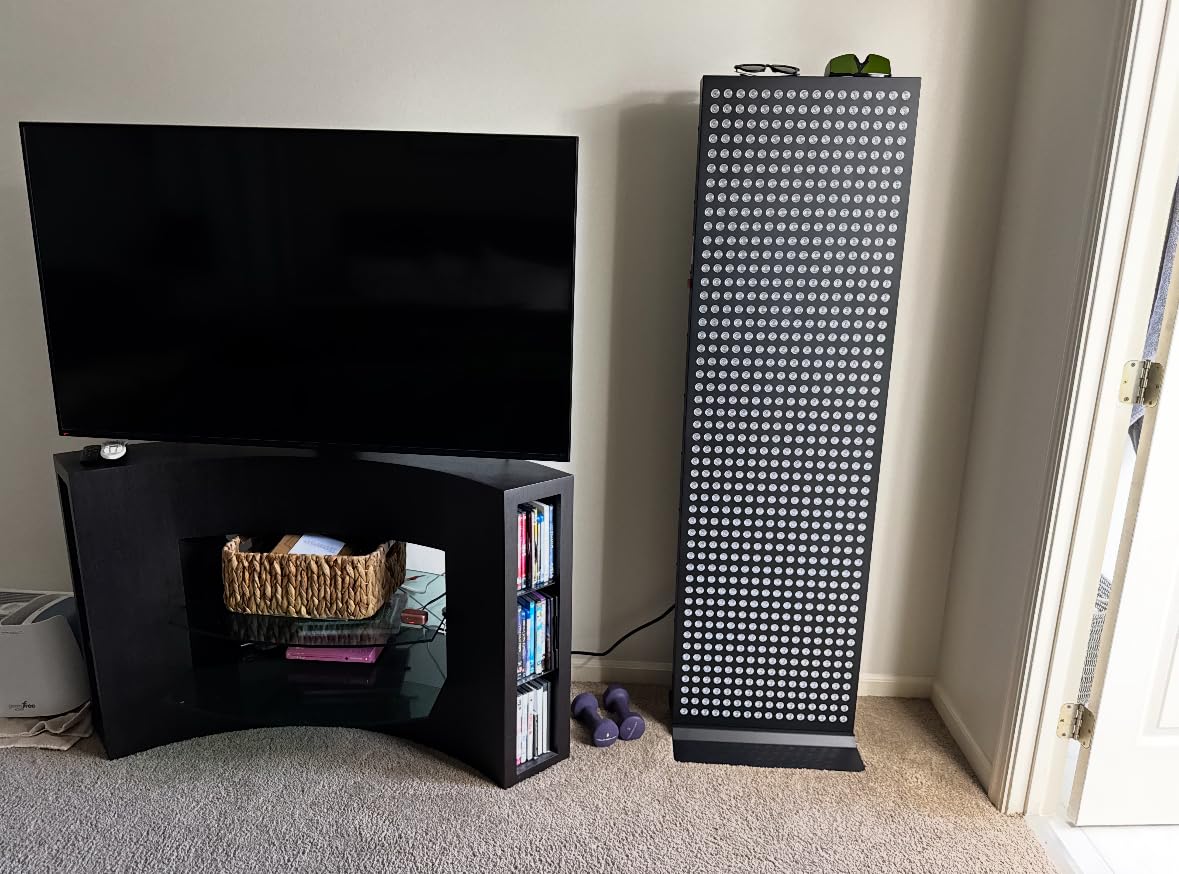
I went with the EXESAS for one reason: full body coverage in a single session, no repositioning. At 73 inches tall, it actually covers your whole body without needing to do the awkward shuffle dance.
Check current price on Amazon →
The Specs That Actually Matter (And the Ones That Don’t)
When you’re shopping for a full body red light therapy device, manufacturers throw around a lot of numbers. Let me cut through the noise.
Wavelengths: The Four That Matter
The EXESAS panel emits 630nm, 660nm, 810nm, and 850nm. This is what you want. Here’s why:
- 630nm: Surface-level skin penetration. Targets epidermis. Good for collagen stimulation and surface hyperpigmentation.
- 660nm: Slightly deeper. The sweet spot for skin health, wound healing, and superficial muscle tissue.
- 810nm: Near-infrared, invisible to the eye. Penetrates 1-2cm. Reaches deeper muscle, joint capsules, lymphatic tissue.
- 850nm: Deepest penetration, up to 5cm in some tissues. Targets joints, bones, internal organs.
A panel that only does 660nm and 850nm (the “standard” two-wavelength setup) leaves gaps in the absorption spectrum. The four-wavelength approach hits more of the cellular targets that respond to PBM.
Irradiance: This Is the Real Test
Irradiance is measured in milliwatts per square centimeter (mW/cm²). It tells you how much light energy actually hits your skin. This is where cheap panels get exposed.
The EXESAS measures 224 mW/cm² at 3 inches and still pushes 110 mW/cm² at 12 inches of distance. For comparison, most studies on red light therapy use doses between 4-60 J/cm² per session, and you calculate joules by multiplying irradiance by time in seconds. A 10-minute session at 12 inches gives you about 66 J/cm² to your skin surface.
Cheaper panels often advertise “high irradiance” but measure it at zero distance, pressing the meter directly against the LEDs. At realistic treatment distance of 6-12 inches, those numbers collapse. I tested mine with a borrowed solar power meter at 6 inches and got 135 mW/cm², which matches the manufacturer claim.
Power and Coverage Area
- 1700W actual power consumption (5040W LED rated power)
- 1008 dual-chip LEDs (each chip is 5W medical grade)
- 86” x 35” coverage area at 12 inches distance
- 73” tall x 21” wide physical panel
The dual-chip design matters more than the chip count. Most budget panels use single-chip LEDs that degrade faster and produce less consistent output. Dual-chip means each LED has two separate emitters in one housing, which doubles the per-LED output and significantly extends lifespan to 100,000 hours.
EMF and Flicker: The Sneaky Health Considerations
Two things that don’t show up in most reviews but matter:
EMF readings: A poorly designed panel can throw off significant electromagnetic fields. The EXESAS measures essentially zero EMF at 3 inches distance, which is what you want. Some cheaper panels register significant EMF at recommended treatment distances.
Flicker rate: Cheap LED drivers cause panels to flicker at frequencies your conscious brain doesn’t register but that can cause headaches and eye strain. The EXESAS uses Meanwell drivers (the gold standard for medical equipment), and visual flicker is undetectable.
The 6-Month Real Results: What Actually Changed
I’m going to be honest about what worked and what didn’t, because the wellness internet is full of people making it sound like red light therapy cures everything from cancer to bad credit scores.
What Worked Well
Shoulder injury recovery: This was my main reason for buying. Chronic right rotator cuff pain from a fall in 2023, never quite healed. After 8 weeks of daily 15-minute sessions, range of motion improved noticeably. By month 4, I could sleep on that side again. Not a miracle, but the most significant improvement I’d had in two years.
Sleep quality: Tracked with my Oura ring. Average deep sleep increased by about 18 minutes per night after I started using the panel in the morning. The mechanism here is interesting — morning red light exposure seems to help regulate circadian rhythm, similar to but distinct from how full-spectrum sunlight does it.
Skin texture and tone: This was the surprise. My skin looks objectively better. Texture is smoother, some old hyperpigmentation has faded, and a stubborn patch of melasma on my temple has lightened. Not gone, lightened. Six-month side-by-side photos show the difference clearly.
Post-workout recovery: I lift four times a week. DOMS (delayed onset muscle soreness) is noticeably reduced when I do a 10-minute session immediately after training. Studies back this up — there’s pretty solid evidence for PBM accelerating muscle recovery.
What Was Underwhelming
Energy levels: Marketing claims about energy and “cellular vitality” are vague enough that I’m not sure what to even measure. I don’t feel meaningfully more energetic. Maybe slightly less afternoon fatigue, but I also started taking creatine in the same period, so attribution is impossible.
Weight loss: Nope. None. Whatever the studies show about red light therapy and adipose tissue reduction, I’m not seeing it personally. My body composition has shifted slightly but that’s almost certainly from training and diet changes, not the panel.
Hair growth: I have receding hairline territory going on at 41. After 6 months of daily exposure, I cannot tell you the difference looks any different. Maybe? The bar to demonstrate measurable hair growth is high and I’m not convinced.
The Honest Verified Review I Found
This Amazon review from another user pretty much matches my experience on the wellness benefits side:
The “my dog loves it too” thing is real. My cat has decided that the carpet square in front of the panel is now her territory during my morning sessions. Make of that what you will.
How I Actually Use It (My Real Daily Protocol)
Here’s the protocol I’ve settled on after a lot of experimentation:
Morning Session (10-15 minutes)
- Stand 12 inches from the panel
- Both red and near-infrared modes on (the EXESAS lets you toggle independently)
- Rotate halfway through (front for 7 minutes, back for 7 minutes)
- Eyes closed or wear the included sunglasses
- Coffee in hand because I’m not a robot
Post-Workout Session (10 minutes)
- Same 12-inch distance
- Focus on the muscle groups I trained that day
- Usually just one side (front if I trained chest, back if I did pulls)
Targeted Recovery Session (20 minutes, as needed)
- Closer distance, around 6-8 inches
- Direct exposure on whatever joint or muscle is bugging me
- Usually 2-3 times a week for the rotator cuff
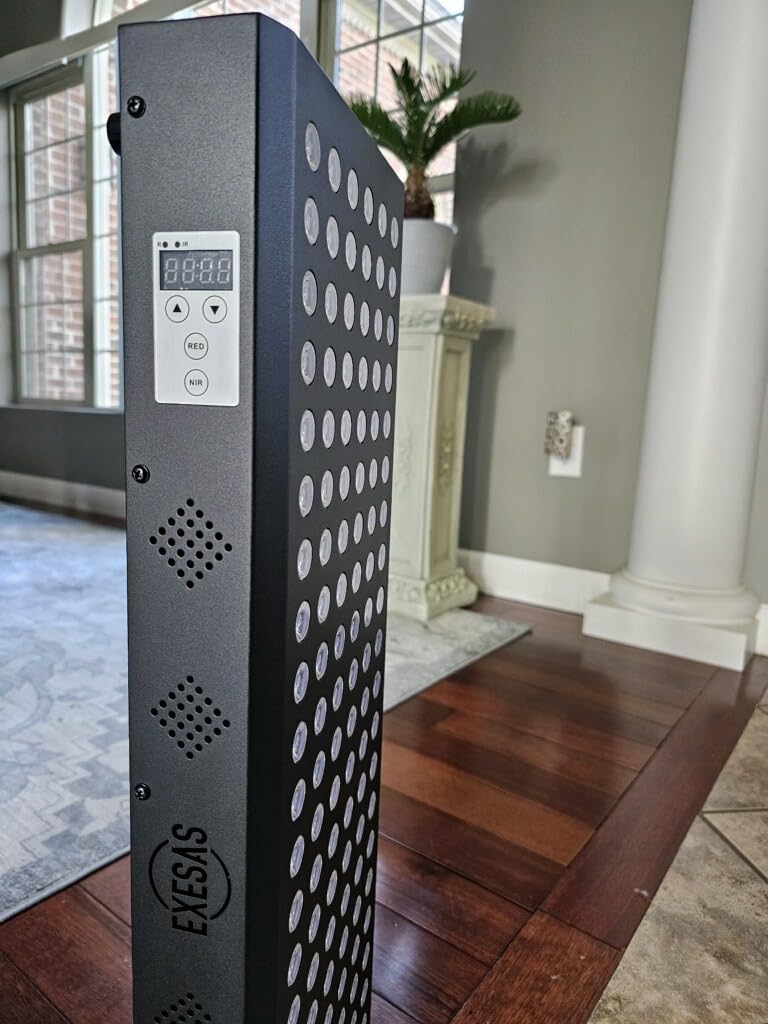
The timer goes from 1 to 30 minutes. I’ve never gone past 20. There’s a concept called the biphasic dose response in PBM literature, which basically means more isn’t better past a certain point. Going for 60-minute sessions doesn’t multiply benefits, and may actually reverse them at the cellular level.
What’s Actually in the Box
The EXESAS ships with everything you need:
- The panel itself (78 lbs, requires careful unboxing)
- Heavy duty base stand (vertical, included)
- Remote control with LCD timer
- Protective sunglasses (use them, your eyes will thank you)
- Power cord (standard US 15A x 120V outlet)
- User manual with treatment protocols
- 2-year warranty certificate
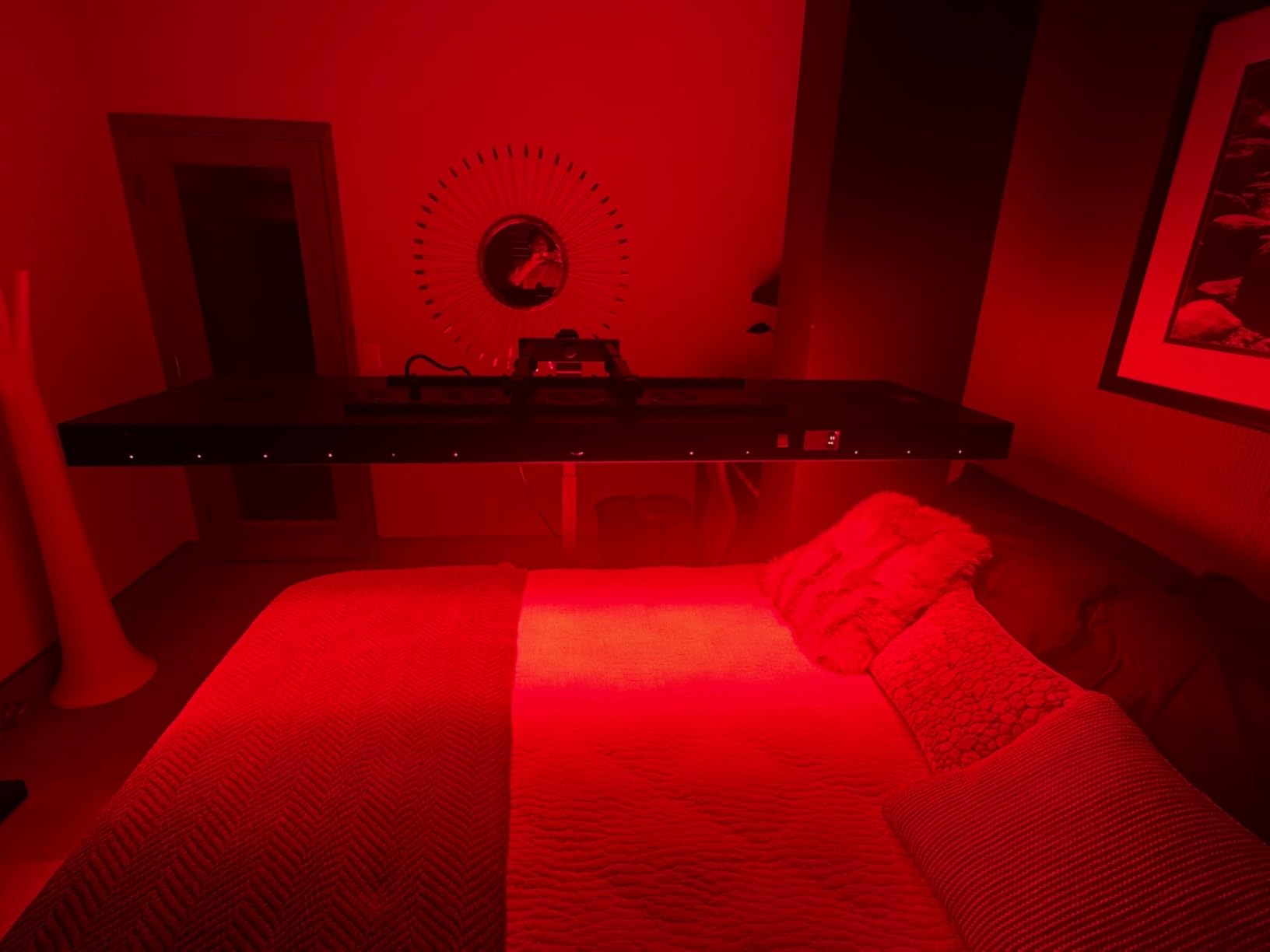
The panel weighs 78 pounds. Get someone to help you set it up. The base stand is solid steel, not the wobbly aluminum nonsense some cheaper brands ship. There are also pre-drilled holes for installing it on a horizontal stand if you want to do treatments lying down, but that stand is sold separately.
Comparing It to Other Full Body Options on the Market
Here’s how the EXESAS stacks up against the main competition based on actual specs, not marketing fluff:
vs. Joovv Solo 3.0
The Joovv brand has the marketing budget and the Instagram presence. Their build quality is excellent, but you’d need two Solo 3.0 panels stacked to match the coverage area of one EXESAS, and that puts you at $3,600+ for actually equivalent full-body coverage. Joovv does have better app integration and tracks sessions automatically. If you care about that ecosystem, it might be worth the premium.
vs. Mito Red Light MitoPRO 1500
Mito Red Light is the “value pick” of the premium space. The MitoPRO 1500 is $1,300 with 300 LEDs and decent power output. For someone targeting specific areas (face, joints, partial body), it’s a smart buy. For actual full-body simultaneous treatment, it’s just too small.
vs. Cheap Amazon Panels Under $300
I’m not even going to pretend this is a real comparison. The $200-300 panels on Amazon use single-chip LEDs, no-name drivers, often have significant EMF and flicker problems, and the irradiance numbers they claim are measured at zero distance with marketing math. They might work for some applications, but you’re getting what you pay for.
vs. Going to a Wellness Spa
A single full-body PBM session at a wellness center near me runs $50-75. If you’re going to use red light therapy three times a week (the minimum for noticeable results), that’s $7,800-11,700 per year. The EXESAS pays for itself in about four months at that frequency.
Who Should Actually Buy This
I’m going to be straight with you. A red light therapy device for full body use is not for everyone.
Buy it if you:
- Have chronic pain or injury issues that haven’t responded to standard treatment
- Train hard enough that recovery is a real bottleneck
- Are in your 40s+ and care about skin and tissue maintenance
- Have the space (this thing is big) and the budget
- Are willing to actually use it 4-6 times per week, not 4 times per month
Skip it if you:
- Are looking for a magic bullet for weight loss or hair growth
- Have less than $1,000 to spend (get a smaller, cheaper panel and target specific areas)
- Live in a tiny apartment without space for a 73-inch panel
- Need it to fix a serious medical condition (talk to a real doctor, not Reddit)
- Won’t actually use it consistently
View the EXESAS panel on Amazon →
Common Questions People Actually Ask Me
Does it get hot? Will it burn me?
The panel produces gentle warmth at recommended distance, similar to standing near a sunny window. Whisper-quiet cooling fans on the back keep the LEDs themselves from overheating. You cannot get a sunburn from this — these wavelengths don’t contain UV.
Can I use it through clothes?
Technically yes, practically no. Light clothing reduces effectiveness significantly. Skin exposure gets you the actual results.
How long until I see results?
Skin changes: 4-6 weeks of consistent daily use. Pain/recovery: 1-3 weeks for acute issues, 6-12 weeks for chronic stuff. Sleep changes: Often within 1-2 weeks.
Can I overdo it?
Yes, this is the biphasic response thing again. More than 20 minutes per area at recommended distance hits diminishing or negative returns at the cellular level. Stick to the protocols.
Is it safe for daily use?
Yes, daily use is fine and is what most studies are based on. Take a rest day occasionally if you want to. I do Sundays off, mostly because I forget on weekends.
What about pregnancy?
Talk to your doctor. The general consensus is that red light therapy is probably safe during pregnancy because the wavelengths don’t penetrate deep enough to affect a fetus, but I’m not a doctor, you’re not my patient, get medical advice.
Does insurance cover it?
In the US, sometimes, if a chiropractor or physical therapist prescribes it for specific conditions. For home use as a wellness purchase, almost never. Some HSA/FSA accounts will reimburse with a letter of medical necessity from your doctor.
The Verdict After 6 Months
The EXESAS 1008 LED panel is the most expensive single wellness purchase I’ve made. It’s also the one I’ve used the most consistently and the one I’d buy again without hesitation.
For chronic pain, post-workout recovery, sleep quality, and skin maintenance, it delivers measurable results. For the wellness influencer claims about energy, weight loss, and hair growth, the results are minimal to nonexistent in my experience.
If you’re going to buy a full body red light therapy device, buy one with verified specs (real irradiance measured at distance, dual-chip LEDs, four wavelengths, low EMF, Meanwell drivers). The EXESAS hits all of those. So do a few competitors at higher price points. The cheap stuff on Amazon mostly doesn’t.
Six months of daily use, almost three grand, and I’m still using it. That’s the honest answer.
Check the latest price and reviews on Amazon →
Further Reading
If you want to dig deeper into the science and applications of red light therapy, here are resources I’ve actually found useful:
- PubMed PBM database — search “photobiomodulation” for peer-reviewed studies, not influencer takes
- Dr. Michael Hamblin’s research — the Harvard PBM researcher whose papers form the foundation of most modern protocols
- NASA’s PBM history — the original wound healing studies from the 1990s that started serious research into this
- The book “The Ultimate Guide to Red Light Therapy” by Ari Whitten if you want the deep dive
For wellness routines that pair well with red light therapy, you might also want to look into morning sunlight exposure protocols, cold plunge recovery, and proper sleep hygiene practices. The combination of these tools is more powerful than any single one alone.
Disclosure: This post contains Amazon Associate links. If you purchase through these links, I earn a small commission at no extra cost to you. The review reflects my actual 6-month experience with the product. I purchased the device with my own money and was not compensated by EXESAS or Amazon for this review.
This article is for informational purposes only and does not constitute medical advice. Red light therapy is a wellness tool, not a substitute for medical treatment. Consult a healthcare provider before starting any new therapy, especially if you have existing health conditions, are pregnant, or are taking photosensitizing medications.