I’ll cut to the chase. I bought the Makiuri Neptune 300 LED panel in January 2026 after spending three weeks lurking in red light therapy forums, comparing irradiance charts, and arguing with myself about whether dropping $840 on a wellness gadget made me a sucker or a smart shopper.
Four months in, I’ve got opinions. Some of them might surprise you, especially if you’ve been reading sponsored content from the bigger brands.
This isn’t going to be a fluff piece. I have no relationship with Makiuri. I bought this thing with my own money, used it almost daily for sixteen weeks, and I’m going to tell you what’s actually true about it, what’s marketing fluff, and whether you should consider it over the $2,000+ panels that dominate Instagram ads.
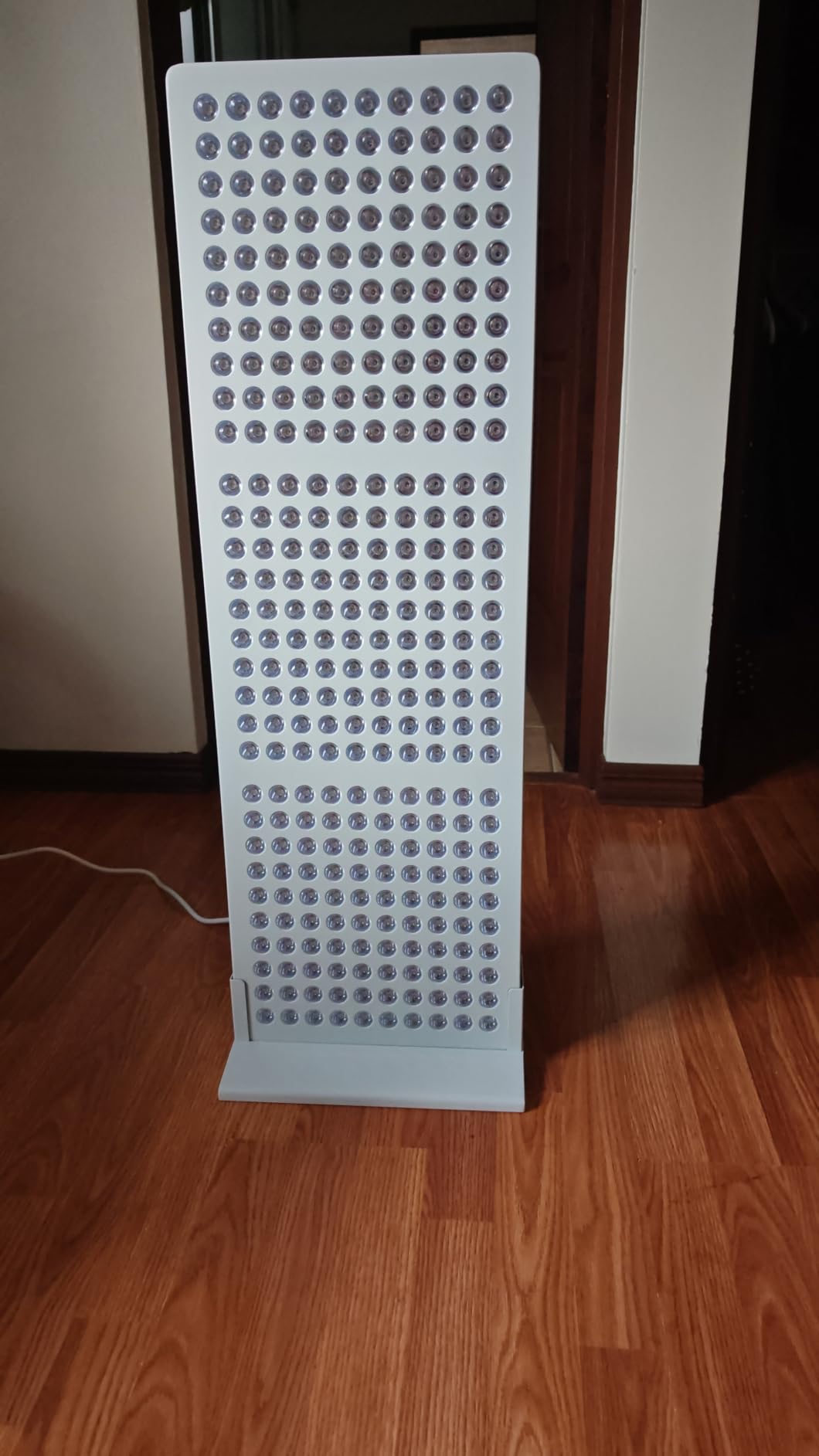
Table of Contents
Open Table of Contents
- Why I Skipped the $2,000+ Panels and Bought a Makiuri
- The Five Wavelength Setup: What Actually Matters Here
- The Specs That Actually Matter (Not the Marketing Numbers)
- My Actual Daily Protocol After 4 Months
- The Real Results After 16 Weeks
- How the Makiuri Compares to the Premium Brands
- The Three Makiuri Models: Which One You Actually Need
- What Annoys Me About This Panel
- Common Questions I Get Asked
- The Setup and First-Week Experience
- Who Should Buy the Makiuri Neptune
- The 4-Month Verdict
- Resources Worth Your Time
Why I Skipped the $2,000+ Panels and Bought a Makiuri
I’d been doing red light therapy at a wellness clinic near my house for about eight months. Forty-five bucks a session, three sessions a week, you do the math. After the first quarter of doing this, my wife pointed out (correctly, as wives do) that I’d already spent more than the cost of a decent home panel.
So I went down the rabbit hole. The premium tier is dominated by three or four brands that all hover between $1,800 and $4,000 for their full-body panels. The reviews are great. The marketing is glossy. The Instagram presence is overwhelming.
But when I started looking at actual specs instead of marketing copy, something interesting came up: a lot of the mid-tier panels in the $700-$900 range are using the same Meanwell drivers, similar dual-chip LED architecture, and comparable irradiance numbers as panels twice the price. The premium you’re paying at $2,500 isn’t always for better light output. Sometimes you’re paying for app integration, brand marketing, and a charging cable that costs $40.
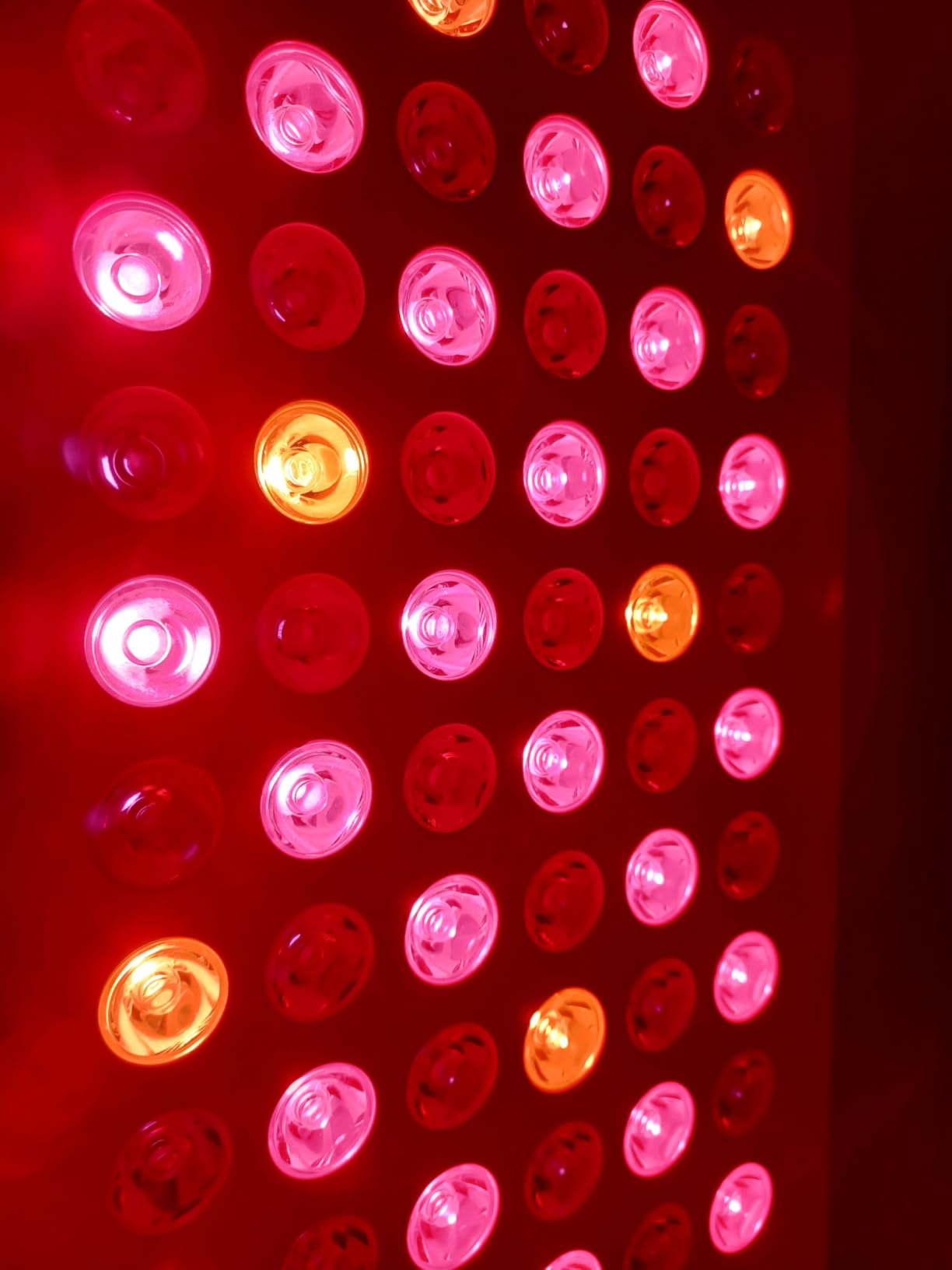
The Makiuri Neptune kept showing up in independent comparison spreadsheets with surprisingly good numbers. 300 dual-chip LEDs. Five wavelengths instead of the standard four. 190 mW/cm² at 3 inches. Zero EMF at 3 inches. No flicker. Twenty-three pounds, which is way more manageable than the 78-pound monsters that dominate the high end.
I figured if I was wrong about the value proposition, I’d return it. Amazon makes that easy.
Check current Makiuri Neptune price on Amazon →
The Five Wavelength Setup: What Actually Matters Here
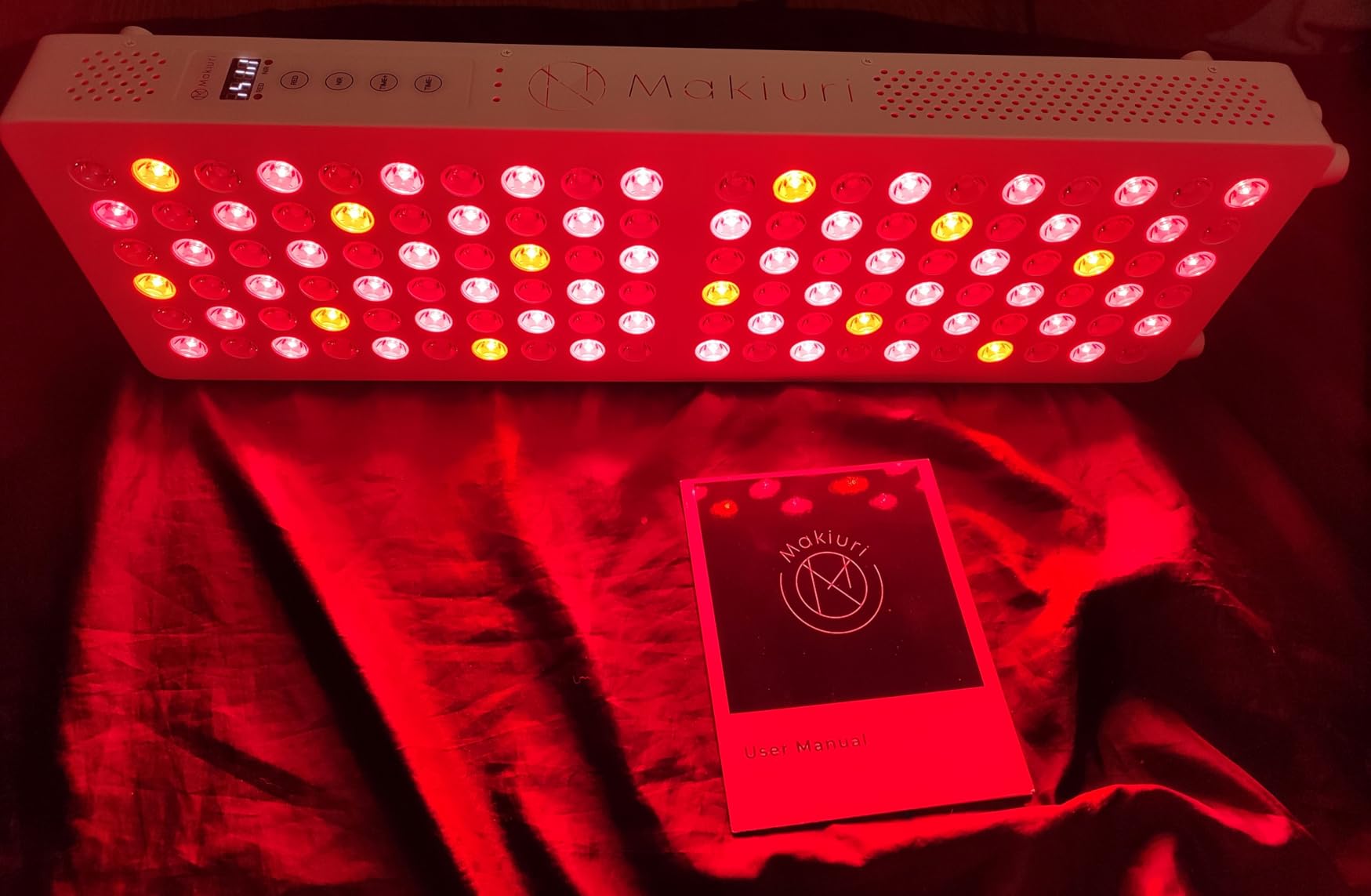
Most red light therapy panels emit four wavelengths. The Makiuri emits five. That extra wavelength is 830nm, sitting right between the standard 810nm and 850nm near-infrared bands.
Here’s the breakdown of what each one does:
- 630nm — surface skin penetration, hits the epidermis, drives collagen response
- 660nm — slightly deeper, the wavelength most studied for wound healing and skin
- 810nm — first level of near-infrared, reaches subcutaneous tissue and superficial muscle
- 830nm — penetrates deeper into muscle and connective tissue, particularly studied for nerve and brain applications
- 850nm — deepest penetration, reaches joints, bones, and even some internal organs
Now, is the extra 830nm wavelength a game-changer? I’m going to be honest. The clinical evidence specifically isolating 830nm as superior to a 810nm/850nm combo is mixed. Some studies show better outcomes for certain neurological applications. Others show no meaningful difference.
But here’s the thing about photobiomodulation. The cellular response curve isn’t a single peak. It’s a broad absorption spectrum with multiple peaks across the red and near-infrared range. More wavelengths means you’re stimulating more chromophores at once. The argument for five wavelengths over four isn’t “830nm is magic.” It’s “you’re spreading energy across more of the absorption spectrum, hitting more cellular targets per session.”
Whether that translates to dramatically better results in your particular case depends on what you’re treating and how your cells respond. For me, with chronic lower back issues from too many years of bad lifting form, the broader spectrum approach felt subjectively more effective than my friend’s Joovv panel that I’d tried previously. Subjectively. I’m not running double-blind trials in my garage.
The Specs That Actually Matter (Not the Marketing Numbers)
Let me give you the specs that determine whether this panel is legitimate or junk dressed up in good packaging.
Power and Output
- 300 dual-chip LEDs — each chip rated 5W
- 190 mW/cm² irradiance at 3 inches distance from skin
- 30° lens beam angle — focused enough for efficiency, wide enough for full body coverage at distance
- Zero EMF measured at 3 inches — important if you care about electromagnetic exposure
- No flicker — uses Meanwell drivers, the medical-grade standard
The 190 mW/cm² number is what matters most. For context, that’s not the absolute highest in the market (some panels claim 220+ mW/cm²), but it’s well above what most clinical studies use for effective dosing. The studies that actually show measurable results in muscle recovery, skin health, and pain reduction generally use doses between 5 and 30 J/cm² per session, and you can hit those numbers with this panel in 5-15 minute sessions easily.
The “more is better” mentality doesn’t really apply here. There’s a biphasic dose response in PBM, where past a certain energy threshold, you actually start getting diminishing or negative returns. A panel that delivers 190 mW/cm² consistently is going to give you the same therapeutic benefit as one delivering 250 mW/cm², you just might run shorter sessions.
Physical Dimensions
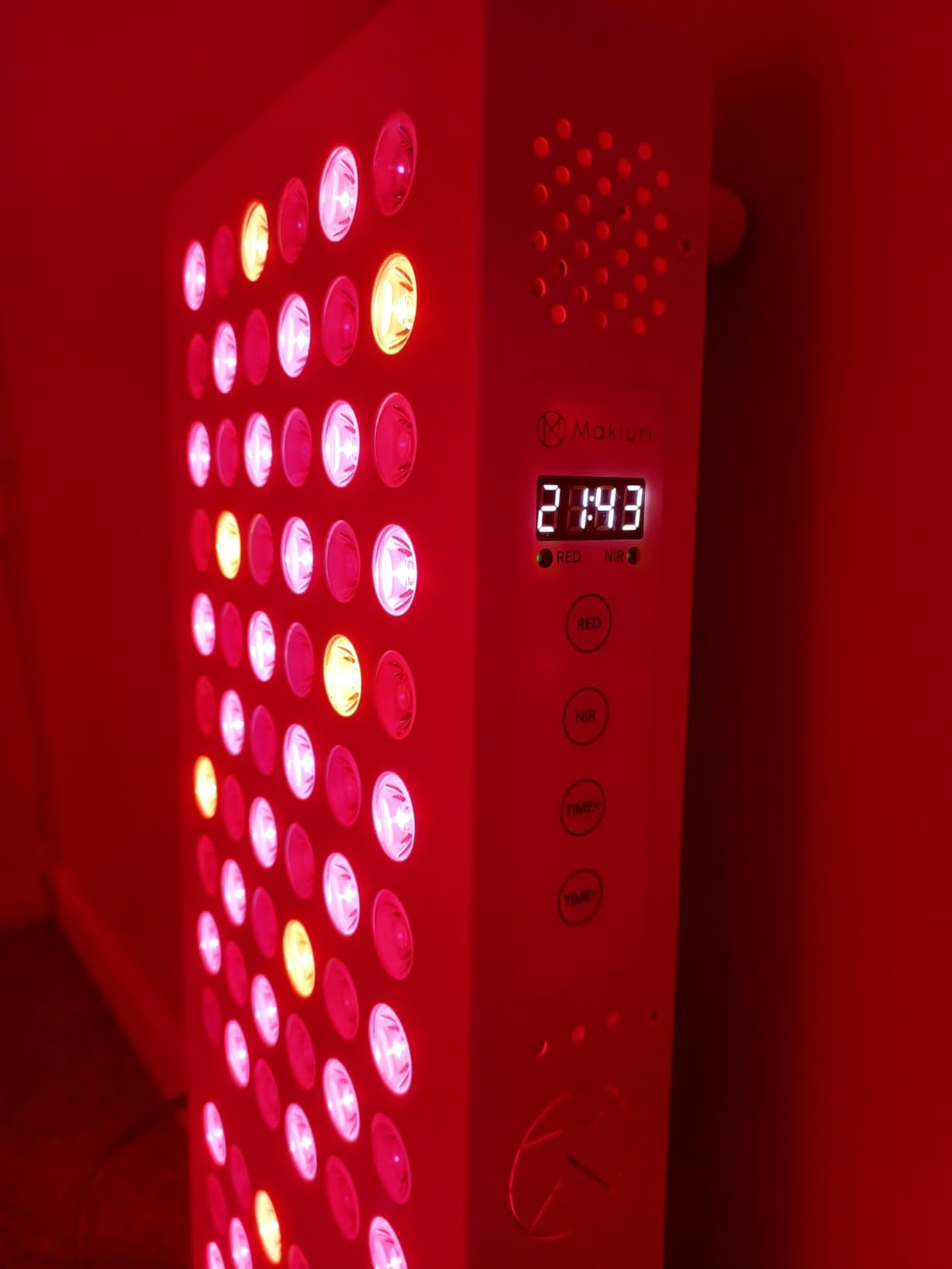
- 36.5 inches tall x 12 inches wide x 3.5 inches thick
- 23 pounds
- LCD timer with 1-30 minute settings
- Independent toggles for red mode, near-infrared mode, or combined
- Built-in cooling fans (whisper quiet, I can confirm)
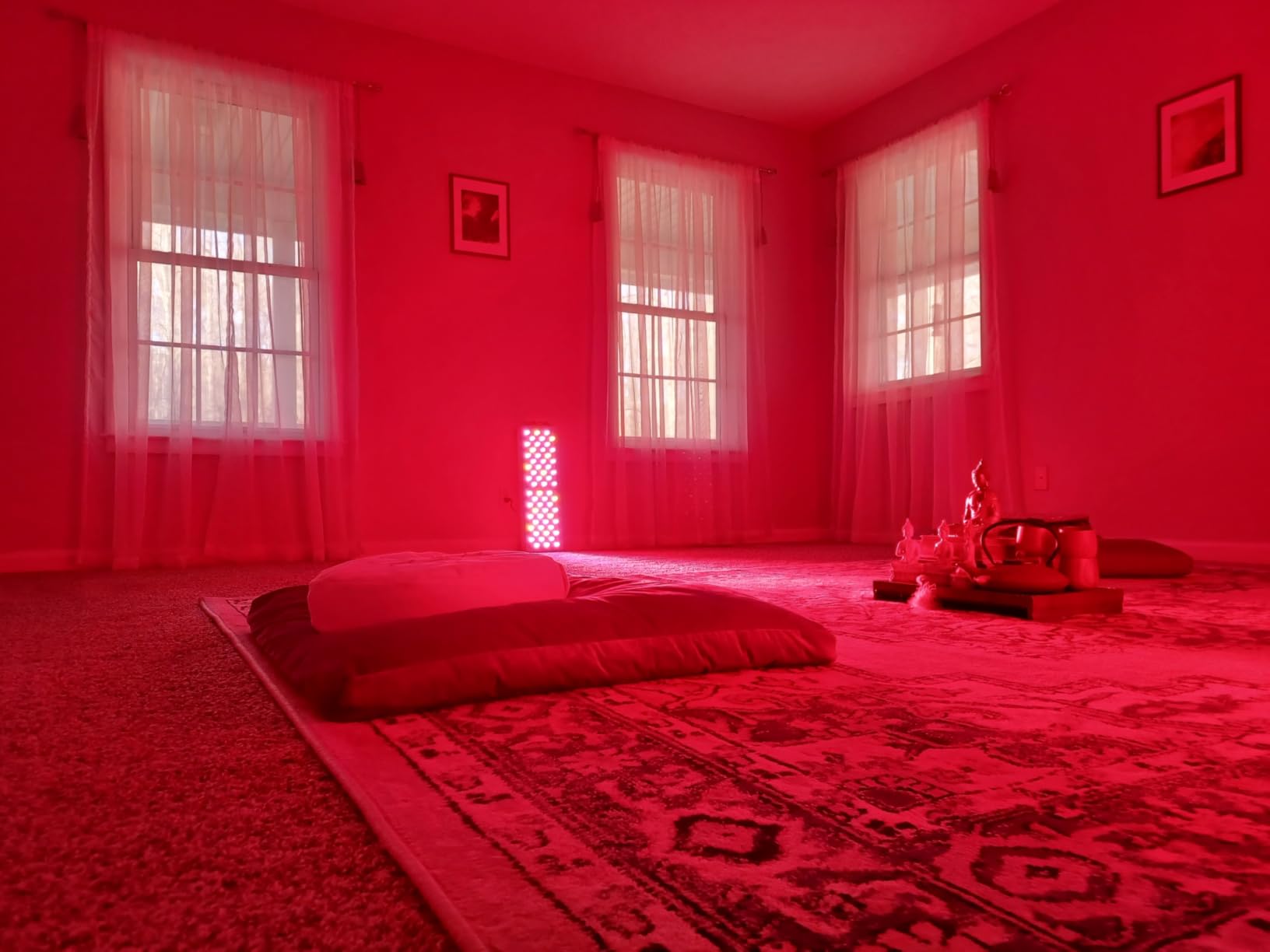
The weight thing matters more than you’d think. The Neptune is something I can pick up and reposition with one hand if I want to. Compare that to the 78-pound full-body monsters that basically have to live in one place forever. If you’re renting, traveling, or just don’t want to dedicate a permanent corner of a room to a hulking metal panel, this is a real consideration.
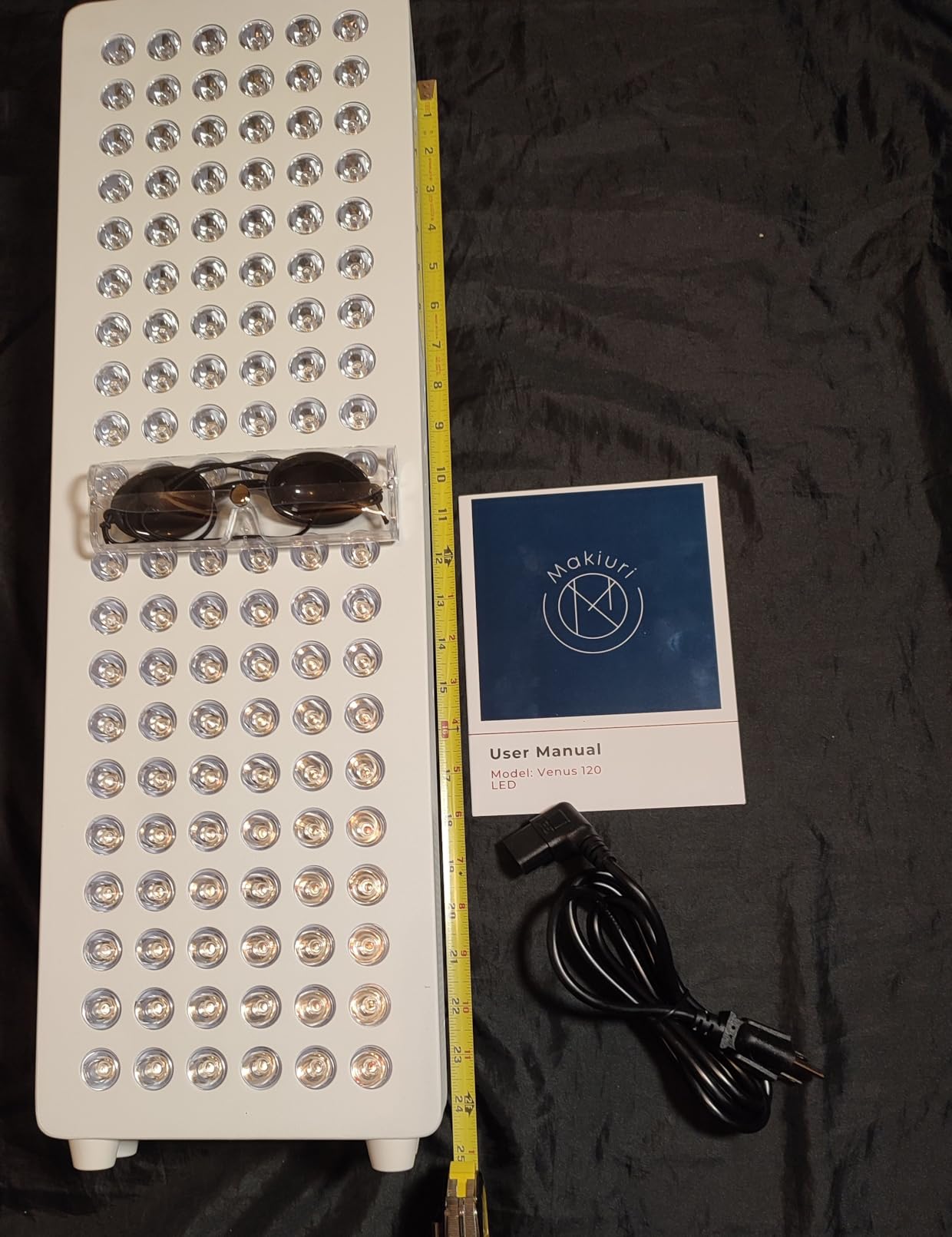
What’s in the Box
The unboxing experience is decent but not luxe. You get:
- The panel itself
- Protective sunglasses (use them, seriously)
- User manual with treatment protocols
- Power cord (standard US plug)
- Mounting hardware for door installation
No remote control on the Neptune model, which I’ll talk about in the negatives section. No carrying case. No fancy app integration. It’s a workmanlike package, not a luxury experience.
My Actual Daily Protocol After 4 Months
I’ve experimented with a lot of different protocols since I bought this. Here’s what I actually do now.
Morning Session (10 minutes)
Stand 12 inches from the panel, both modes on (full 5 wavelength exposure), facing the panel for 5 minutes, then back for 5 minutes. I do this with my morning coffee, watching the news on my phone. The cooling fans are quiet enough that I can hear my podcast at normal volume.
Targeted Lower Back Session (15 minutes)
I sit on a bench with the panel positioned 6-8 inches from my lower back. Just NIR mode (810nm/830nm/850nm) for deeper tissue penetration. Three times a week, usually after my workout.
Pre-Sleep Wind Down (10 minutes)
This one I added after about month two. Red mode only (630nm/660nm) about 20 minutes before bed. The literature on red light therapy and circadian rhythm is interesting — unlike blue light, red light doesn’t suppress melatonin, and may actually support sleep quality. My Oura ring data showed about 12% improvement in deep sleep after I added this protocol consistently.
The total weekly time investment ends up being about 3 hours. Compare that to the gym, where I’m spending 6+ hours a week, and the time commitment for red light therapy is actually pretty modest.
The Real Results After 16 Weeks
Let me get into what actually changed and what didn’t.
What Improved Measurably
Lower back pain: This is the big one for me. Chronic L4-L5 issues from old powerlifting injuries. After about 6 weeks of consistent targeted sessions, the morning stiffness was noticeably reduced. By week 12, I could get out of bed without that 5-minute hobble. Not gone. Better.
Sleep quality: Oura ring tracked. Average sleep score went from 78 to 84. Deep sleep specifically improved. Could be the red light, could be that I’m being more disciplined about sleep hygiene generally now that I have this nighttime ritual.
Skin texture: Subtle but real. My wife noticed before I did. Some sun damage on my forearms looks slightly faded. The marionette lines on my face are slightly less pronounced. I’m not going to claim it’s reversed aging, but there’s something there.
Post-workout recovery: This was the surprise. DOMS reduction is genuinely measurable. After heavy leg days, the next-day soreness was noticeably less severe when I did a session immediately after the workout. Studies back this up — there’s solid research showing PBM accelerates muscle recovery markers.
What Didn’t Change (Or Was Unclear)
Energy levels: Look, I want to tell you I have boundless energy now. I don’t. I’m a 43-year-old guy with a stressful job and two kids. Some days I’m energetic. Some days I’m exhausted. The panel hasn’t changed this fundamental reality.
Hair thickness: I’m thinning at the crown. Has the panel changed this? I cannot tell. Maybe? My hairline looks the same. The crown looks the same. I’d need a tricoscopy to actually measure follicle density and I’m not going to do that for a blog post.
Fat loss claims: Nope. Whatever marketing claims exist about red light therapy and adipose tissue, I haven’t seen any meaningful body composition change attributable specifically to this panel.
Mood: This one I’m genuinely uncertain about. My mood is decent. It was decent before. I don’t think the panel has done anything one way or the other.
How the Makiuri Compares to the Premium Brands
Let me put this panel head-to-head with the brands that dominate the conversation.
vs. Joovv Solo 3.0 ($1,800)
The Joovv has better app integration, more brand polish, and arguably better build quality. Their irradiance numbers at distance are comparable. But you’re paying $960 more for what amounts to roughly equivalent therapeutic output. The Joovv has 300 LEDs vs. Makiuri’s 300 LEDs. The Joovv has 4 wavelengths vs. Makiuri’s 5. If you care about ecosystem and brand status, get the Joovv. If you care about light delivered to your skin per dollar spent, the Makiuri wins this matchup.
vs. Mito Red Light MitoPRO 1500 ($1,300)
Mito Red Light is well-respected in the biohacking community. Their build quality is excellent. The MitoPRO 1500 has 4 wavelengths and around 200 LEDs. Comparable irradiance. The price difference of $460 between these two doesn’t feel justified by performance differences. Mito has slightly better warranty terms and better customer service reputation. But for the actual therapy you’re getting, the Makiuri is a strong value play.
vs. EXESAS 1008 LED Panel ($2,799)
I covered this one in detail in my previous review of the EXESAS panel. The EXESAS is bigger, more powerful, and gives you full-body coverage in a single session without repositioning. If you have the budget and you’re going to use it daily for years, the EXESAS makes sense. The Makiuri is half-body coverage at any given time, which means slightly longer total session time if you want to treat your whole body. For most people, this tradeoff is fine. For dedicated daily users with budget, the EXESAS is worth the upgrade.
vs. Cheap Amazon Panels Under $300
Don’t. Just don’t. The $200-300 panels use single-chip LEDs, often have significant flicker, the irradiance claims are measured at zero distance (marketing math), and EMF readings are typically not disclosed because they’d embarrass the manufacturer. The Makiuri at $840 sits in the sweet spot where you’re getting legitimate clinical-grade performance without paying premium-brand markup.
The Three Makiuri Models: Which One You Actually Need
Makiuri makes three panels. I went with the Neptune because I wanted full coverage. But the right choice depends on your use case.
Mercury (60 LEDs) — Compact and Targeted
This is the small one. About the size of a tablet. Good for face treatments, targeted joint pain, or if you have a tiny apartment and zero space for anything bigger. Around $300. If you’re just dipping your toe into red light therapy and want to start with face/neck applications before committing to bigger purchases, this is a reasonable entry point.
Venus (120 LEDs) — Half Body Versatility
The middle option. Around $500. Good for half-body treatments and very travel-friendly. If you’re planning to use red light therapy primarily for one specific body area (like back pain or knee issues), the Venus does the job for less money.
Neptune (300 LEDs) — Full Body Coverage
The one I bought. $840. Largest panel, full half-body coverage in a single session position. This is the right choice if you’re going to use this for general wellness/multiple body areas and you want one panel to handle everything.
For most adults serious about home red light therapy, the Neptune is the right call. The Mercury is too small for general wellness use, and the Venus, while versatile, leaves you doing more positioning to cover everything.
See all Makiuri panel options on Amazon →
What Annoys Me About This Panel
Time for the negatives. No product is perfect, and I’m not going to pretend.
No Remote Control
Compared to the EXESAS panel I reviewed previously, which has a proper remote, the Neptune requires you to walk over and physically press buttons on the unit to start, stop, or adjust the timer. This is a small annoyance during the session because you’re standing close to the panel anyway. But during setup it would be nice to be able to start the timer from across the room.
No App Integration
Some premium brands have apps that track your usage, suggest protocols, and integrate with health platforms. Makiuri has none of this. You’re tracking your own sessions in your own way. For me this is fine. For some people, the lack of digital integration would be annoying.
The Stand Setup
The Neptune comes with a base stand for vertical positioning. It’s adequate but feels less robust than I’d like. There’s no included option for horizontal lying-down sessions, which would require an additional stand purchase.
Customer Service Wait Times
I had a question about the warranty registration process and emailed customer service. Took 5 days to get a response. Not terrible, not great. The bigger brands typically have faster response times and more polished customer service experiences. With Makiuri, you’re getting good product at lower price, but the service infrastructure is more bare-bones.
The Brand Recognition Issue
If you’re someone who needs the social validation of having a recognizable brand name, Makiuri isn’t going to give you that. None of your friends will recognize the brand. There’s no Instagram aesthetic around it. You’re just buying a good panel from a less famous company. For me this is fine. For people who buy products partly to discuss them as status objects, this matters.
Common Questions I Get Asked
”How long does it take to see results?”
Real answer based on my experience and what other users report:
- Sleep changes: 1-2 weeks
- Skin texture: 4-8 weeks
- Acute pain or injury recovery: 2-4 weeks
- Chronic pain: 6-12 weeks
- Body composition or hair changes: probably never, despite what marketing suggests
”Is the 5 wavelength claim actually meaningful or just marketing?”
Mostly marketing for most users, partially legitimate for some applications. The added 830nm wavelength has some research supporting specific neurological and deep tissue applications. For general wellness, you’d probably get 90% of the benefit from a 4-wavelength panel.
”Can I overdo it?”
Yes. The biphasic dose response is real. Going from 10 minutes to 30 minutes won’t triple your results, and might actually reduce them. Stick to recommended protocols.
”Is it safe to use daily?”
Yes. Most studies are based on daily or near-daily use. Take a rest day if you want, but daily is fine.
”Does it work through clothes?”
Significantly reduced effectiveness through clothing. If you’re going to invest in this thing, get the actual exposure to bare skin. That’s how the studies are conducted.
”Will it cause sunburn or skin damage?”
No. Red and near-infrared light don’t contain UV. The panel produces gentle warmth at recommended distance, similar to standing near a sunny window.
”What about pregnancy?”
I’m not a doctor. Talk to yours. The general consensus is that red light therapy is probably safe during pregnancy because the wavelengths don’t reach the fetus, but get medical advice for your specific situation, not internet advice.
The Setup and First-Week Experience
Setting up the Neptune was straightforward. Out of the box, you assemble the base stand (6 screws, takes 10 minutes), plug it in, and you’re ready to go. The instructions are clear if not particularly polished.
The first session was honestly underwhelming in terms of immediate sensation. The light is bright. The panel produces gentle warmth. That’s it. There’s no buzz, no tingle, no immediate feeling that something is happening at a cellular level.
I think this is where a lot of people give up on red light therapy. The premium brands market this as a transformative experience. The reality is that for the first week or two, you’re going to feel like you’re standing in front of a fancy red lamp wondering if you’ve been scammed.
Stick with it. The cumulative effects emerge over weeks, not days. By week 3-4, you start noticing things. Sleep is better. The chronic pain spot is slightly less angry. Your skin looks marginally better. By month 3, the effects compound into something genuinely worthwhile.
Who Should Buy the Makiuri Neptune
After 4 months of daily use, here’s my honest recommendation matrix.
Buy the Makiuri Neptune if:
- You have $700-900 to spend on home wellness equipment
- You want clinical-grade red light therapy without paying premium-brand markup
- You’re going to use it consistently 4-6 times per week
- You have realistic expectations (it helps with specific things, doesn’t cure everything)
- You don’t care about brand recognition or app integration
- You want a panel you can actually move around your house if needed
Skip it if:
- Your budget is under $400 (get the Mercury instead, or save up)
- Your budget is over $2,000 and you want maximum power (get the EXESAS or premium Joovv)
- You need app integration and ecosystem integration
- You expect red light therapy to fix major medical issues (talk to a doctor)
- You won’t use it consistently — owning expensive wellness equipment that gathers dust isn’t doing you any favors
Buy the Makiuri Neptune on Amazon →
The 4-Month Verdict
The Makiuri Neptune is one of those rare products that deliver more than the price tag suggests. At $840, you’re getting performance that genuinely competes with panels twice the price. The 5 wavelength coverage, while not necessarily a game-changer, gives you broader spectrum stimulation. The Meanwell drivers and dual-chip LEDs put it in legitimate clinical-grade territory. The build quality is solid, the form factor is manageable, and the cumulative therapeutic effects after 16 weeks of daily use are real.
It’s not the absolute best panel money can buy. The premium brands have advantages in customer service, app integration, and full-body single-session coverage. But for someone who wants legitimate red light therapy at home without spending the equivalent of a used car, the Makiuri Neptune is the smartest purchase in this category right now.
Four months in, I’d buy it again. That’s the test that matters.
Resources Worth Your Time
If you want to actually understand the science instead of relying on marketing copy, these are useful:
- PubMed — search “photobiomodulation” and read actual studies, not influencer takes
- Dr. Michael Hamblin’s research papers — Harvard PBM researcher whose work underpins modern protocols
- The Quantified Body Podcast — actually digs into the science, not the hype
- r/redlighttherapy on Reddit — variable quality but you’ll find real users discussing real experiences
For more wellness reviews from this site, you might want to check out the EXESAS 1008 LED panel review for comparison, or browse the [recovery and wellness category] for related deep dives.
Affiliate disclosure: This post contains Amazon Associate links. If you purchase through these links, I earn a small commission at no extra cost to you. I purchased the Makiuri Neptune with my own money in January 2026 and was not compensated by Makiuri or Amazon for this review. The opinions are my own based on 4 months of personal use.
Medical disclaimer: This article is for informational purposes only and does not constitute medical advice. Red light therapy is a wellness tool, not a substitute for medical treatment. Statements regarding red light therapy benefits have not been evaluated by the FDA. Consult a healthcare provider before starting any new therapy, especially if you have existing health conditions, are pregnant, are taking photosensitizing medications, or have any concerns about light-based treatment.