Disclosure: This post contains affiliate links. I may earn a small commission at no extra cost to you if you purchase through these links.
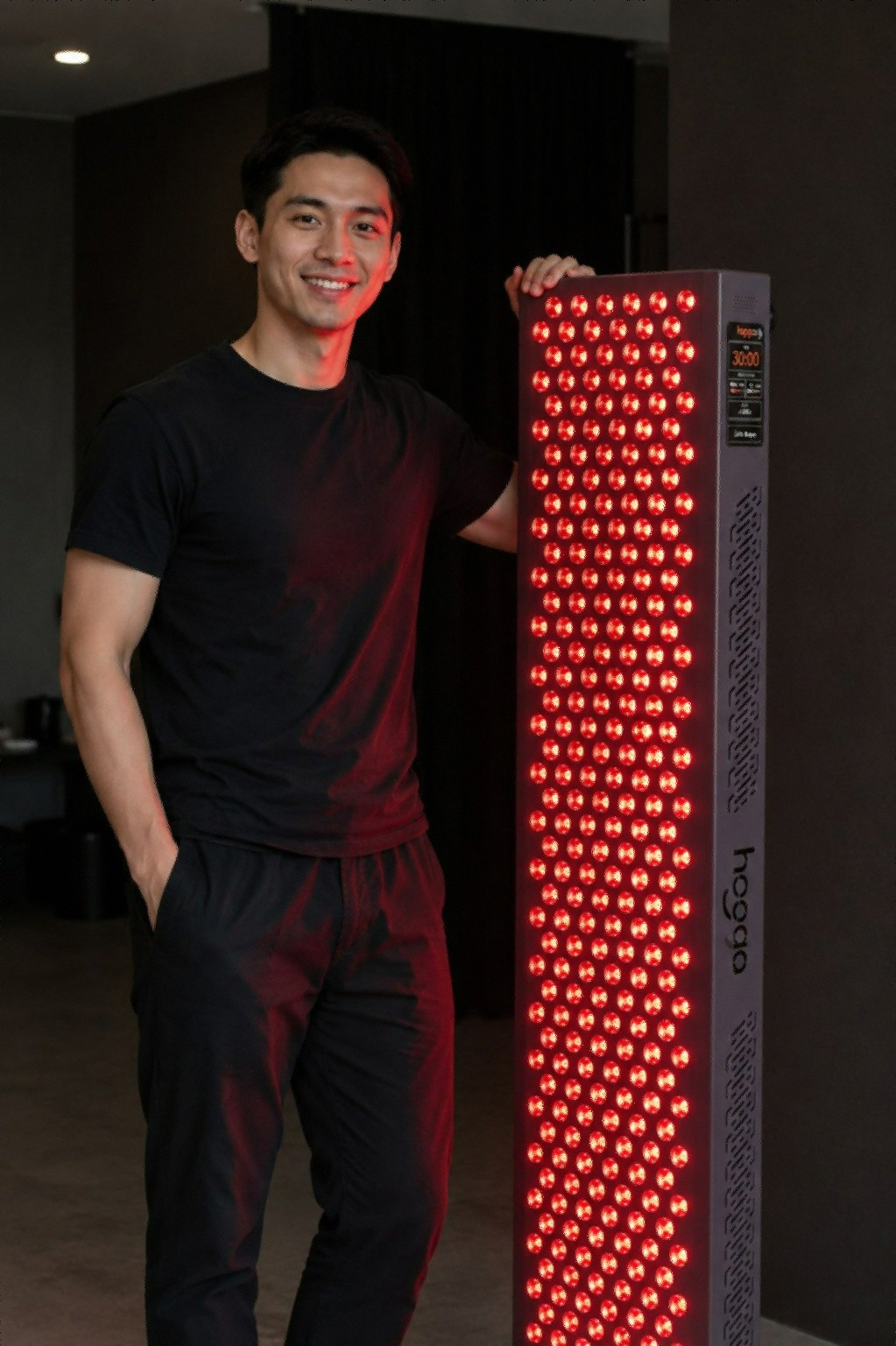
Three months. That’s how long I sat with the Hooga ULTRA1500 before sitting down to write any of this. Not a weekend test, not a press sample sent over for a quick once-over — three months of running it after workouts, pointing it at my face for skin stuff, and actually tracking whether my sleep got better or if I was just telling myself a story.
Why Red Light Therapy Panels Actually Matter in 2026
I know how this sounds. Stand in front of a glowing red panel and feel better. Sounds like something you’d find at a wellness expo, parked next to the crystal healing booth and a cold plunge tub that costs more than a used car.
But the biology underneath it is fairly well-documented at this point. Red and near-infrared wavelengths — roughly 630–850nm — penetrate tissue and interact with mitochondria. Cells absorb the light, ATP production goes up, and more ATP means more fuel for cellular repair.
Where that actually plays out:
Muscle Recovery and Inflammation
This is where I first got curious. I CrossFit four days a week, and my knees started filing complaints somewhere around age 34. A coach mentioned red light therapy, I went down the rabbit hole, and landed on the ULTRA1500 as the serious option rather than a toy.
The research on photobiomodulation and inflammation is the strongest part of the science here. Several peer-reviewed studies show measurable drops in markers like C-reactive protein and IL-6 after consistent sessions. For athletes, that means less time stuck waiting between sessions.
Skin Health and Collagen Production
660nm specifically targets skin-depth tissue — most dermatology-grade devices run this exact frequency. One Amazon reviewer mentioned paying for in-office red light sessions at her doctor’s office for melasma, switched over to the ULTRA1500, and noticed her face brightening after a few weeks. At a fraction of the clinic bill.
Sleep and Mental Clarity
This is the one that surprised me most. Near-infrared (810nm and 850nm) goes deeper — muscle, joint, and there’s some evidence pointing toward neurological effects too. A handful of reviewers brought up improved sleep and mental clarity without being asked. One bought it on his doctor’s recommendation and said it seemed to help with depression symptoms and sleep patterns — while admitting flat out that he couldn’t rule out placebo. I appreciated that kind of honesty.
Related Post: How to Use a Red Light Therapy Panel for Full Body Treatment
Hooga ULTRA1500 Specs: What You’re Actually Getting
Let me break down what separates this from the cheap $35 red light gadgets flooding Amazon.
The Quad-Chip LED Configuration
Most reviewers skip over this part because it requires actually understanding the spec sheet. The ULTRA1500 has 300 LEDs, but each one contains four separate chips. That’s 1,200 total emitting chips, not 300.
Each chip puts out a different wavelength — 630nm, 660nm, 810nm, 850nm. So every single LED point on the panel is firing all four wavelengths at once, across the whole surface. What you end up with is genuinely balanced multi-wavelength coverage, not a panel that’s mostly one wavelength with a couple others sprinkled in for the marketing copy.
Why the Wavelength Mix Matters
Different wavelengths reach different depths:
| Wavelength | Penetration Depth | Primary Target |
|---|---|---|
| 630nm | ~1–2mm | Skin surface, collagen |
| 660nm | ~2–5mm | Dermis, superficial tissue |
| 810nm | ~30–40mm | Muscle, joint, some neural |
| 850nm | ~40–50mm | Deep muscle, bone, systemic |
A panel running only 660nm and 850nm — which describes most budget panels — skips the skin-layer benefits of 630nm and the mid-depth work 810nm does. The quad-chip setup covers the whole stack.
Size and Coverage Area
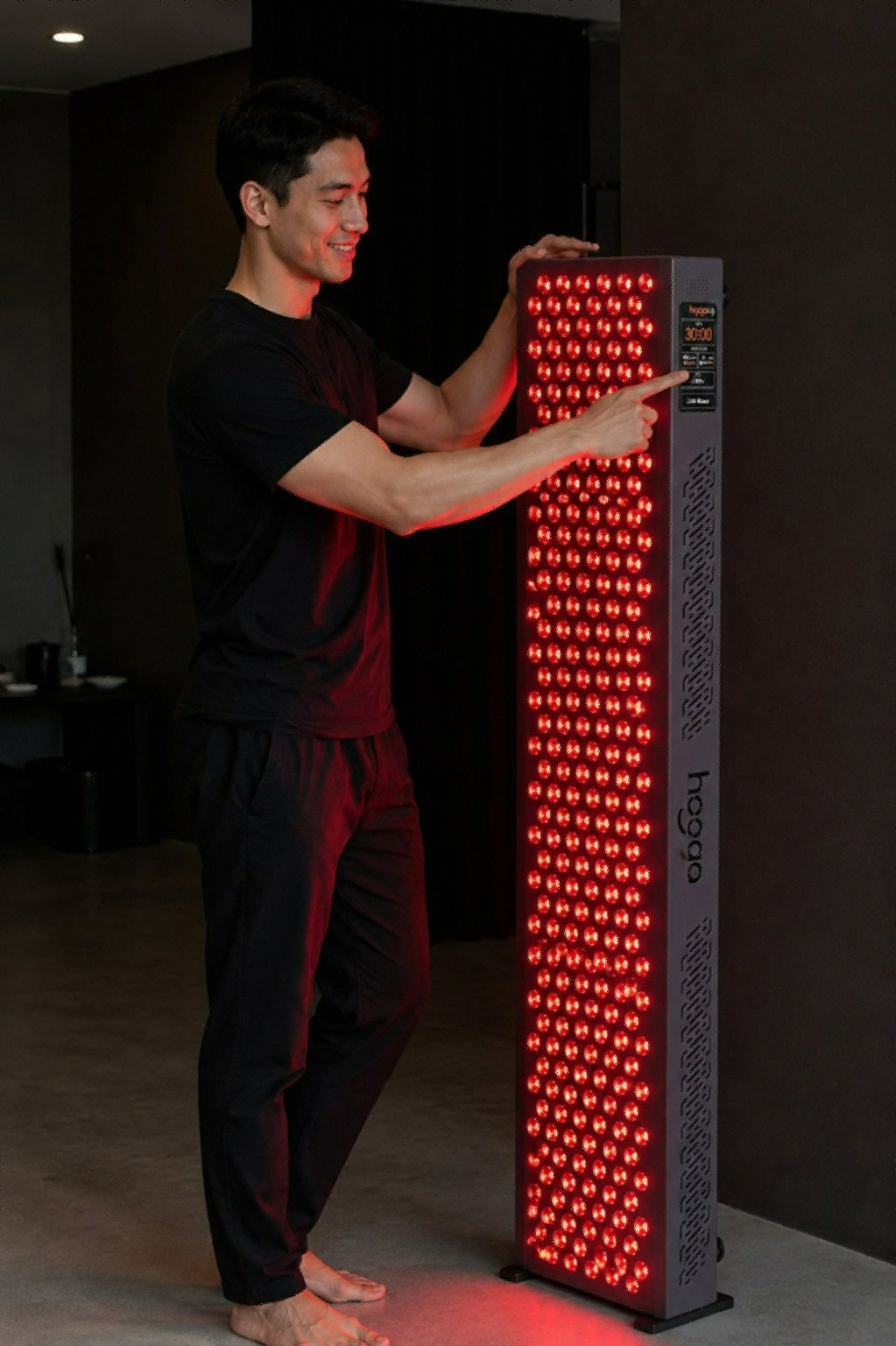
This is a large-format panel. 42.7 x 12.2 x 8.1 inches, nearly 26 pounds. Not subtle in the least. It’s built to cover your full body when you stand at the recommended 6–12 inch distance, and the 60-degree beam angle gives you even coverage instead of one bright hot spot.
Controls and Usability
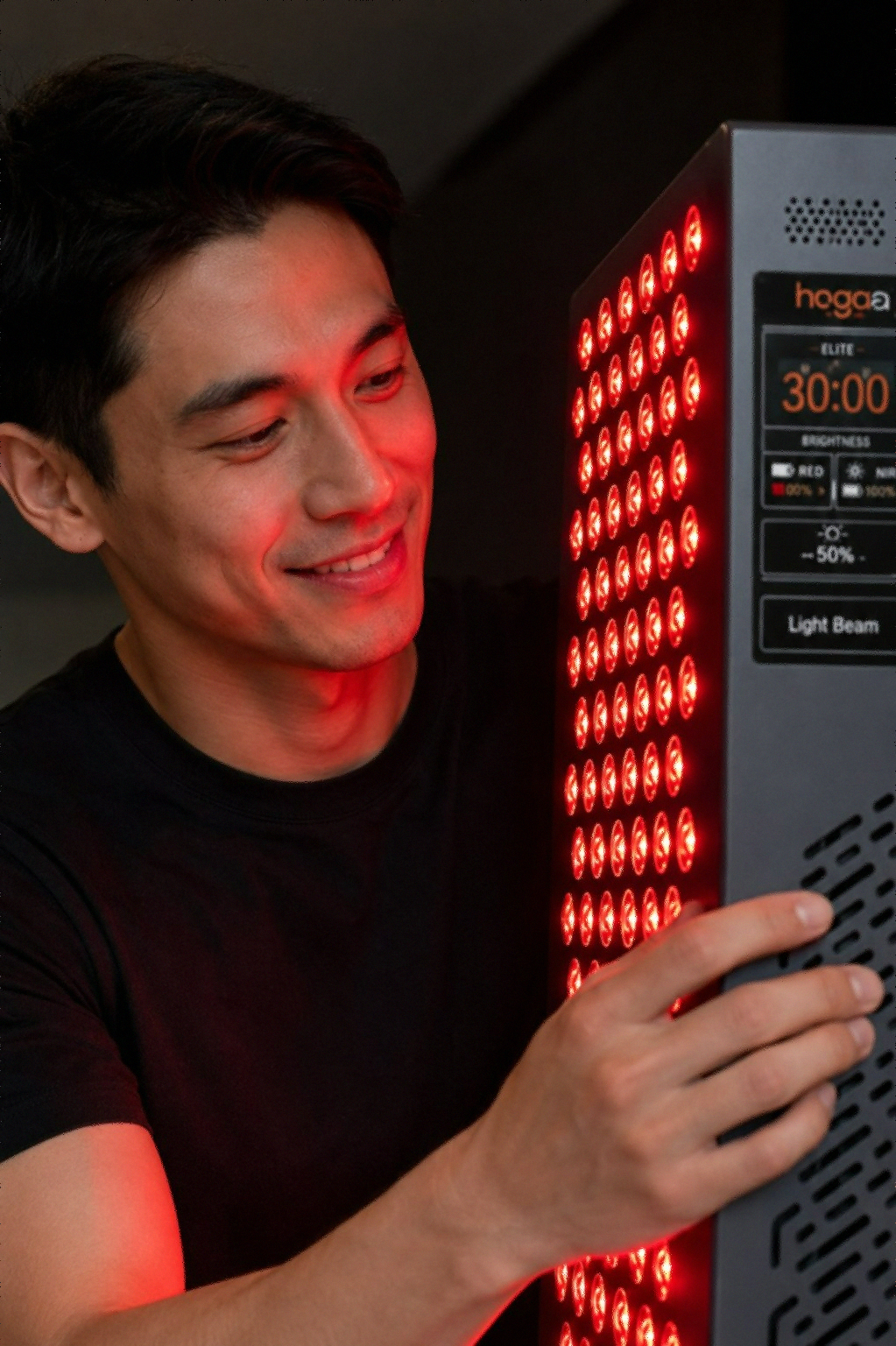
Adjustable brightness matters more than people give it credit for. Cranking it to 100% on day one is a quick route to skin irritation. Being able to dial back to 25% or 50% while you build tolerance is genuinely useful, not a gimmick feature.
Pulse mode comes included. Some people swear pulsed delivery beats continuous wave, though the evidence on whether it actually matters for a typical home user is mixed at best. Having the option doesn’t cost you anything either way.
The remote runs everything — power, brightness, pulse mode, timer. One reviewer’s remote wouldn’t hold a charge and had to go back. Customer service apparently shipped a replacement fast, which is worth mentioning, because at this price point, slow support would sting a lot more.
Real-World Performance: What Three Months Actually Looked Like
The Setup
I wall-mounted mine in the home gym. Took about 20 minutes, hardware’s included. The panel’s heavy enough that you want the mount secure — don’t improvise this part. You can also run it on compatible stands or daisy-chain it with other ULTRA panels if you want to expand coverage down the line.
The cooling fans are audible. Not loud enough to fight a podcast over, but you know they’re running. They kick in during operation to keep the LEDs stable, which is the right call — heat is what kills LEDs early.
Recovery Sessions
My routine: 15–20 minutes after workouts, full body, medium brightness, aimed at whatever was complaining that day. By week three I could string together consecutive training days with noticeably less residual soreness. Whether that’s purely the light or some combination of factors, I can’t say for certain. What I can say is the timeline lined up with when I started being consistent about it.
The most documented result in the review section belongs to a 50-year-old CrossFit and BJJ athlete who tracked recovery on a Whoop band and reported measurable HRV improvement after two months of daily 20-minute sessions. That’s about as objective as home-user data gets.
Skin Results
I started with the smaller Ultra360 for face work, then began positioning my face in the ULTRA1500’s coverage zone during full-body sessions. Around six weeks in, a few people mentioned my skin looking clearer. I’ll take it.
The melasma reviewer’s experience tracks with what I’d expect — lightening took a few weeks, and she stayed cautious going in because she’d read that red light can sometimes make melasma worse in certain cases. That’s a real caveat, not a throwaway one. If melasma’s part of your situation, do your homework and maybe loop in a dermatologist before you commit.
Sleep and Energy
Genuinely noticed this one. Morning sessions seemed to track with steadier energy through the afternoon. I shifted from post-workout to morning sessions for a few weeks and the pattern held. Sleep got better around week four — falling asleep faster, waking up actually rested. Confounders exist, sure. But the pattern showed up enough times that I kept the morning sessions going.
Related Post: Red Light Therapy Wavelengths Explained: 630nm vs 660nm vs 850nm
Hooga ULTRA1500 vs. Competitors: How It Stacks Up
The full-body panel market is crowded now. Here’s where the ULTRA1500 sits against the main alternatives:
| Panel | Price | LEDs | Wavelengths | Notable |
|---|---|---|---|---|
| Hooga ULTRA1500 | $1,399 | 300 quad-chip | 630/660/810/850nm | Best value quad-chip |
| BestQool Pro300 | $844 | 300 dual-chip | 4 wavelengths | More affordable, FSA-HSA eligible |
| EXESAS Full Body | $2,799 | Clinical grade | 630/660/810/850nm | Clinical-grade spec, premium price |
| Hooga Ultra750 | $799 | 150 LEDs | 660/850nm | Half the coverage, half the price |
| Joovv Solo 3.0 | ~$1,195 | 100 LEDs | 660/850nm | Strong brand, fewer wavelengths |
💡 Pro Tip: If skin benefits are your main goal and full-body muscle recovery isn’t really the point, the smaller Ultra360 at $399 handles face and upper body fine for a third of the price.
⚠️ Watch Out: Some panels advertise “4 wavelengths” while running two-chip LEDs — meaning they can only emit 2 wavelengths at a time and alternate between them. The ULTRA1500’s quad-chip setup fires all four simultaneously. Ask manufacturers to clarify this before you buy anything.
The BestQool Pro300 is the most direct competitor at $844. Dual-chip LEDs across 300 positions, 4 wavelengths, FSA/HSA eligible. If budget’s the deciding factor, that’s the comparison worth making.
Related Post: Hooga ULTRA1500 vs BestQool Pro300: Which Full Body Panel Wins?
Who Should Actually Buy This
This makes sense if you’re:
An athlete or active person training multiple days a week, where recovery time genuinely matters. The math works out fast if it keeps you training consistently instead of sidelined.
Someone dealing with chronic joint pain or inflammation. Reviewers managing autoimmune conditions, post-surgery recovery, chronic pain — several report meaningful results. The physiotherapist recommendation one reviewer mentioned lines up with how these devices are increasingly showing up in clinical settings.
A skin health person chasing clinic-level results at home. If you’re paying $100–200 per session at a dermatology office, this pays for itself in 7–14 visits.
Someone who’ll actually use it consistently. This doesn’t work if you try it twice and shove it in a closet. The biology needs repeated, regular stimulation. If 4–5 times a week isn’t realistic for you, keep your money.
Who Should Skip It
If you’re just testing the waters and aren’t sure you’ll stick with it, start with the Ultra360 at $399 or the HG300. A few people who returned the ULTRA1500 ended up with simpler Hooga models that fit what they actually needed.
If full-body coverage isn’t the goal. One spot — a shoulder, a knee, your face — doesn’t need a panel this big. You’d just be paying for coverage you’ll never use.
If FSA/HSA eligibility matters to you. The BestQool Pro300 has that eligibility specifically noted, which at this price range can mean $150–300 in real savings.
What I’d Tell Someone Considering This
Here’s the honest version: $1,399 is a real commitment. This isn’t an impulse buy you return two weeks later because you “didn’t feel anything.” Red light therapy runs on timelines measured in weeks, not sessions.
The quad-chip configuration at this price is genuinely hard to beat. Most panels in this range give you two wavelengths, or use marketing language vague enough to hide the actual chip count. 300 quad-chip LEDs means legitimate coverage across the full red and near-infrared spectrum without switching panels or protocols halfway through.
Build quality holds up — several reviewers specifically called out the construction as premium, worth what they paid. One UK reviewer with a remote issue had it sorted and replacement parts shipped right away. That kind of thing matters more at this price.
The one thing I’d push back on, from some of the more enthusiastic reviews out there: manage your timeline expectations. Three months in is where I started feeling like the investment made sense. Month one, I wasn’t sure. Month two, patterns started showing up. Month three, I was sold.
Ready to try it? The Hooga ULTRA1500 is currently $1,399 on Amazon, with free shipping and a 30-day return window. That return policy takes a bit of the pressure off committing.
Frequently Asked Questions
How far should I stand from the Hooga ULTRA1500? 6–12 inches for most uses. Skin treatments can go closer; full-body sessions targeting deeper tissue do better at 12 inches for broader coverage. Don’t go past 24 inches — irradiance drops off fast with distance.
How long should each session be? Start at 10 minutes and build from there. Most people settle around 15–20 minutes. Longer isn’t automatically better — there’s a dose-response curve, and pushing past 20–30 minutes on one spot doesn’t seem to add much.
Can I use it on my face? Yes, but wear the included protective glasses or grab proper red light goggles. The intensity is fine for skin but uncomfortable, possibly damaging, for unprotected eyes. Hooga’s glasses run around $30 and are worth having.
Does it help with muscle recovery specifically? This is where the evidence is strongest. Multiple studies show reduced DOMS and faster return to baseline strength when red/NIR light is applied post-exercise. Expect to notice it around week 3–4 of consistent use.
Is the ULTRA1500 the same as the older Hooga HG1500? No. The ULTRA series runs quad-chip LEDs and updated controls — remote with brightness adjustment and pulse mode. The older HG series used single-chip LEDs. This is a real hardware upgrade, not a relabel.
See Today’s Deal on Amazon
Final Verdict
The Hooga ULTRA1500 is the real deal for full-body red light therapy at home. $1,399 isn’t cheap, but it’s priced about right for what you get: 300 quad-chip LEDs covering all four therapeutically relevant wavelengths, solid build, enough coverage for actual full-body sessions.
If you’re serious about recovery, skin health, or just want clinic-level red light access without the recurring appointment cost, this delivers. Give it 8–12 weeks of consistent use before you decide either way.
If you’re still on the fence about how committed you are, start with the smaller Hooga Ultra360 at $399, see if you’ll actually use it regularly, then upgrade.
4.6 stars from 182 verified Amazon buyers. About what I’d give it too.
Always consult with a healthcare professional before starting any new therapy, especially if you have existing medical conditions. Red light therapy devices are not FDA-cleared medical devices for treatment of disease.