Disclosure: This post contains affiliate links. I may earn a small commission at no extra cost to you if you purchase through these links.
Red light therapy has had a weird trajectory. Five years ago it was this niche biohacker thing you read about on obscure forums. Now it’s in wellness spas, physical therapy clinics, and increasingly in people’s homes — because the panels got good enough and cheap enough that doing it yourself actually makes sense.
The problem is the market got flooded with garbage. Every month there’s another $60 panel from a brand you’ve never heard of promising clinical-grade results. Most of them are underpowered, poorly built, and use questionable LEDs that don’t actually deliver the wavelengths they claim.
The Hooga PRO300 sits in a different tier. It’s a Wisconsin-based small business (actual American company, not a rebrand), Amazon’s Choice in its category, 4.6/5 across 724 reviews, and 500+ units sold per month. At $299, it’s not cheap for a desktop panel, but it’s nowhere near the $900+ clinical panels either.
I dug through the real-world feedback and worked out what actually makes a panel like this perform. Here’s the full picture.
What the Hooga PRO300 Actually Is
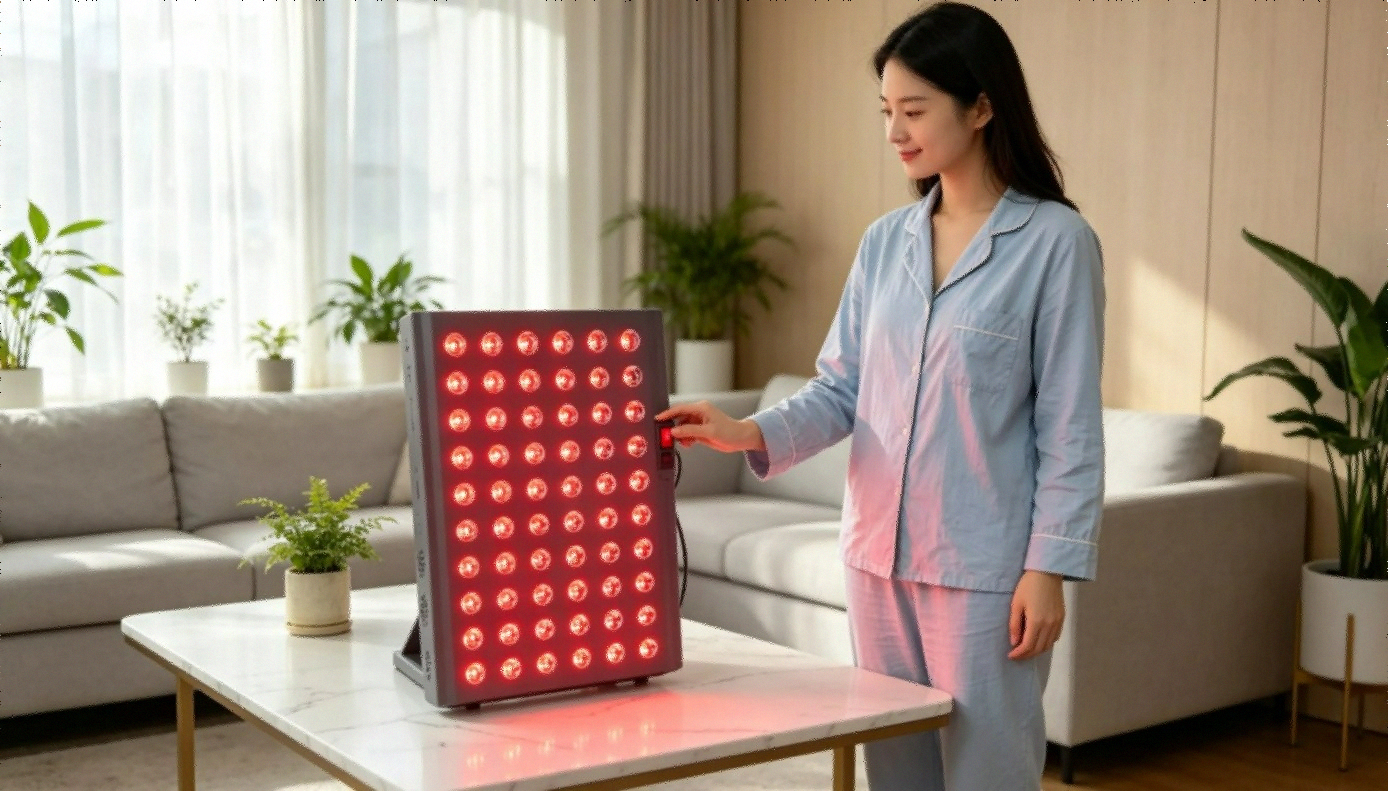
The PRO300 is a desktop/tabletop red light therapy panel from Hooga Health, a company headquartered in Wisconsin. It uses 60 dual-chip LEDs emitting at two specific wavelengths: 660nm (red) and 850nm (near-infrared, or NIR). The panel comes with an adjustable stand, a built-in timer, and flicker-free LEDs. Weight is 9.46 pounds — substantial enough to feel quality, manageable enough to move around.
It’s designed for at-home daily use. Not a full-body panel — it covers face, neck, chest, lower back, or targeted body areas. Think 10–20 minutes per session, sitting or standing in front of it, positioning whatever area you’re working on within the effective treatment distance.
This is not a medical device and is not FDA-cleared. Hooga’s legal disclaimer is standard for this category: wellness product, general fitness use, not intended to diagnose or treat disease. That’s the correct framing — the research on red light therapy is promising but still developing, and individual results vary.
The Science Behind 660nm and 850nm: Why These Wavelengths
Here’s why these two numbers actually matter, before we get into the review — a lot of panels claim to use them and don’t actually deliver adequate irradiance at those wavelengths.
660nm (Red Light): This wavelength sits in the visible red spectrum. It penetrates the outer layers of skin — epidermis and dermis — and is associated in research with collagen stimulation, skin tone improvement, reduced inflammation at the surface level, and wound healing. When you use a red light panel for skin benefits, this is the primary wavelength doing the work.
850nm (Near-Infrared): This wavelength is invisible to the naked eye but penetrates significantly deeper — into muscle tissue, joints, and bone. Research has explored its role in mitochondrial function (specifically cytochrome c oxidase activation), deeper tissue recovery, joint inflammation reduction, and neurological applications. When people use red light therapy for muscle recovery or joint pain, 850nm is the primary mechanism.
The dual-chip design in the PRO300 means each LED contains both wavelengths simultaneously, rather than alternating between different LED types. This provides simultaneous delivery across the treatment area rather than patchy coverage.
Related Post: Red Light Therapy Wavelengths Explained has a deeper breakdown of the full wavelength spectrum and what different nanometer ranges are used for, if you want the fuller picture before deciding what you’re trying to accomplish.
Hooga PRO300 Specs
| Spec | Value |
|---|---|
| Wavelengths | 660nm Red + 850nm Near-Infrared |
| LED Count | 60 dual-chip LEDs |
| LED Type | Dual-chip (both wavelengths per LED) |
| Built-in Timer | Yes (up to 20 minutes) |
| Stand | Adjustable, included |
| EMF | Low (at recommended treatment distance) |
| Flicker | Flicker-free design |
| Weight | 9.46 lbs |
| Package Dimensions | 16.9 x 11.3 x 7.12 inches |
| Warranty | 3 years |
| Amazon Price (2026) | $299 (coupon price $284) |
| Rating | 4.6/5 — 724 reviews |
A couple of things stand out here: the 3-year warranty is genuinely good for this price point. Most panels in the $150–$300 range offer 1–2 years. The low EMF output at recommended treatment distance is a specific feature Hooga calls out — and multiple reviewers specifically mention testing for EMF and being satisfied with the readings.
The 20-minute maximum timer is a deliberate design choice. One reviewer wished it had an unlimited timer setting. It doesn’t — and honestly, for most applications, sessions longer than 20 minutes aren’t meaningfully more beneficial and there’s a theoretical case for overdoing it, so the cap is reasonable.
Real Results: What 724 Reviews Actually Show See Today’s Deal on Amazon
With 84% five-star reviews across 724 ratings, the PRO300 has one of the better review profiles in its category. Here’s what real owners are actually reporting.
Skin Benefits
abitbookish did a rabbit hole of red light therapy research, tried masks and found them claustrophobic, and landed on this panel. After a month of 10–15 minute nightly sessions on a nightstand: brighter, more even complexion. She has melasma and was specifically worried the NIR setting might worsen it — it didn’t, and she found her skin looked better with the NIR component active rather than just the red.
Stephen Tucker bought it as an anniversary gift. His girlfriend used it consistently for a month: complexion noticeably brighter and smoother, more even tone, fine lines around the eyes softened. He described it as “worth every penny” with results visible enough that he’d recommend it confidently.
Kyle Stermer tracked his results deliberately over six weeks. Within two to three weeks: skin noticeably clearer, post-workout soreness recovering faster. His assessment of the dual-chip LEDs: “the real deal.”
The skin benefit timeline across reviews is consistent: one to four weeks before visible changes, with more significant results at 6–8 weeks of consistent daily use. This matches what the research suggests — collagen remodeling is not a rapid process.
Muscle Recovery and Pain Relief
Matthew W. Monk described it as “most effective for soothing muscle and tendon aches and injuries.” He has ongoing trouble with neck and knees, and found the panel provides “no doubt” symptomatic relief. He also incorporated it into a morning routine with breathing exercises, noting it’s a good daily ritual.
Kyle Stermer (from above) specifically noted faster post-workout recovery — measurably less soreness than his baseline.
Jm Rasmussen is using it for eczema. The result: he stopped using steroid cream. He called that “HUGE” — which anyone who’s dealt with chronic eczema and steroid dependency understands is a significant quality-of-life shift.
t. lett reports it brings blood pressure down, though acknowledges this is one part of a broader health approach. She chose Hooga specifically because her Facebook health groups for red light therapy had nothing negative to say about the brand.
What the Aggregate Data Shows
Amazon’s AI summary of the 724 reviews highlights: well-built, effective, no EMF or flicker issues, helps with joint and back inflammation, improves skin clarity, particularly beneficial for muscle recovery, worth the price. The breakdown by topic shows Quality (51 mentions), Functionality (37), Build Quality (35), Pain Relief (33), Skin Benefits (30), Value for Money (28).
That’s not a product scraping by on hype. That’s a product where a substantial percentage of buyers are seeing results across multiple use cases.
What the PRO300 Does Well
Dual-Chip LED Design
This is the key differentiator from cheaper panels. A lot of budget panels use single-chip LEDs and alternate between red and NIR in a checkerboard pattern, which means at any given point on the treatment surface, you’re getting either red or NIR but not both simultaneously in the same spot. Dual-chip means each LED fires both wavelengths at the same time, for more even coverage across the treatment area.
Build Quality and Weight
At 9.46 pounds, this feels like quality hardware, not a plastic toy. The adjustable stand is solid — Matthew W. Monk noted that some reviews call it tight to adjust, but his perspective is that you wouldn’t want it looser, because it holds position reliably once set. The cooling fans keep the unit from running hot during sessions.
Flicker-Free LEDs
This matters for people who are sensitive to flicker, which some people perceive as headaches or eye strain with lower-quality LED products. The PRO300 is specifically designed as flicker-free.
Low EMF
EMF concern with light therapy panels is a real question people have, especially for daily use close to the body. Kyle Stermer mentioned testing for EMF and finding the low output at recommended treatment distance addressed his concern going in.
The Stand
Multiple reviewers called it out positively. It’s included in the $299 price, it’s adjustable, and it holds the panel steady enough for hands-free sessions. Competitors at similar price points often don’t include a quality stand.
What Could Be Better
Touch-Sensitive Buttons
Matthew W. Monk’s main complaint: the touch-sensitive buttons on the side are too easy to accidentally trigger when you pick up or adjust the panel. He’d prefer the older back-panel switch design. It’s not a dealbreaker — easy to correct — but it’s a real UX annoyance that comes up in multiple reviews.
20-Minute Timer Cap
The built-in timer maxes out at 20 minutes, which is fine for most protocols. But if you want a longer session or prefer to just leave it running, you’ll need to restart it manually. One reviewer found this frustrating. There’s a reasonable safety rationale for the cap, but an “unlimited” option would be a nice addition.
Coverage Area
The PRO300 is a desktop panel, not a full-body panel. It covers roughly neck and chest simultaneously (abitbookish describes this use case), or face, or lower back — targeted areas. If you’re looking to cover your entire torso and legs in one session, you’d need a larger panel or multiple sessions repositioning. The Hooga lineup includes larger panels (300 LED full-body version at $899) if coverage is the priority.
Hooga PRO300 vs. The Competition
At $299, the PRO300 is competing against a specific tier of panels. Here’s how it stacks up.
| Model | LEDs | Wavelengths | Price | Key Difference |
|---|---|---|---|---|
| Hooga PRO300 | 60 dual-chip | 660nm + 850nm | $299 | This review unit |
| BestQool Pro (similar tier) | Dual chip | 660nm + 850nm | ~$152–$189 | Lower price, smaller |
| Hooga HG300 (larger) | 300 LEDs | 660nm + 850nm | $199 | More LEDs, less power density |
| Hooga Full Body | 300 LEDs | 660nm + 850nm | $899 | Full body coverage |
| Joovv Solo | High-power | Multiple | $700+ | Clinical-grade, much higher irradiance |
The BestQool is the most direct budget alternative — also dual-chip, similar wavelengths, lower price. The tradeoff is smaller coverage area and less irradiance output. For face-only use, it’s a reasonable option. For neck, chest, and lower back simultaneously, the PRO300’s larger panel pays off.
The Joovv (what a lot of people were searching when they found the PRO300 on Amazon) is in a different tier entirely — higher irradiance, larger panels, and $700+ price tags. The Joovv has more robust clinical validation around it simply because it’s been around longer and more practitioners have used it. If you’re doing daily therapeutic use for serious conditions, the Joovv line’s extra cost probably pays for itself. For general wellness, skin, and recovery use, the PRO300 bridges a meaningful gap.
Related Post: Hooga Ultra 1500 vs BestQool PRO300 Comparison breaks down the panel comparison in more depth if you’re deciding between models.
How to Use the Hooga PRO300 Effectively See Today’s Deal on Amazon
The research on red light therapy protocol is less settled than the product marketing suggests, but there are reasonable evidence-based guidelines.
Distance: Most protocols recommend 6–12 inches from the panel for peak irradiance. Further away reduces the dose. The PRO300 performs at the recommended ranges — don’t sit three feet away expecting full benefit.
Session Length: 10–20 minutes per treatment area. The PRO300’s timer handles this automatically. Kyle Stermer uses 10 minutes daily on face and lower back. abitbookish does 10–15 minutes nightly.
Frequency: Daily use is generally recommended for building cumulative benefit. Consistency matters more than any single session length.
Eye Protection: Near-infrared light (850nm) is invisible and bright LED panels can cause eye discomfort with direct staring. Most panels ship with protective glasses — use them, or simply keep your eyes closed or look away during face sessions.
Expectations Timeline: Skin benefits typically become visible at 4–8 weeks of consistent use. Recovery benefits (soreness reduction, joint relief) can be noticeable sooner — some people report feeling it within the first few sessions.
Related Post: How to Use a Red Light Therapy Panel for Full Body Treatment covers session protocols, positioning, and treatment area rotation in detail.
Who Should Buy the Hooga PRO300
This is the right panel if:
- You want to start red light therapy without spending $700+ on a Joovv or clinical device
- Your primary goals are skin improvement, post-workout recovery, or targeted joint/muscle pain
- You want daily at-home use that’s genuinely convenient — plug and go, built-in timer
- You have specific areas (face, neck, lower back, knees) rather than wanting full-body coverage
- Low EMF and flicker-free operation matter to you
- The 3-year warranty gives you confidence at this price point
Look elsewhere if:
- You want full-body coverage in a single session — the PRO300 isn’t sized for that
- You’re dealing with a diagnosed medical condition and need clinical-grade irradiance — look at higher-power panels or consult a practitioner
- You’re outside the US (this runs on 110–120V; international buyers need a voltage converter)
- Budget is the primary driver — the BestQool panels offer solid results at lower price points
Frequently Asked Questions
Q: Can it be used on all skin types? Yes, based on current evidence. Red light therapy is generally considered safe across skin tones. abitbookish specifically noted she has melasma and was cautious about NIR — found no adverse effect and actually preferred the results with NIR active. As always, if you have specific skin conditions or photosensitivity concerns, consult a dermatologist first.
Q: Does it help with muscle recovery? Multiple reviewers report yes. Kyle Stermer noticed faster soreness recovery after six weeks of consistent use. Matthew W. Monk reports symptomatic relief for chronic neck and knee issues. This tracks with the research on 850nm NIR and mitochondrial function in muscle tissue.
Q: How long until I see results? For skin: expect 4–8 weeks of daily use. For recovery and pain relief: some people notice effects within the first few sessions, with cumulative benefit over weeks. Consistency is the key variable.
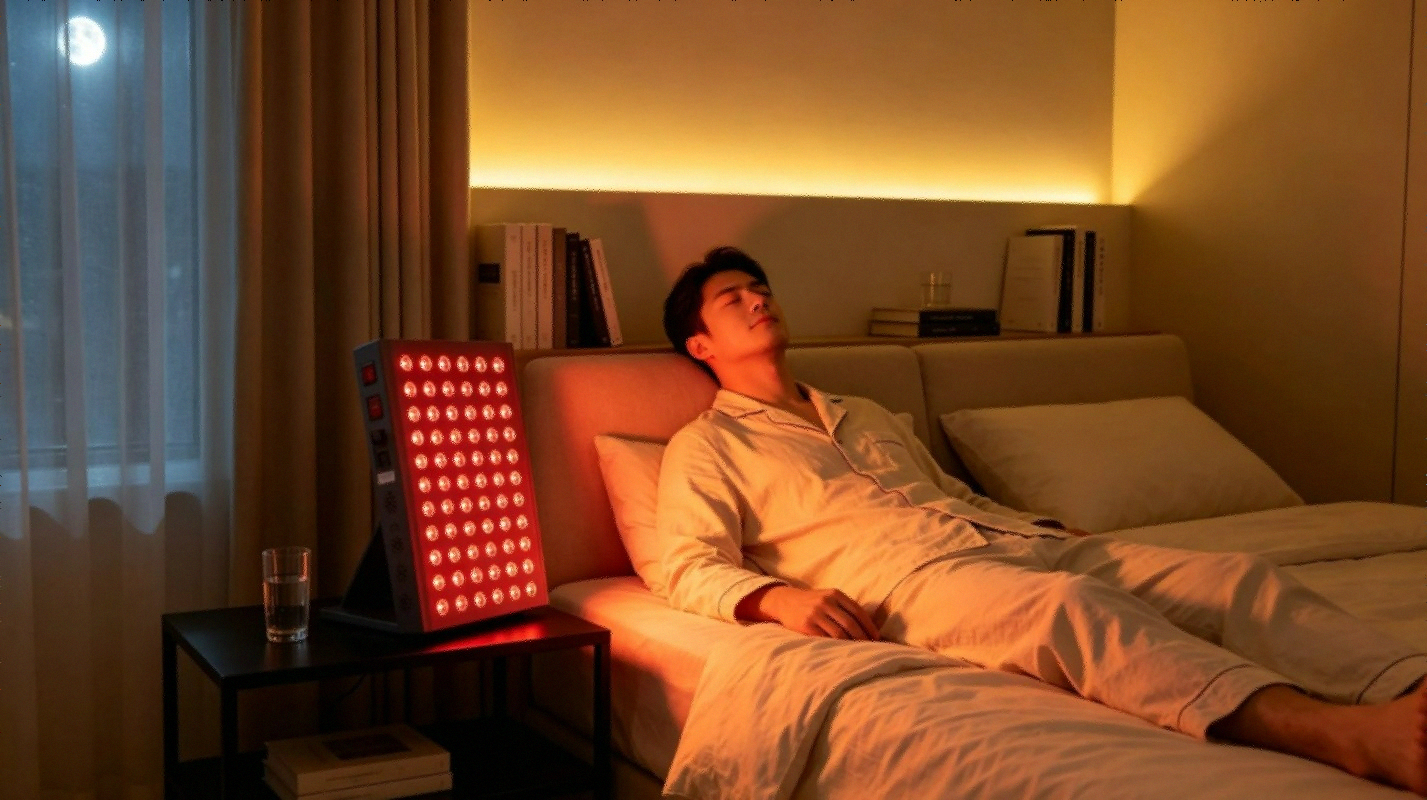
Q: Is it easy to move around? At 9.46 pounds with an adjustable stand, it’s designed to be repositioned. It’s not pocketable — this is a desktop panel, not a handheld device. Multiple reviewers use it on a nightstand or desk.
Q: Does it have automatic shutoff? Yes, the built-in timer handles this. Maximum timer setting is 20 minutes, after which the panel shuts off automatically.
Q: Can I use just the red light or just the NIR? The PRO300 has three modes: red only (660nm), NIR only (850nm), or both simultaneously — useful since some conditions call for one wavelength over the other.
Q: Is it worth it vs. a $60 Amazon panel? In my assessment, yes — for different reasons than you might expect. The cheap panels often deliver less than their stated irradiance, use lower-quality LEDs, and have shorter lifespans. The PRO300’s dual-chip design, 3-year warranty, and the brand’s customer service reputation represent a real step up from the bottom of the market.
Final Verdict
The Hooga PRO300 Red Light Therapy Panel occupies the right spot in the market. It’s not a cheap throwaway panel and it’s not a $700 clinical device — it’s a well-built, dual-chip, dual-wavelength panel from a legitimate US small business with 724 reviews backing up its performance claims.
An 84% five-star rate with specific, detailed results across skin, recovery, and pain categories is hard to argue with, and the 3-year warranty, flicker-free LEDs, low EMF, and included stand make the $299 price feel justified.
It won’t cover your whole body in one session, and if you’re managing a diagnosed condition you’ll want something with more clinical backing behind it. But for skin improvement and muscle recovery as a daily home routine, it delivers — without the gamble of cheap hardware or the cost of stepping up to clinical-grade equipment.
Related Post: Red Light Therapy Device Full Body Review 2026 covers the full-body panel options if the PRO300’s coverage area isn’t enough for what you’re trying to accomplish.
FDA Disclaimer: Red light therapy products are general wellness devices. Statements about health benefits have not been evaluated by the FDA. Not intended to diagnose, treat, cure, or prevent any disease. Consult a healthcare professional for medical conditions.
Prices accurate as of June 2026. Amazon prices change frequently — check current price before purchasing.