I get this question about twice a week now: “Hooga ULTRA1500 or BestQool Pro300 — just tell me which one to buy.”
And honestly, I get why people ask. Both panels show up on every “best red light therapy panel full body” list floating around in 2026. Both have legit specs. Both have brand recognition. The price gap between them is roughly $635, which is not a small number. So the question isn’t lazy — it’s a real decision with real money attached.
I’ve reviewed both panels separately (Hooga ULTRA1500 deep dive here and BestQool Pro300 review here) but those were standalone evaluations. This piece does what those couldn’t — puts them head-to-head with the same questions asked of both.
If you’re between these two, by the end of this you’ll know which one fits your setup. No fence-sitting. I’ll commit to recommendations.
![Hooga ULTRA1500 panel listing on Amazon showing premium red light therapy device]
The Quick Answer (For People Who Hate Long Posts)
Get the Hooga ULTRA1500 if: you’ve got the budget ($1,399), you want the most advanced panel money can buy in this class, the 60-degree beam angle matters for your distance preference, and the quad-chip LEDs and brightness/pulse controls actually appeal to you as features you’ll use.
Get the BestQool Pro300 if: you want serious full body red light therapy without crossing into flagship pricing, you specifically want 940nm deep tissue penetration, you value the modular expansion path (two units = full body), and saving $635 gets reinvested somewhere smarter.
For most people reading this, the BestQool Pro300 is the more sensible buy. The Hooga is the better panel, but “better” and “worth the gap” aren’t the same thing. We’ll get into why.
Spec Sheet: Side By Side
Let me put the headline numbers in one place so you don’t have to bounce between tabs.
| Spec | Hooga ULTRA1500 | BestQool Pro300 |
|---|---|---|
| Price | $1,399 | $764 |
| LEDs | 300 quad-chip | 300 dual-chip |
| Wavelengths | 630 / 660 / 810 / 850 nm | 630 / 660 / 850 / 940 nm |
| Actual Power | ~300W | 500W (verified) |
| Irradiance @3” | 190 mW/cm² | 106 mW/cm² |
| Beam Angle | 60 degrees | 30 degrees |
| Weight | 28 lbs | 19.1 lbs |
| Modular | Yes | Yes |
| Brightness Control | Yes | No |
| Pulse Mode | Yes | No |
| Certification | — | Class II Medical |
The numbers tell two different stories depending on which row you fixate on. Let’s actually unpack what matters.
Wavelength Coverage: The First Real Difference
This is where most “which panel” comparisons go vague. People list the wavelengths and move on. But the Hooga and the BestQool make a genuinely different choice in the near-infrared range, and it matters for what you’ll actually use the panel for.
Hooga ULTRA1500: 630 / 660 / 810 / 850 nm
The 810nm wavelength has the largest published research base for near-infrared photobiomodulation. If you’ve read any of the well-known photobiomod papers — Hamblin, Karu, the meta-analyses on neurological applications — most of them are referencing 810nm or close to it. It’s the workhorse NIR wavelength for tissue-level effects.
BestQool Pro300: 630 / 660 / 850 / 940 nm
BestQool skips 810nm and adds 940nm. The 940nm penetrates deeper than 850nm — think hip joint work, shoulder capsule, deep muscle bellies in the back or thighs. Less published research at this wavelength specifically, but the penetration depth is real physics, not marketing.
So the practical question becomes: do you want more research-backed wavelengths, or do you want one less-studied wavelength that physically reaches deeper tissue?
For surface-level skin work and standard muscle recovery, the 810/850 combo (Hooga) is the safer bet. For deep joint applications — chronic hip stuff, shoulder capsule issues, anything that needs light traveling 3+ centimeters into tissue — the 850/940 combo (BestQool) earns its place.
Neither is wrong. They’re just optimized for slightly different use cases.
Irradiance: The Stat That’s Easier to Misread Than You Think
This is the spec people most often misunderstand, and it’s where the comparison gets nuanced.
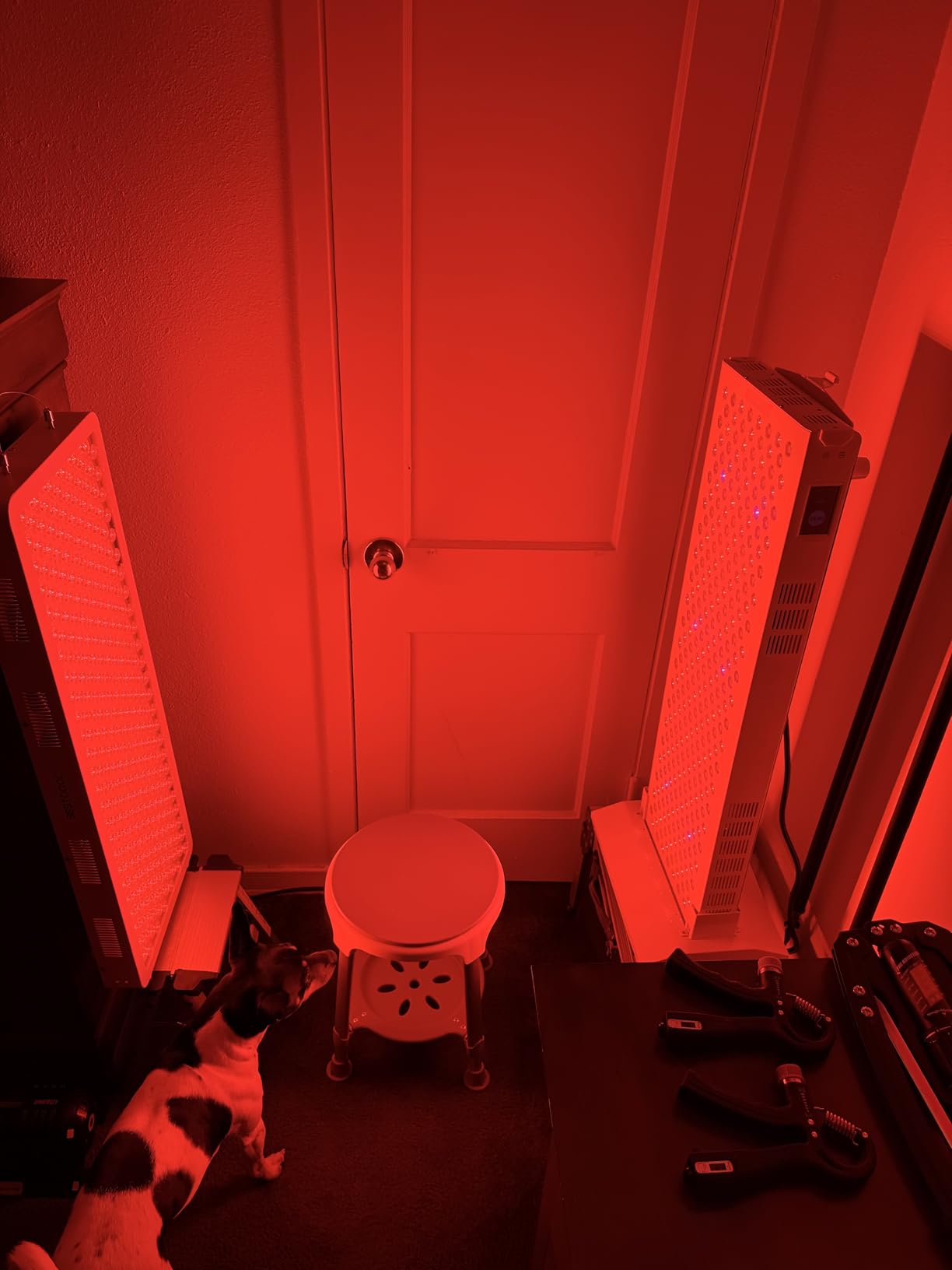
At 3 inches: Hooga delivers 190 mW/cm². BestQool delivers 106 mW/cm².
If you stop reading there, the Hooga looks like a clear winner. 80% more irradiance at the same distance. Done, right?
Not quite.
Two things change the picture:
First, the beam angle difference. Hooga uses a 60-degree beam angle. BestQool uses 30 degrees. A wider beam spreads light over a larger area at distance. A narrower beam concentrates light in a smaller zone. As you move farther from the panel, the wider-beam Hooga loses less intensity than you’d expect, and the narrower-beam BestQool drops off faster.
Second, the dose math. Photobiomodulation dose is measured in joules per cm² and calculated as irradiance × time. Higher irradiance means shorter sessions for the same dose. If the Hooga gives you a target dose in 6 minutes and the BestQool needs 10 minutes for the same dose, the Hooga isn’t “better” — it’s just faster.
Both panels deliver therapeutic doses. The Hooga gets you there faster and at slightly more distance flexibility. The BestQool requires longer sessions or closer positioning. For someone using this 4-5 times a week, the time savings on the Hooga are real but not life-changing. A 10-minute session vs a 6-minute session, repeated 200 times a year, is roughly 13 extra hours annually. Worth $635 to some people. Not to others.
Build Quality and Real-World Handling
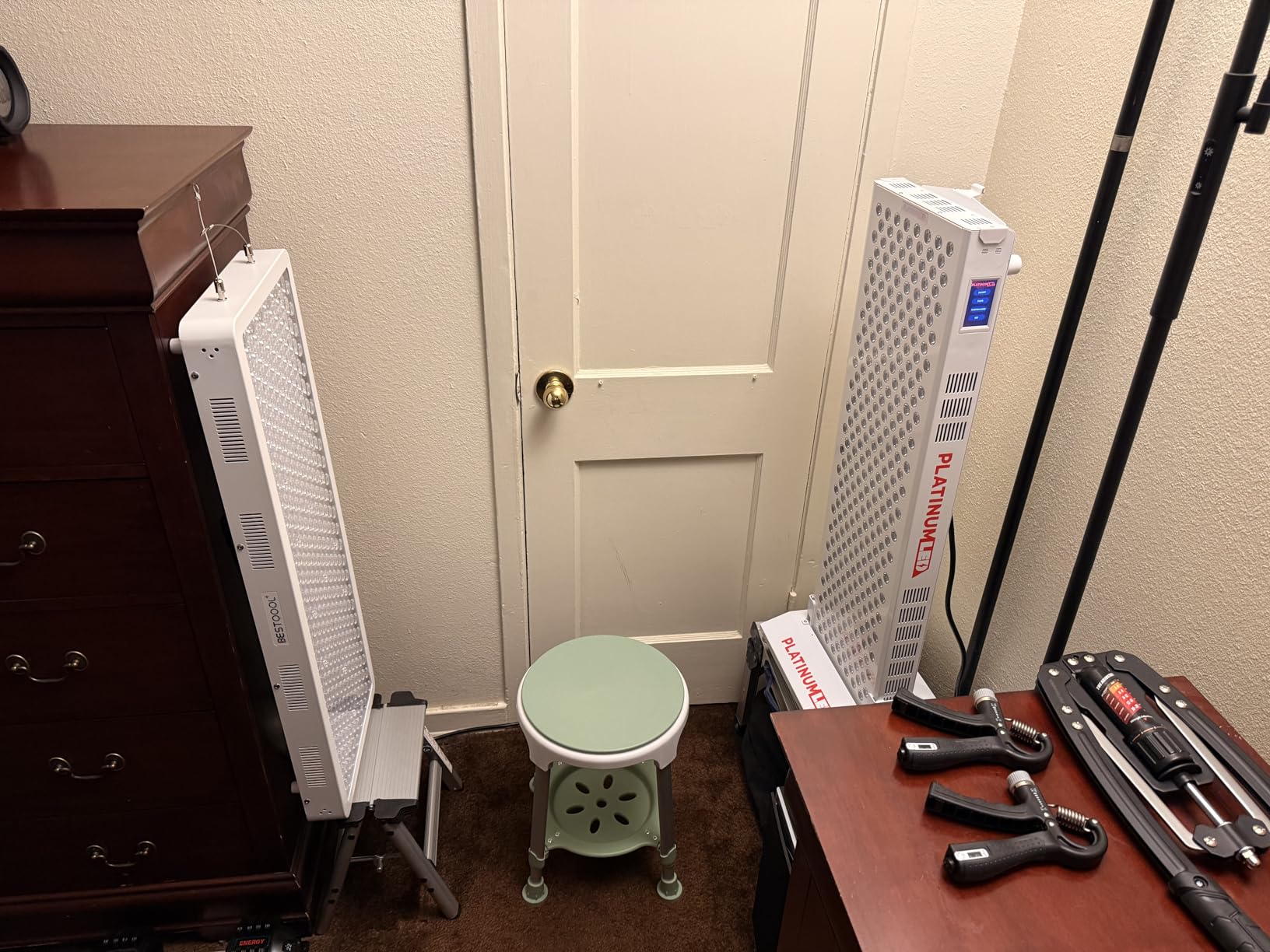
The 28 lbs vs 19.1 lbs weight difference doesn’t sound dramatic until you actually move these things around.
I’ve helped friends set up both. The BestQool Pro300 at 19 lbs is a single-person mounting job. You can wall-mount it solo, reposition it on a stand without a second pair of hands, and lift it to clean behind it without staging an event.
The Hooga ULTRA1500 at 28 lbs is technically still a one-person job, but it’s the kind where you have to be deliberate. Wall mounting solo? Possible but awkward. Repositioning between sessions? You’ll feel it.
If your panel is going to live in one spot permanently, weight is irrelevant. If you’ll be moving it — between rooms, on/off a stand, repositioning for different applications — the BestQool is meaningfully easier to live with.
The build quality on both is genuinely solid. Hooga has the more refined feel — better fit and finish on the housing, more premium controls. BestQool is more utilitarian. Neither feels cheap.
Features the Hooga Has That the BestQool Doesn’t
Let’s be specific about what your extra $635 actually gets you on the Hooga side, beyond raw irradiance.
Brightness control. The Hooga lets you dial intensity down. Useful for face sessions where full output is excessive, or for ramping up tolerance over weeks. The BestQool is on/off — no intermediate intensity setting.
Pulse mode. The Hooga supports pulsed output, which some research suggests has different cellular effects than continuous wave at the same total energy. The evidence base is thinner than for continuous-wave PBM, but it’s a feature you have access to.
Quad-chip LEDs. The Hooga uses 4 LED chips per diode housing. The BestQool uses 2. More chips per housing means more wavelength density per square inch of panel surface.
60-degree beam angle. Already covered above — better for users who want flexibility in standing distance. The BestQool’s 30-degree beam rewards close work.
Independent channel control. Both panels have this (red and NIR independently switchable), but the Hooga’s interface is more polished.
If you actually use brightness control regularly — say, you do face sessions at lower intensity and body sessions at full — that’s a feature with daily value. If you’d never touch the dial, you’re paying for capability you won’t use.
Features the BestQool Has That the Hooga Doesn’t
Verified 500W power consumption. BestQool publishes the actual measured wattage. The Hooga’s actual draw is around 300W per their listing. More wattage means more delivered energy, full stop. It’s why the BestQool’s lower irradiance per cm² doesn’t tell the full story — it’s distributing more total power across the panel.
940nm deep penetration wavelength. Already covered — if deep tissue is your priority, this is in the BestQool, not the Hooga.
Class II medical device certification. This isn’t trivial. Class II requires actual safety and performance documentation submitted to regulators. Most consumer panels skip certification entirely. If certification matters to you (some employers, some health-cost reimbursement programs require it), BestQool clears that bar.
Lighter weight. 9 lbs less than the Hooga. Real-world relevant if you’ll move the panel.
$635 left in your bank account. Money you didn’t spend on a panel can be spent on accessories, a second small panel for targeted work, or simply not spent. The opportunity cost of premium pricing is real.
The Modular Question
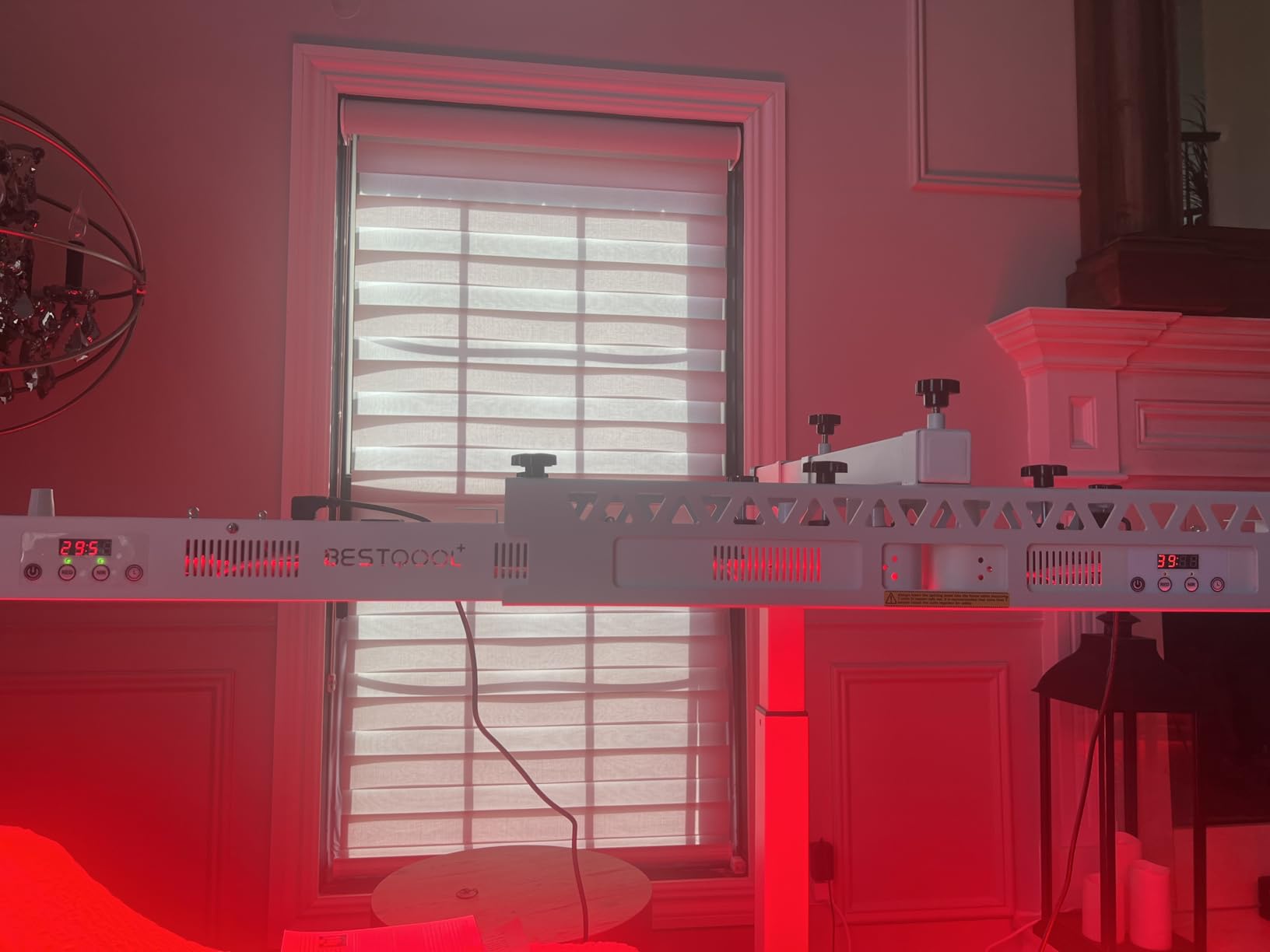
Both panels support modular expansion, but the math works differently.
Two BestQool Pro300s connected = 72.84 inches of vertical coverage (full body for most adults), at a total cost of roughly $1,528. That’s $129 more than a single Hooga ULTRA1500.
Two Hooga ULTRA1500s = full body coverage with the larger-format panels, but you’re at $2,798 total. Nearly double the dual-BestQool setup.
If your roadmap is “get one panel now, expand to full body later,” the BestQool path is significantly more economical. You also get redundancy — if one unit fails out of warranty, you still have a working panel. Single-panel buyers who pay flagship pricing don’t have that fallback.
For people who genuinely want full body neck-to-ankle coverage as the end goal, two BestQool Pro300s is mathematically the better play unless you specifically need Hooga’s feature set.
Sound, EMF, and Daily-Use Stuff
Both panels run flicker-free drivers. Both report low EMF. Both have fan cooling — neither is silent, but neither is loud enough to disrupt podcasts or music during sessions.
The Hooga’s fans are slightly quieter under sustained load. The BestQool’s fans ramp up more noticeably as the panel heats up over a 20-minute session. We’re talking the difference between “I notice it” and “I notice it a bit more” — not a deal-breaker either way.
Heat output: both panels run warm but not hot. Standing 6 inches away you’ll feel the warmth on your skin in addition to the light. Standing 12+ inches the thermal effect is mostly gone.
Who Should Actually Buy Each One
Buy the Hooga ULTRA1500 if any of these are true:
- Budget is genuinely a non-issue and you want the most refined panel in this class
- You’ll use brightness control or pulse mode regularly (not “I might”)
- You prefer 810nm over 940nm in your NIR coverage
- You’ll stand at varied distances from the panel (60-degree beam helps)
- The panel will live in one spot — 28 lbs doesn’t bother you
- You value polish, finish, and feature depth over raw value
Buy the BestQool Pro300 if any of these are true:
- You want serious red light therapy capability under $800
- 940nm deep tissue penetration matches your use case (joints, deep muscle)
- You’ll mount on bare skin and stay close (3-6 inches) most sessions
- Modular expansion to full body is a real future plan, not a “maybe”
- Class II certification matters for your situation
- You’ll move or reposition the panel regularly
- The $635 saved goes somewhere smarter for your goals
What Neither Panel Solves
Both panels have limitations worth being honest about.
Single-panel coverage is partial. Whether you buy the Hooga or the BestQool, a single 33-36 inch tall panel covers your torso in one session. Full body sessions require either repositioning, using a stand to angle the panel at different heights, or buying a second unit (modular). Don’t expect a single panel to give you simultaneous head-to-toe coverage.
Consistency beats hardware. A daily 10-minute session with a $400 budget panel beats a weekly session with a $1,400 flagship. Both these panels reward habit, and neither will produce the marketed results without consistent use on bare skin.
Eye protection is required for both. The 850nm and (especially) 940nm wavelengths are invisible but interact with retinal tissue. Use IR-blocking goggles. Both panels should ship with goggles or recommend them in setup instructions.
Neither replaces medical care. Photobiomodulation is a genuine therapeutic modality with research backing for several applications, but if you’re using a panel to manage a chronic condition, that’s an adjunct to medical care, not a substitute.
My Actual Recommendation
If forced to pick one panel for “most readers of this comparison,” I’d point them to the BestQool Pro300. Here’s why:
The Hooga ULTRA1500 is the better panel. I’m not arguing otherwise. But “better” is doing a lot of work in that sentence. The performance gap doesn’t scale linearly with the price gap. Going from a $0 panel to a $764 BestQool is transformative. Going from a $764 BestQool to a $1,399 Hooga is incremental. The diminishing returns on that extra $635 are real.
The BestQool gives you 940nm deep tissue capability, modular expansion at half the per-unit cost, Class II certification, and verified 500W power — all genuinely meaningful features. You give up some refinement, brightness control, pulse mode, and the wider beam angle. For most home users, that trade-off favors the BestQool.
If you’ve genuinely got the budget and want the most polished home panel available short of professional-grade equipment, the Hooga is the right pick. It’s a flagship product that delivers flagship performance. Just don’t talk yourself into it on “I’ll grow into the features” reasoning. Buy it because you’ll use what makes it more expensive, or buy the BestQool.
For readers who want the entry tier, my EXESAS 200-LED panel review covers what’s available below the BestQool’s price point. The EXESAS is a credible $529 option if budget is the binding constraint.
Where to Buy
Check current price for the Hooga ULTRA1500 on Amazon
Check current price for the BestQool Pro300 on Amazon
For full standalone reviews of each panel, I’ve broken them down individually in the Hooga ULTRA1500 review and the BestQool Pro300 review. The EXESAS 200-LED panel review covers the budget tier if neither of these fits your price range.
Disclosure: This post contains affiliate links. If you purchase through these links, I may receive a commission at no additional cost to you. Pricing on Amazon changes frequently — verify current pricing on the listing before purchasing.
This content is for informational purposes only and does not constitute medical advice. Consult a qualified healthcare provider before starting any new wellness protocol. These statements have not been evaluated by the FDA and are not intended to diagnose, treat, cure, or prevent any disease.