Disclosure: This post contains affiliate links. I may earn a small commission at no extra cost to you if you purchase through these links.
If you’ve been poking around the red light therapy panel market for more than ten minutes, you’ve probably noticed two things. First, there are a shocking number of options ranging from $40 to $1,500. Second, it’s genuinely hard to know which ones are real and which are elaborate packaging around underpowered LEDs.
The LifePro BioHeal Plus lands in an interesting position. LifePro is a fitness and recovery brand with a track record of building solid physical products — massage guns, vibration plates, recovery tools — and they brought that same build-quality mentality to their red light therapy line. The BioHeal Plus (120 LED version) sits at $266.46 with Prime pricing, with 795 reviews at 4.6/5 and FDA-approved wellness device status.
This is a review for people who have moved past “does red light therapy work” and are asking “which panel is actually worth buying at this price.”
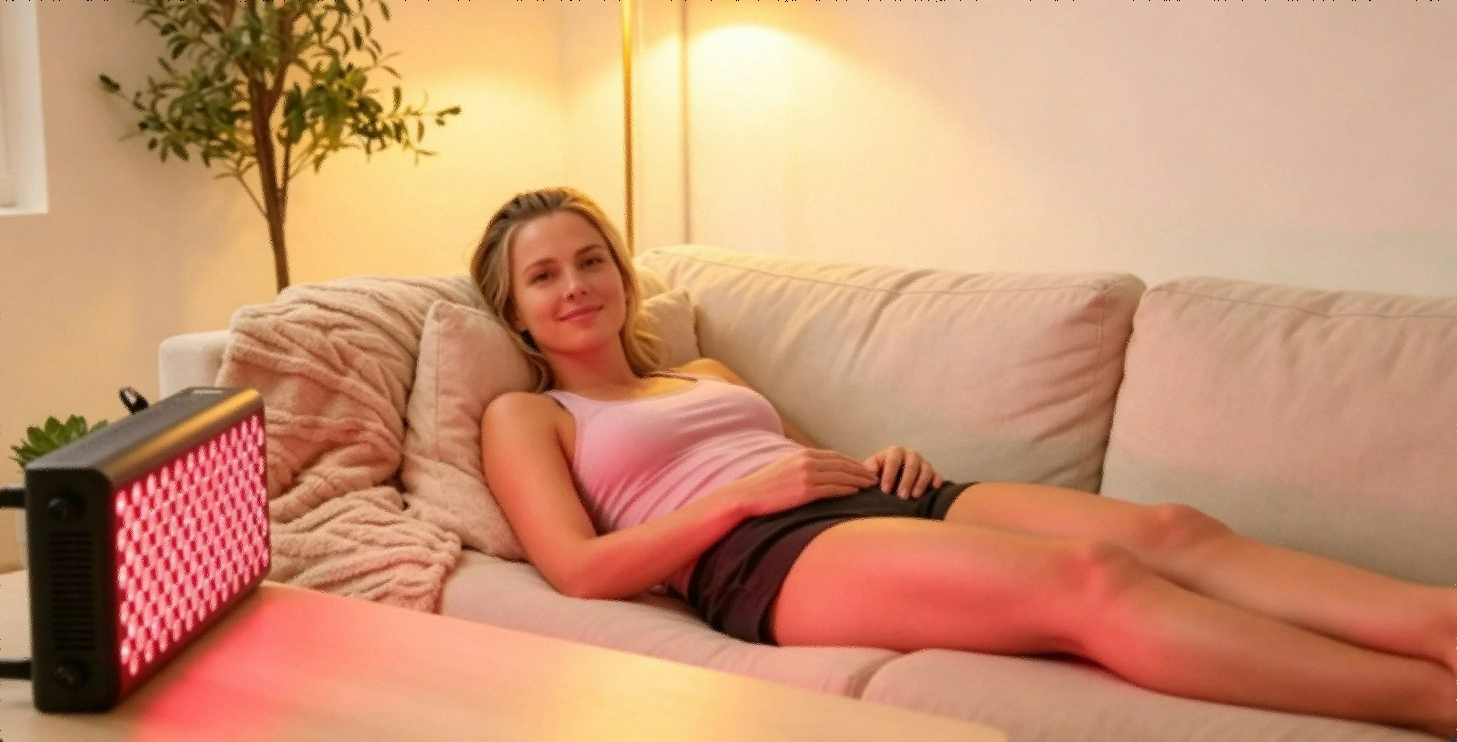
LifePro BioHeal Plus: What You’re Actually Getting
The BioHeal Plus is a full-body oriented red light therapy panel — a tall, narrow form factor designed to treat larger surface areas in a single session versus the smaller desktop panels that cover one zone at a time. It comes in two configurations:
- 90 LED version: $136.79 — good for face, neck, or targeted body areas
- 120 LED version: $266.46 — the one this review covers, sized for true half-body or full-leg sessions
The 120 LED model at 20.50” × 8.20” × 2.55” is noticeably larger than standard desktop panels like the Hooga PRO300. It weighs 8.37 lbs, uses iron construction (not plastic), and includes a hanging kit plus tilt stand for flexible positioning — wall, door, floor stand, or lying beside you on a surface.
Specs That Matter
| Spec | Value |
|---|---|
| LED Count | 120 dual-chip LEDs (660nm + 850nm) |
| Wavelengths | 660nm Red + 850nm Near-Infrared |
| Irradiance | 212 mw/cm² at 3 inches |
| Pulse Mode | Optional 10Hz pulse mode |
| Light Modes | Red only / NIR only / Both combined |
| Auto Timer | 10 minutes (built-in) |
| Session Guideline | 10–30 min per area; max 30 min; 6 hrs between sessions |
| Dimensions | 20.50” × 8.20” × 2.55” |
| Weight | 8.37 lbs |
| Material | Iron frame |
| Mounting Options | Tilt stand + hanging kit (included) |
| Eye Protection | Two pairs of glasses included |
| Power | Wall outlet (110–120V) |
| FDA Status | FDA-approved general wellness device |
| Warranty | Lifetime (register within 7 days of purchase) |
| FSA/HSA Eligible | Yes |
| Amazon Price (2026) | $266.46 (Prime) / $280.49 regular |
A few things deserve attention here.
212 mw/cm² at 3 inches is a real irradiance number, not a vague claim. The reason this matters: many budget panels list wattage (often misleadingly) without telling you actual irradiance at treatment distance. Irradiance at the skin surface is what actually drives the photobiomodulation effect. 212 mw/cm² at 3 inches is competitive at this price point.
FSA/HSA eligible is genuinely useful. If you have a health savings account or flexible spending account, you can use pre-tax dollars to pay for this — effectively giving yourself a 20–30% discount depending on your tax bracket. Not many panels at this price point carry that designation.
Lifetime warranty with 7-day registration is a meaningful differentiator. Most panels in this category offer 1–2 years. The lifetime warranty signals either genuine confidence in the product or a strong commitment to the brand relationship — either way it lowers the long-term risk.
The 10Hz Pulse Mode: What It Actually Does
Most panels at this price just give you on/off for each wavelength. The BioHeal Plus adds an optional 10Hz pulse mode, and it deserves a closer look because the marketing copy on this feature ranges from accurate to overstated.
Pulsed light in red light therapy is based on research suggesting that certain frequencies of pulsed delivery may produce different cellular responses than continuous wave delivery. 10Hz is a specific frequency that has appeared in some neurological research contexts (though the evidence base for specific pulsed frequencies is still developing).
Practically, what this means for a home user: you have an additional mode to experiment with. Some people report finding pulsed sessions feel different from continuous — though whether that’s a genuine therapeutic difference or perception is hard to say at the individual level.
What it’s definitely not: magic. The core of what this panel does is deliver 660nm and 850nm photons to your tissue. The pulse mode is an additional feature, not the reason to buy or skip it.
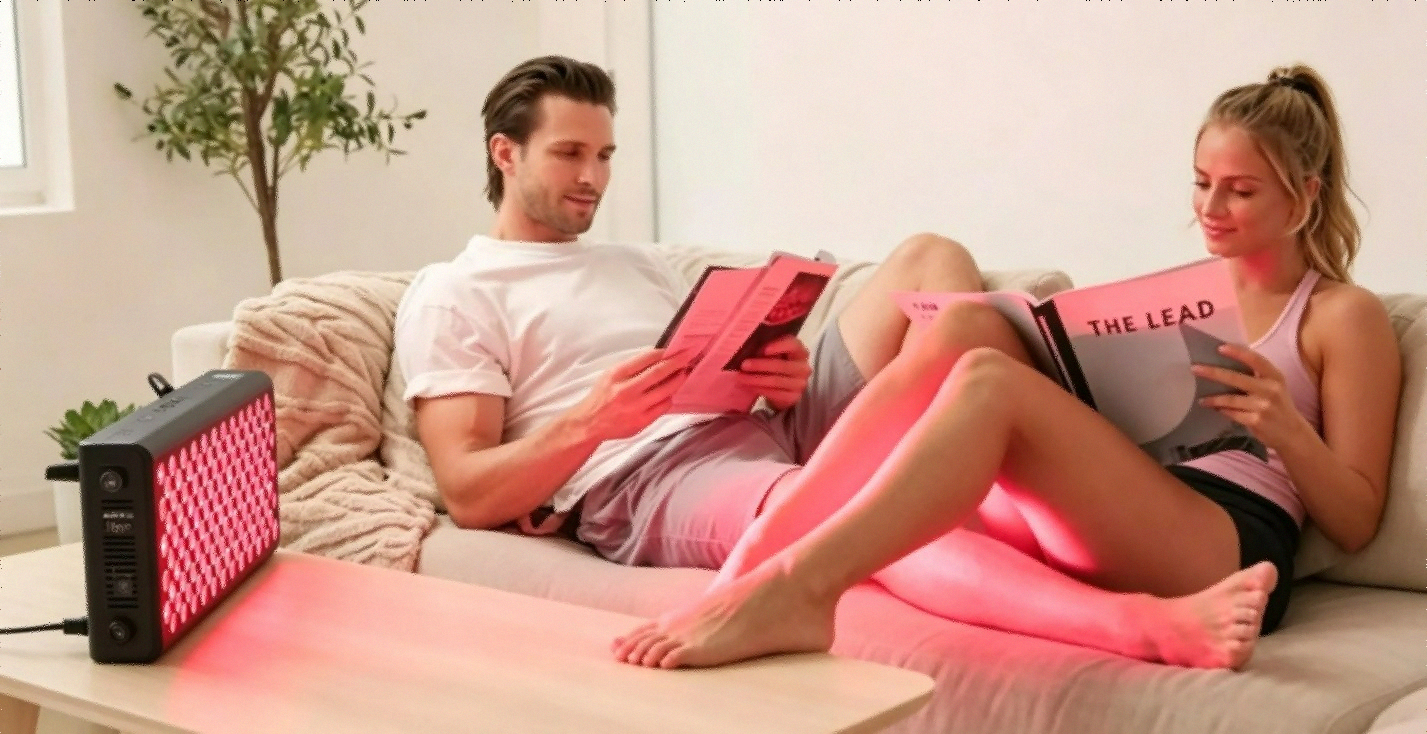
Coverage Area: The Real Reason to Choose This Over a Desktop Panel
This is the central argument for the BioHeal Plus over something like the Hooga PRO300 or similar desktop panels.
Imashieldmaiden’s review is the most instructive here. She actually bought the 90 LED version, found it too small for her purposes, returned it, and upgraded to the larger model. Her assessment: the 90 LED is good for face, small section of arms, legs, or neck. If you have multiple areas to treat, the bigger one means you’re not spending double the time repositioning.
With the 120 LED version at 20.50” tall, you can do half-body sessions — back or front, top half or full leg — sitting or standing in front of it. That’s meaningfully different from a 16” desktop panel where you’re covering maybe your face and neck simultaneously.
Michael bought the 120 LED specifically for facial skincare, then found himself using it for back, knees, and ankles. The size makes it easy to reposition for different treatment areas without it feeling like a production.
The question is whether the coverage tradeoff is worth the price jump from the 90 LED ($136) to the 120 LED ($266). If you have one or two small target areas, the 90 LED is sufficient and better value. If you’re doing full-body recovery work, treating multiple areas in each session, or want to hang it and stand in front of it for a more comprehensive session, the 120 LED is the right call.
Related Post: BestQool PRO300 Review covers a compact panel with more wavelength options if you’re focused on skin benefits at a targeted area rather than full-body coverage.
Build Quality: Why People Trust LifePro See Today’s Deal on Amazon
The most consistent theme across the 795 reviews is build quality exceeding expectations for the price, and it ties directly into LifePro’s brand positioning.
An Amazon Customer who reviewed the 90 LED version specifically said: “There are some other red light therapy devices I’ve seen on Amazon and elsewhere that sell for around the same price and are essentially cheap plastic junk.” They noted the LifePro construction and hanging kit quality were noticeably superior, and assumed the internal electronics were of equal quality.
TN paid more than competing panels specifically because of LifePro’s track record and lifetime warranty, wanting long-term peace of mind over short-term savings.
Gloria Orlando Ives has multiple LifePro products and switched to this one when her previous (different brand) red light panel stopped working. She described it as “not a cheap fly by night red light therapy.”
The iron frame construction matters here. Most panels at this price use plastic housings. Iron adds weight (8.37 lbs) but reduces flex, vibration, and long-term structural degradation. You can feel the difference when you pick it up.
💡 Pro Tip: Register the product within 7 days of purchase to activate the lifetime warranty. This is explicitly called out on the product page — don’t skip it. Miriam initially had trouble reaching LifePro support, which created doubt about warranty honoring. LifePro did eventually follow up and resolve her questions, but the lesson is: register immediately and document it.
Real Results: What 795 Owners Are Actually Experiencing
With 80% five-star reviews across 795 ratings, the results data is solid. Here’s the breakdown by use case:
Sleep and Fatigue
This one surprised me as a theme in the reviews. Imashieldmaiden has significant fatigue and sleep issues. First night using the panel: slept like a baby, stretched out her legs with a smile, woke up with energy “for the first time.” She described feeling at ease and calm during sessions, and noted circulation improvement, metabolic effects, and lymphatic drainage effects.
Tricia Mazzola bought it in October, started using it in January. After one week: improved circulation in feet (she has thyroid issues causing chronic cold feet) and definitively improved mood.
Bingman specifically mentioned wanting better sleep as one of his goals in buying it.
Sleep improvement is one of the more unexpected but consistently reported benefits of red light therapy in general — the proposed mechanism involves circadian rhythm entrainment and melatonin production support. It’s not a direct sedative effect but a downstream effect on biological timing.
Pain Relief and Recovery
Amazon’s AI summary of the 795 reviews lists Pain Relief as the second most mentioned topic with 95 mentions — behind Quality at 132.
Imashieldmaiden uses it for fatigue, energy, weight loss, pain, and sleep patterns across multiple body areas. Michael uses it for back, knees, and ankles beyond his original facial skincare purpose. Bingman specifically mentioned wanting to heal an ankle injury.
The Amazon review aggregate describes “immediate pain relief reported, particularly for back aches” — which aligns with 850nm NIR’s documented effects on deeper tissue inflammation and recovery.
Skin Benefits
Skin benefits rank fifth in mentions (46) behind Quality, Pain Relief, Ease of Use, and Performance — but they’re clearly present. The aggregate notes improvements in complexion and fine lines and wrinkles on the face.
For dedicated facial skincare work, the 90 LED version ($136) is probably more appropriate. The 120 LED’s strength is body coverage, not precision facial treatment. That said, multiple owners use it for both.
covers a panel optimized for facial and targeted body work if skin is your primary goal.
The Pulse Mode and Wavelength Controls
One of the UX issues TN flagged: no remote control means you have to look at the machine to hit the on button, which is annoying when you’re trying to start a session without staring directly at the LEDs.
The electrical cord placement is also noted — it attaches via a jack on the back, but the placement and cord type mean it sits in the way of the handle. This is an ergonomic oversight that doesn’t affect function but is slightly annoying during repositioning.
The panel has three light modes (red, NIR, or both) plus the optional 10Hz pulse mode. This is more control than many panels at this price. TN specifically called out the 10Hz pulse mode as one of the standout features.
⚠️ Watch Out: The included sunglasses that come with the unit don’t fully seal around the eyes for NIR protection. TN noted this and ordered proper protective goggles separately. NIR at 850nm is invisible but can cause eye discomfort with direct long exposure. Proper protective goggles that seal around the eyes make a real difference — the included glasses are better than nothing but not ideal for close-proximity use.
LifePro BioHeal Plus vs. Competing Full-Body Panels
At $266, this sits in a competitive tier. Here’s how it compares to the main alternatives.
| Model | LEDs | Irradiance | Wavelengths | Price | Key Difference |
|---|---|---|---|---|---|
| LifePro BioHeal Plus 120 | 120 dual-chip | 212 mw/cm² @ 3” | 660nm + 850nm | $266 | Iron build, lifetime warranty, pulse mode, FSA/HSA |
| LifePro BioHeal Plus 90 | 90 dual-chip | Not published | 660nm + 850nm | $136 | Same brand, smaller coverage, better value for targeted use |
| Hooga PRO300 | 60 dual-chip | Not published | 660nm + 850nm | $299 | More compact, 3yr warranty, well-established brand |
| BestQool (4-wavelength) | Dual-chip | Higher power | 4 wavelengths | $271–$500 | More wavelengths, FSA/HSA eligible |
| Bontanny BO-2400 | 240 LEDs | High | Multiple | $400+ | Full-panel coverage, larger footprint |
| iRESTORE Apex 1500 | High-power | Clinical grade | 8 wavelengths | $999+ | Clinical-grade, serious investment |
The LifePro BioHeal Plus wins on: iron construction, lifetime warranty, FSA/HSA eligibility, included hanging kit, and the 212 mw/cm² irradiance published spec. It loses on: wavelength variety (only 2 vs. panels with 4–8 wavelengths) and the smaller review base compared to Hooga.
If you want more wavelengths for skin work specifically, take a look at the BestQool 4-wavelength panels. Related Post: Bontanny BO-2400 Red Light Therapy Panel Review covers a higher-LED-count option if full-panel body coverage is the goal.
Positioning and Setup: Three Ways to Use It
One of the practical advantages of the BioHeal Plus over smaller panels is mounting flexibility. You get both a tilt stand and a hanging kit included, which opens up several genuine use cases:
Standing sessions: Hang it from a door at torso height, stand 6–12 inches away, treat front or back torso. 10–20 minutes. Hands-free.
Seated face and neck sessions: Use the tilt stand on a desk or table, position at face height, sit in front of it. Cleaner setup than holding a smaller handheld panel.
Floor sessions: Prop it with the tilt stand on the floor, lie down beside it, treat legs or back. Imashieldmaiden specifically mentioned full leg sessions this way.
Targeted treatment: Use it close-in on a specific area — knee, shoulder, ankle — by adjusting the tilt stand angle.
The multiple mounting options make it more versatile than panels that only come with a desk stand or only support hanging. For a product designed for “whole body” use, the flexibility matters.
The Warranty Situation: What You Need to Know See Today’s Deal on Amazon
The lifetime warranty is the headline protection here, but it comes with a condition: you must register the product within 7 days of purchase. This is a hard deadline, not a guideline.
Miriam’s experience is instructive. She initially couldn’t reach LifePro customer support for days via phone, chat, and email regarding warranty registration questions. This created real doubt about whether the warranty would be honored. She eventually heard back, got her questions answered, and upgraded her review to 5 stars.
The lesson: register immediately after purchase. Don’t wait. Document the registration. If you have trouble reaching support initially, be persistent — the resolution seems to come, but the initial response time can be frustrating.
For comparison, the Hooga PRO300 has a 3-year warranty with a smaller but well-regarded small-business customer service operation. Different risk profiles for different buyers.
International Buyers: Important Voltage Note
The LifePro BioHeal Plus runs on 110–120V US standard power. UK and European buyers will need a voltage transformer — a UK buyer named Charles confirmed this and recommended the Bronson T1-200 as compatible.
If you’re outside North America and considering this panel, factor in the transformer cost and add the compatibility step to your setup. Amazon listing doesn’t always make this clear.
Who Should Buy the LifePro BioHeal Plus 120 LED
This is the right panel if:
- You want to cover multiple body areas in a single session without repositioning a small panel repeatedly
- Build quality and long-term durability matter more to you than having the lowest price
- You want FSA/HSA eligibility to use pre-tax health spending dollars
- A lifetime warranty (with registration) gives you meaningful peace of mind
- You’re interested in experimenting with 10Hz pulse mode alongside standard continuous modes
- Recovery, sleep, and pain relief are your primary goals more than targeted facial skincare
Look elsewhere if:
- Facial skincare is your primary goal — the 90 LED version or a dedicated desktop panel is better sized
- You want more than 2 wavelengths — look at 4-wavelength or multi-wavelength panels
- You need a fully passive setup without any setup steps — larger panels require hanging kit assembly
- You’re outside North America and don’t want to deal with voltage transformers
- You want the lowest price in the category — the 90 LED at $136 or BestQool at $152 are cheaper
Related Post: Exesas 200 LED Panel Review covers a higher LED count option at a different price point if coverage density is your priority.
LifePro BioHeal Plus FAQ
Q: Can it be used for muscle recovery? Yes, and this is one of the most consistently reported use cases in the reviews. The 850nm NIR wavelength penetrates deep into muscle tissue and is associated with reduced inflammation and faster recovery. Multiple owners specifically mention post-workout soreness reduction and injury recovery.
Q: How does the 10Hz pulse mode change the session? The pulse mode fires the LEDs at 10Hz rather than continuously. Some research suggests pulsed delivery may have different cellular effects than continuous wave, particularly for neurological applications. At home, the difference is most commonly described as a subjective “feel” difference. It’s an additional mode to try, not a guaranteed outcome enhancer.
Q: Does it come with a timer? Yes, a 10-minute auto timer is built in. The official guidelines recommend 10–30 minutes per area with at least 6 hours between sessions on the same area.
Q: Is it FSA/HSA eligible? Yes. This is one of the product’s practical advantages — you can purchase it with pre-tax health spending dollars, effectively reducing the real cost by your marginal tax rate.
Q: How close should I be to the panel? Lifepro’s guidelines specify 6–12 inches from the panel. The published irradiance spec of 212 mw/cm² is measured at 3 inches. At 6–12 inches the irradiance will be lower — but that’s the intended treatment distance for skin-safe daily use.
Q: Can it replace a gym recovery routine? No. Red light therapy is a supplement to, not a replacement for, physical recovery practices. But multiple owners report it meaningfully reduces soreness recovery time and supports sleep quality, which indirectly supports training capacity.
Final Verdict
The LifePro BioHeal Plus 120 LED Red Light Therapy Panel earns its 4.6/5 rating honestly. Iron construction, genuine full-body coverage, FSA/HSA eligibility, a published irradiance spec, pulse mode, and a lifetime warranty — that combination is hard to find together at $266.
Build quality is the real headline. LifePro has a fitness brand reputation to protect, and it shows in the hardware — this isn’t cheap plastic, it’s something you expect to still be using in five years.
The tradeoffs are real too: two wavelengths instead of the four or more some competitors offer, an awkward cord placement, eye protection that doesn’t fully seal, and at least one buyer who had a rough few days reaching customer service before the warranty question got resolved.
For someone prioritizing whole-body recovery, sleep, and pain relief over precision facial work, with FSA/HSA dollars covering part of the cost, this is one of the stronger mid-range full-body panels on the market right now.
FDA Disclaimer: Red light therapy panels are general wellness devices. Statements about health benefits have not been evaluated by the FDA. Not intended to diagnose, treat, cure, or prevent any disease. Consult a healthcare professional for medical conditions.
Prices accurate as of June 2026. Amazon prices change frequently — check current price before purchasing.