My shoulder has been giving me trouble again. Not the sharp, stop-what-you’re-doing kind of pain, but the dull, persistent ache that settles in after a long day of typing and pretending my posture is fine. I’ve tried the foam rollers, the stretching routines, the desperate late-night YouTube tutorials. Nothing really stuck. So when I started hearing more about full-body red light therapy panels, I was intrigued. Skeptical, but intrigued.
I’ve been down this road before. I reviewed the BestQool Pro300 red light therapy panel a while back and came away impressed but frustrated by the mounting situation. And I’ve written about how confusing the science can be in my red light therapy wavelengths explained post. The Hooga Ultra1500 promised something different: a massive 69-inch panel with 300 quad-chip LEDs, four wavelengths, and enough coverage to hit my entire body without me having to do a weird standing yoga pose to get my back in the light.
The box arrived. I dragged it inside, because this thing weighs almost 26 pounds, and my first thought was: “This is not a panel. This is a door.” The Ultra1500 is enormous. I set it up in my home office, which now looks like a really expensive sci-fi movie set, and I’ve been using it every day for a few weeks. Here’s what I learned.
Unpacking: First Impressions Are… Mixed
Right out of the box, the Ultra1500 feels premium. The steel frame is solid, the LED array looks pristine, and the build quality is leagues above the cheaper panels I’ve tested. The included stand is sturdy, the remote is intuitive, and there’s even a pair of protective goggles that don’t look like they came from a 99-cent store.
But then I hit my first snag: the remote didn’t come with a charging cable. This is a minor thing, but it’s the kind of detail that makes you wonder if anyone actually tested the unboxing experience. I had to dig through my drawer of miscellaneous cables to find one that fit. It’s fine, but it’s annoying. And it’s a recurring theme with these high-end panels—they nail the big things and then somehow forget the little ones.
The instructions are sparse, which is pretty standard for this category. If you’ve ever had to read a red light therapy manual, you know they’re all essentially the same: vague, slightly self-aggrandizing, and not particularly useful. I ended up relying on online resources and the how-to-use-red-light-therapy-panel-full-body guide I wrote earlier.
The 300 Quad-Chip LEDs: What’s Actually Happening Here See Today’s Deal on Amazon
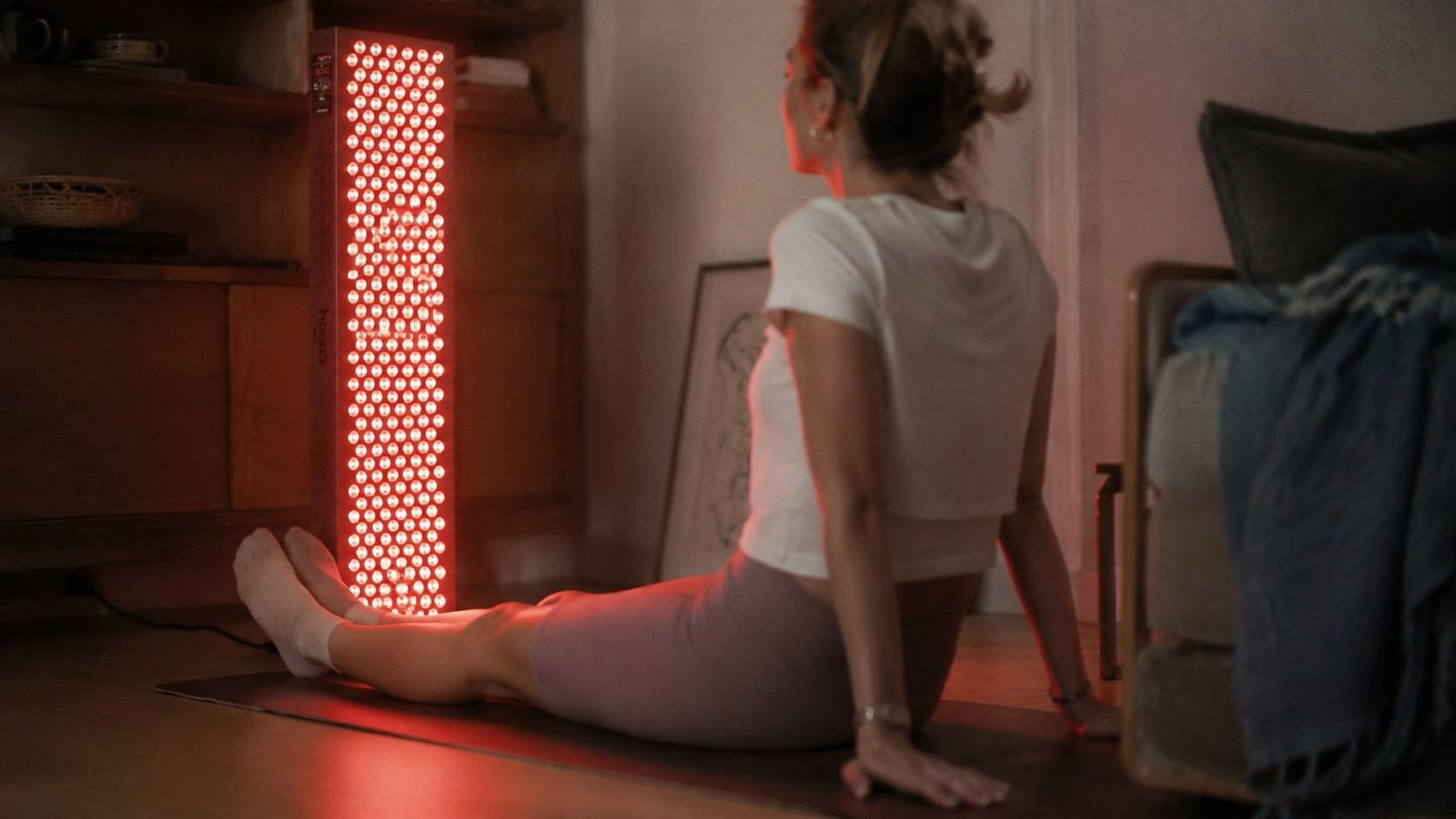
The Ultra1500 has 300 quad-chip LEDs. That’s different from the 300 dual-chip LEDs you see on other panels, including the BestQool Pro300. Each quad-chip contains four individual chips that emit different wavelengths: 630nm, 660nm, 810nm, and 850nm. The marketing claims this delivers a balanced multi-wavelength output across the entire panel surface.
In practice, this means you’re getting a mix of red light (630nm and 660nm) for surface-level benefits like skin health and wound healing, and near-infrared light (810nm and 850nm) for deeper tissue penetration—think muscles, joints, and inflammation. It’s the same combination I discussed in the red-light-therapy-wavelengths-explained post, but the quad-chip design means all four wavelengths are hitting you at the same time from every single LED.
The coverage area is impressive. The panel is 69 inches tall and 26 inches wide, which is enough to cover a full standing adult from head to toe without repositioning. I’m 5’10”, and standing about six inches away, the light hits everything from my shoulders to my shins. It’s a full-body experience in a way that smaller panels just can’t replicate.
I’ve also been using the pulse mode, which is a nice bonus. You can set the panel to pulse at different frequencies, theoretically to match your body’s natural rhythms or target specific issues. I’ll be honest—I have no idea if the pulsing actually does anything. But it’s a fun feature, and it makes me feel like I’m in a high-tech lab instead of my messy home office.
The Stand and Mounting: No Door Hacks Here
If you read my BestQool Pro300 review, you know I had a full meltdown about the mounting situation. The BestQool comes with a door-mount system that feels like a disaster waiting to happen. The Hooga Ultra1500, mercifully, comes with a proper stand. It’s sturdy, it’s adjustable, and it doesn’t require you to engineer a pulley system out of steel cables.
The stand is heavy and well-built, which is exactly what you want when you’re dealing with a 26-pound panel. It holds the panel securely at whatever height you need, and it doesn’t wobble. There’s no sense that the whole thing is going to come crashing down in the middle of your session. It’s a small detail, but it makes a huge difference in the overall user experience.
That said, it’s still a large panel. Moving it around is a pain. It’s not something you’re going to relocate every day, or even every week. This is a “set it up and leave it” kind of device.
The Real-World Experience: What Happened After Weeks of Use
Okay, let’s talk about results. Because at the end of the day, the Ultra1500 is $1,399. That’s real money. It needs to do more than look pretty and emit a pleasant glow.
I used the panel every day for about three weeks. Sessions lasted 10-15 minutes, depending on what I was targeting. I aimed the light at my shoulder, my face, and occasionally my legs after a long walk.
Shoulder recovery: This is the most obvious benefit. The dull ache in my shoulder is significantly reduced. It’s not gone entirely, but it’s manageable. I’m not waking up in the middle of the night because the pain has shifted into a weird position. The near-infrared wavelengths (810nm and 850nm) seem to be doing their job, penetrating deep enough to hit the underlying inflammation. I’ve tried other recovery tools before—I reviewed the Lifepro Bioheal Plus red light therapy panel and the [Makiiuri Neptune 300]—and the Ultra1500 is noticeably more effective. I think the larger coverage area and the quad-chip design make a difference.
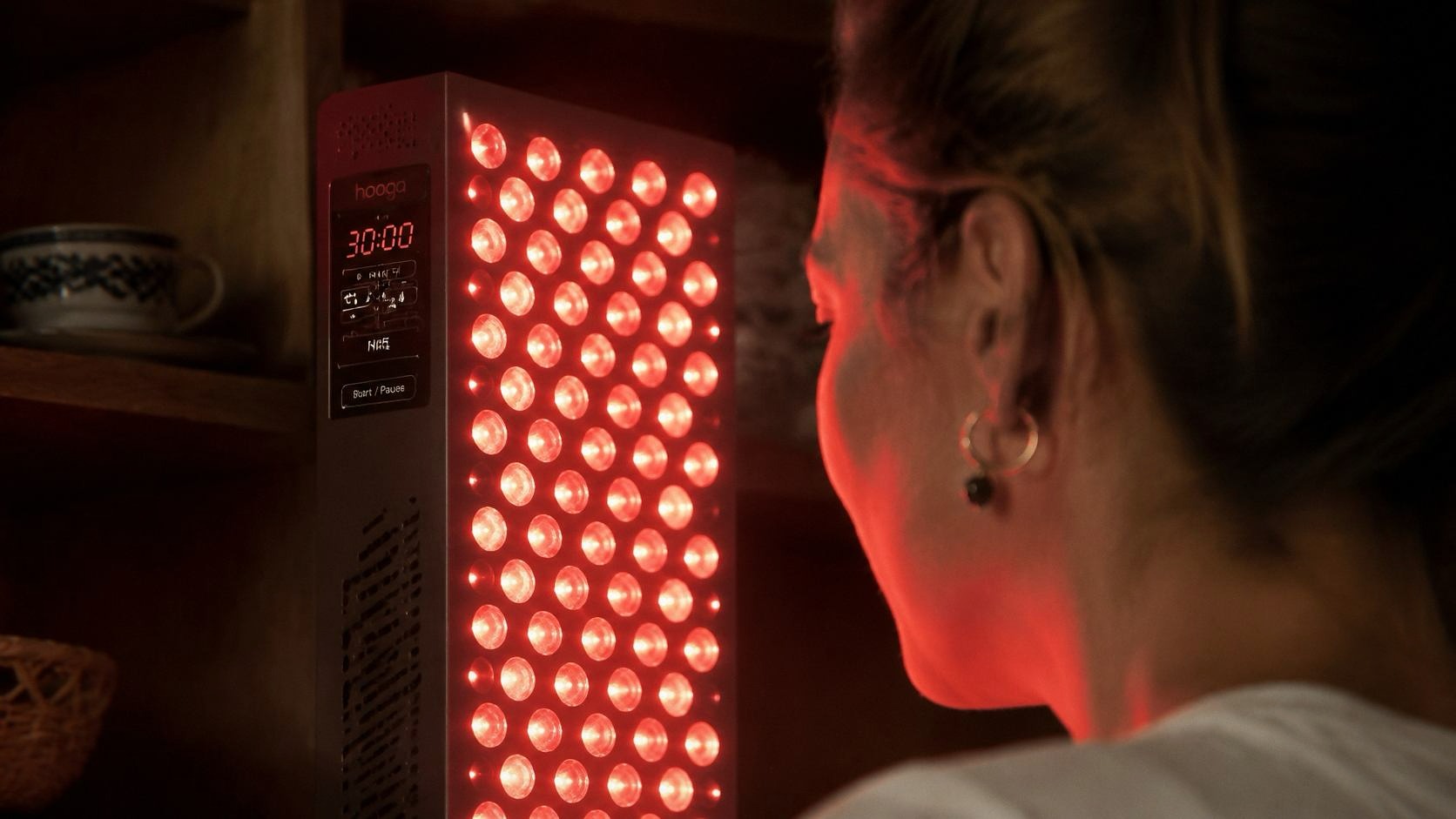 Skin improvements: My face looks better. Brighter, smoother, a bit more even. I’ve been using the panel on my face for about 5 minutes each session, and the results are subtle but real. Fine lines are less pronounced. My skin has a healthy glow that wasn’t there before. It’s not a dramatic transformation, but it’s enough that my partner noticed and asked what I was doing differently.
Energy levels: This was unexpected. I feel more alert and energetic after a session. It’s not a caffeine-like jolt, but a steady, clear-headed wakefulness. One of the customer reviews on Amazon mentioned the same thing, which makes me think it’s not just placebo.
Sleep quality: I’ve been sleeping better. Not dramatically, but noticeably. I fall asleep faster and stay asleep longer. I don’t wake up as much during the night. It’s consistent with what I’ve read about near-infrared light and melatonin production—a topic I covered in my full body red light therapy device review 2026.
The Ultra1500 is easy to use. The remote lets me set the timer (I usually do 15 minutes), adjust the brightness, and toggle pulse mode. The brightness control is particularly useful—I like to start at a lower setting and ramp up as I get used to the light. It’s a small touch that makes the experience feel customizable.
The Not-So-Great Stuff
Alright, let’s be honest. The Ultra1500 isn’t perfect.
-
It’s huge. 69 inches tall, 26 inches wide. This is not a panel that fits in a closet. You need dedicated floor space, and you need to be okay with your home looking like a tanning salon from the future. If you’re short on space, the smaller Ultra750 or even the BestQool Pro300 might be a better fit. My red light therapy device full body review 2026 goes into more detail about finding the right panel size for your space and needs.
-
The remote charging cable. It’s a small thing, but it bothered me. You spend $1,399 on a device and you don’t include a cable for the remote? It’s like buying a car and finding out the key fob doesn’t have a battery.
-
It’s not cheap. $1,399 is a lot of money for most people. If you’re not sure red light therapy works for you, I’d recommend starting with a smaller panel or even a handheld device. The Hooga HG300, for example, is around $200 and is a great entry point.
-
The manual is useless. It’s basic, it’s vague, and it doesn’t give you any real guidance on how to use the panel effectively. I ended up doing my own research, which is fine for me, but might be frustrating for someone new to red light therapy. If you’re confused about the basics, check out my red light therapy wavelengths explained post or the how-to-use-red-light-therapy-panel-full-body guide.
-
The fan is audible. It’s not loud—I can still hear my podcast over it—but it’s there. If you’re sensitive to noise, it might bother you. The BestQool Pro300 is quieter, in my experience.
Who Should Buy This? See Today’s Deal on Amazon
The Hooga Ultra1500 is a premium panel for people who are serious about red light therapy. If you’re dealing with chronic pain, persistent inflammation, or just want to invest in your long-term health, this panel is worth serious consideration.
It’s particularly good for people who want full-body coverage. The 69-inch height means you can stand in front of it and hit your entire body in one session. No repositioning, no messing around with multiple panels. It’s also great for people who want versatility—the four wavelengths cover both surface-level and deep-tissue benefits, so you’re not locked into one specific use case.
But I also have to be honest: if you’re new to red light therapy, the Ultra1500 might be overkill. A smaller panel like the Hooga Ultra750 or even the BestQool Pro300 would give you a lot of the same benefits at a lower price point. You could also explore the [Makiiuri Neptune 300] or the Lifepro Bioheal Plus if you want to stay in a lower budget tier.
[If you grab one through the links here, I might get a small cut — costs you nothing extra and keeps the lights on.]
The Bottom Line (Or What I’d Tell a Friend)
If a friend asked me whether they should buy the Hooga Ultra1500, I’d say this: “It’s expensive, it’s huge, and it takes up a lot of space. But if you’re committed to red light therapy—and I mean truly committed, not just curious—this is one of the best panels you can buy. It’s powerful, it’s well-built, and it delivers real results. Just be prepared for the size and the cost.”
I’ve been using it for weeks. My shoulder feels better. My skin looks better. I feel more energetic. Is that enough to justify $1,399? For me, yes. But I also know that not everyone can—or should—spend that kind of money on a wellness device. Start small. See if red light therapy works for you. And if it does, come back to the Ultra1500 when you’re ready to go all in.
The panel is humming in the corner of my office right now, its red glow casting long shadows across the room. My dog has decided it’s the perfect spot to lay down—she seems to like the warmth. I might be projecting, but I think she’s onto something.
Alright. My session timer just went off. I’m going to go unplug this beast and figure out what’s for dinner.